
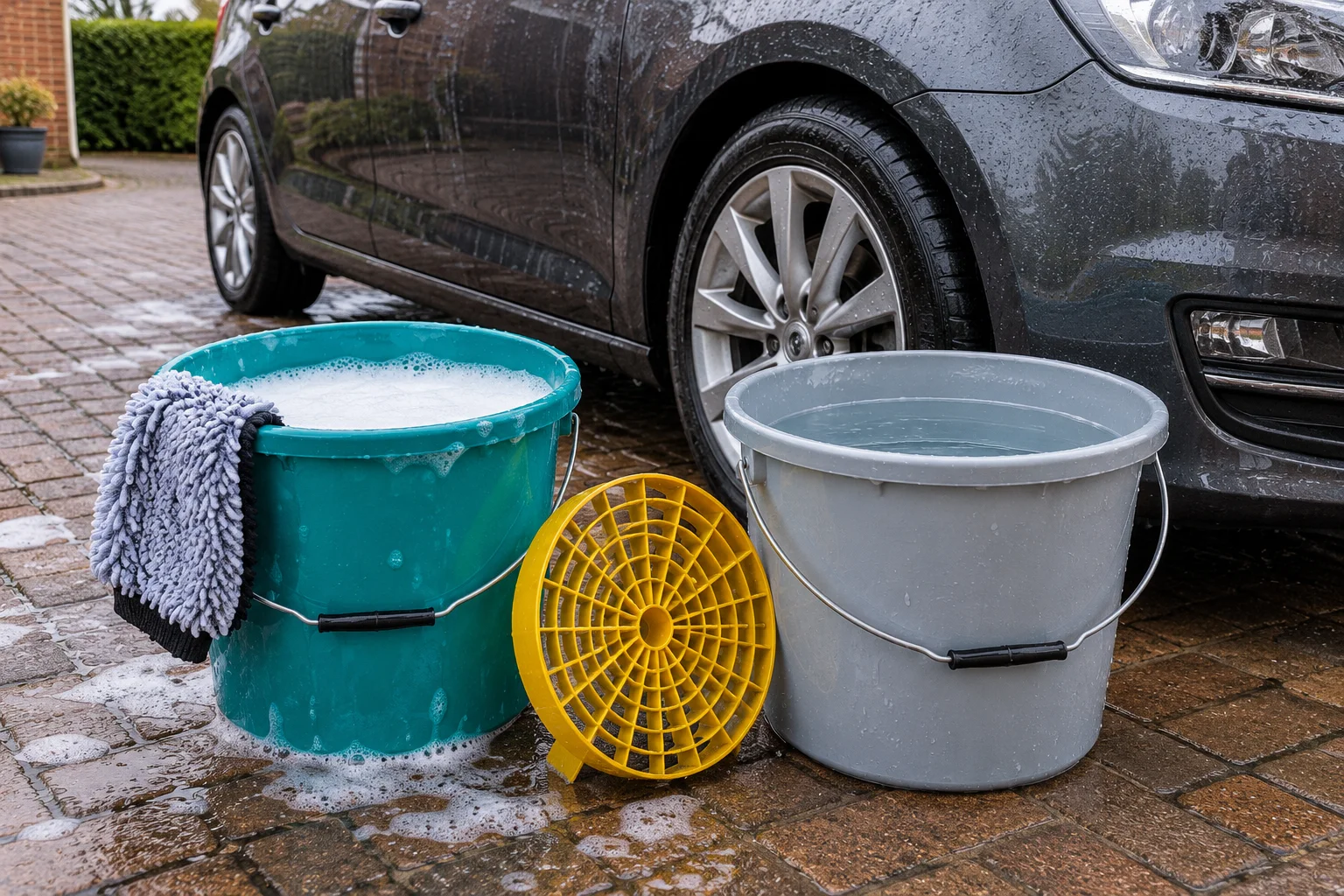
The two-bucket method keeps shampoo solution and mitt-rinsing water in separate containers. Load the mitt from the wash bucket, clean a manageable section, rinse the mitt in the rinse bucket, inspect it and return to the wash solution. It is a contamination-control routine, not a guarantee against scratches.
The distinction is simple, but it only helps when you keep the roles separate and refresh dirty water. A grit guard does not turn a bucket of contaminated water into clean water, and two buckets do not replace rinsing loose grit from the car before the mitt touches it.
Set up the two jobs clearly
Use one clean bucket for correctly diluted shampoo and one for plain rinse water. Identify them with labels or a reliable visual difference. Put them within comfortable reach without leaving the hose or tools across your walking route.
Choose containers with enough room to rinse the mitt without crushing it against a sharp edge. Existing suitable buckets are fine if they are sound and free of old chemicals or grit. Dedicated car-wash buckets are useful where they make clean storage and task separation easier; they are not a compulsory brand purchase.
Bucket capacity is not your mixing volume
Bucket separation still relies on a clean contact tool. The wash-mitt buying guide compares constructions and care limits; a grit guard cannot make a dirty mitt suitable for the next panel.
A 20-litre bucket can hold less than 20 litres during use. Measure the amount of water actually added and use the dose for that amount. Leave room for the mitt and hand rather than filling to a level that overflows every time you rinse.
The separate rinse bucket is plain water, so you do not double the shampoo dose because you own two containers. If you are changing the wash volume, work from the dilution formula rather than estimating from the bucket’s size.
A dedicated bucket when you need one
Autoglym’s translucent 20-litre bucket is designed to take its matching insert. This listing supplies one bucket; a two-bucket system needs a second suitable container. Compare what you already own before buying a pair.
For a separate wash or rinse bucket
Autoglym Car Wash Bucket 20L
A translucent 20-litre-capacity bucket designed to fit Autoglym’s Grit Guard. Useful when you need a dedicated container you can keep clear of household or wheel-cleaning residues.
- 20-litre capacity
- Translucent HDPE
- Guard sold separately
One bucket is supplied; buy a second only if you need it. The Grit Guard is separate. Capacity is not a fill instruction: measure the water actually used before dosing shampoo.
What a grit guard does, and what it cannot do
A guard sits near the bucket base and provides a separation below the working water. Fit matters: an insert that rocks, floats or sits at an unintended height is not a verified match. Autoglym designs the selected guard for its own bucket; do not infer compatibility with every container from an approximate diameter.
Use it as part of rinsing and water management. It cannot inspect the mitt, neutralise chemicals or remove every suspended particle. If the water is visibly dirty or the tool still contains grit, change the water and clean the mitt instead of relying on the insert.
For the matching bucket base
Autoglym Grit Guard Bucket Insert
A removable insert designed for the base of the Autoglym Car Wash Bucket. It provides a separation beneath the working wash water and can be removed for cleaning.
- Matching Autoglym fit
- Removable HDPE insert
- Rinse and dry after use
Check fit before pairing with another bucket. It is not a filter that cleans dirty water or removes the need to rinse and inspect the mitt. Bucket sold separately.
The repeatable wash-and-rinse sequence
- Rinse the vehicle first. Remove loose dirt using a method appropriate to the car and water equipment. Leave wheels and their tools separate.
- Load the clean mitt. Pick up correctly diluted wash solution from the shampoo bucket.
- Wash one manageable area. Start high on the bodywork and work towards the dirtier lower sections. Use light pressure and do not let the solution dry.
- Rinse away collected contamination. Use the plain-water bucket, working the mitt gently as appropriate to its construction. Avoid splashing dirty water back onto cleaned paint.
- Inspect before reloading. Check the fibres, seams and any trapped particles. Stop if the tool cannot be made clean.
- Refresh the rinse water when needed. There is no useful rule that the same bucket must last the entire car.
The cycle takes a little attention at first. Keeping the buckets consistently positioned and clearly identified makes it easier to repeat without accidentally rinsing dirt into the wash solution. Do not let familiarity replace checking what is on the mitt.
A wash mitt with a clear cleaning method
The Autoglym noodle mitt is a hand-wash-only option. Use the soft noodle face on paint and keep its mesh away from painted surfaces. Its care requirements are different from the machine-washable Polar Mitt, even though both carry the same brand.
For a hand-washed noodle mitt
Autoglym Microfibre Noodle Wash Mitt
A red microfibre mitt with an elasticated cuff and a separate mesh section. An option if you prefer a noodle texture and are happy to hand wash the tool after use.
- Microfibre noodles
- Elasticated cuff
- Hand-wash only
Do not use the mesh on paintwork. Hand wash separately in cold water and air dry; do not machine wash or tumble dry. Keep wheel-cleaning tools separate from this bodywork mitt.
Keep wheel and lower-panel contamination apart
A separate wheel stage needs separate tools and water. Bringing the wheel brush into the bodywork buckets defeats the purpose of dividing the wash and rinse stages. If you use another mitt for heavily soiled lower panels, keep it identifiable and clean it before any later bodywork use.
Do not use the rinse bucket as a place to store dirty tools for the next wash. At the end, empty and rinse the containers, remove inserts if needed for cleaning and let them dry. Inspect the bucket bases before refilling next time.
Common mistakes to avoid
| Problem | Why it matters | Useful correction |
|---|---|---|
| Both buckets become shampoo buckets | The rinse stage is no longer distinct | Keep one container for plain rinse water |
| Dirty water is kept for the whole car | Rinsing can return contamination to the mitt | Refresh water according to its condition |
| A dropped mitt goes straight back in | Hard particles can stay within fibres | Put it aside until thoroughly cleaned and inspected |
| The wheel brush enters the wash bucket | Wheel dirt moves into the bodywork kit | Keep a separate wheel container and tools |
Is this the right method for your space?
Two buckets suit a home wash where you can carry and place them securely, access suitable rinse water and complete the drying stage. If space or water access prevents that, do not simply remove the rinsing step and use the same dirty mitt everywhere. Consider an appropriately instructed alternative method or a suitable wash facility instead.
The full home washing guide connects this method to preparation, rinsing and drying. The bucket arrangement is one useful part of that routine, not the entire wash.
Common questions
Which bucket needs the grit guard?
A compatible guard can be used as part of the rinse-bucket setup; some owners also fit one in the wash bucket. The important checks are correct fit and continued water management. An insert does not remove the need for clean water or mitt inspection.
Do I need two identical buckets?
No. Two suitable, clean containers with clearly different jobs can work. Matching buckets can make storage and insert fit easier, but labels and contamination control matter more than identical colours or logos.
How often should I change the rinse water?
Change it according to the contamination you are removing. A visibly dirty rinse bucket or grit remaining in the mitt is a reason to stop and refresh it. There is no sensible fixed panel count that fits every dirty car.
Can I wash wheels with the same buckets?
Keep wheel tools and dirty wheel water out of the bodywork wash-and-rinse system. If containers are reassigned between tasks, clean them thoroughly first. Owning two buckets does not make wheel contamination harmless to paint.
Does the two-bucket method prevent all swirls?
No. Surface grit, trapped particles, pressure, unsuitable tools and drying technique can still cause damage. The method helps separate dirty rinsing from fresh shampoo, but it cannot guarantee a mark-free result.
Sources and product instructions
Follow the label and care instructions for the exact version and surface you own.