
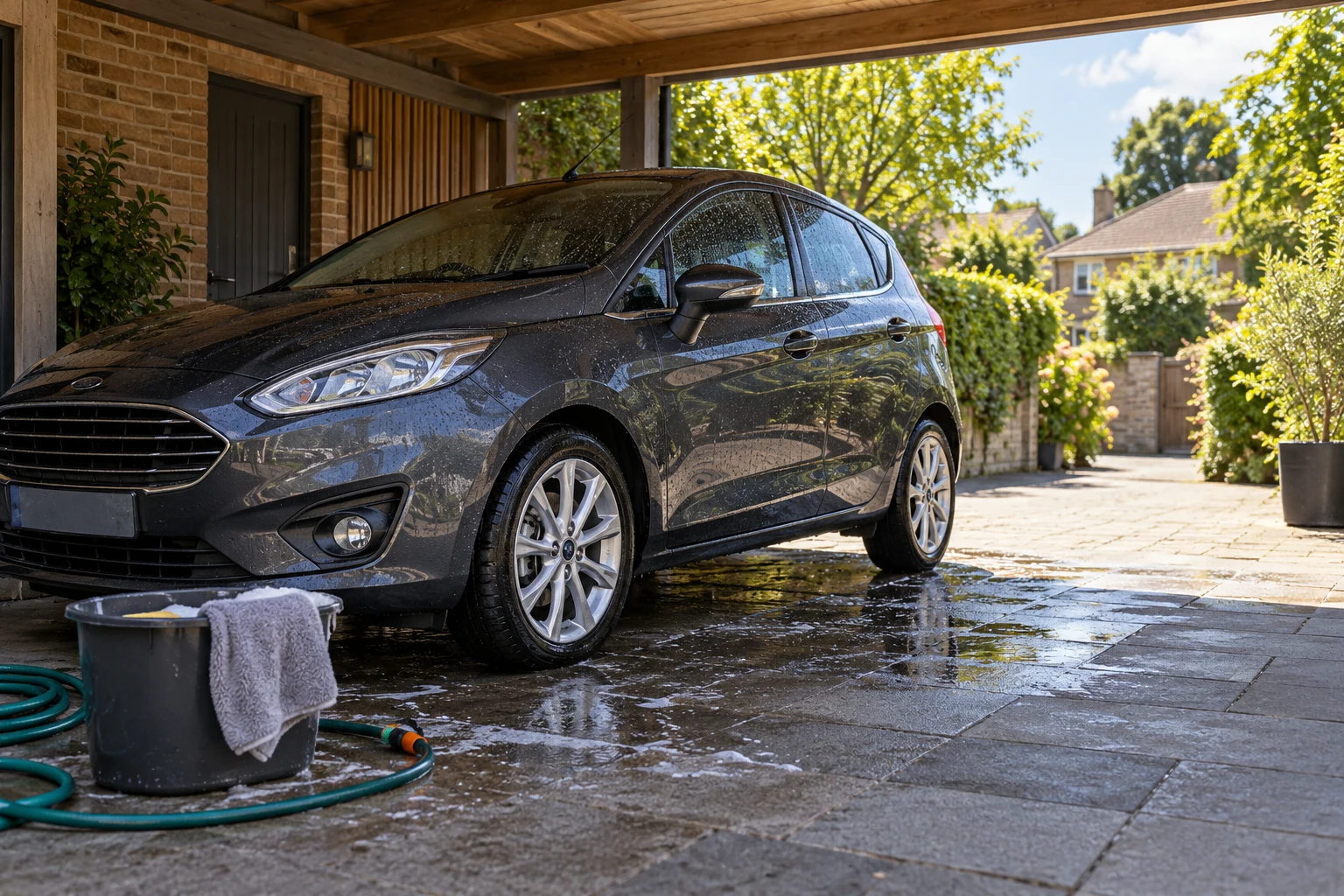
Judge the panel, not just the forecast
Hot-weather washing becomes difficult when water or chemicals evaporate before you can complete their intended stage. The result can be shampoo residue, mineral deposits and an urge to rub a surface that needs rinsing instead. A more concentrated product or a thicker layer of foam does not remove that constraint.
A car parked in direct sun can have a much hotter bonnet than the surrounding air suggests. Dark surfaces, warm wheels after driving and wind across a wet panel add different pressures. Look at the actual working area and the product’s conditions rather than treating a pleasant air temperature as approval.
Autoglym’s heatwave guidance favours shade, cool surfaces and controlled working. Build the routine around that principle. If a small permitted test section dries before you can finish it, change the circumstances or stop; there is no prize for completing the whole car at the least suitable time.
Plan shade that lasts through the job
An early or later session may offer a better working window, but check the position of the sun and the condition of the car when you arrive. A car recently driven can retain heat even in shade. Give it time to cool before applying products that require a cool surface.
Prepare all equipment before wetting the car. Lay out the clean wash media, measuring tool, rinsing arrangement and drying towels within easy reach. Keep electrical equipment and its connections according to their own operating instructions. Moving around searching for a missing towel consumes the short interval you have for finishing a section.
Shade from a building can move. Work out which side will remain shaded and whether you can complete the job there. If the chosen location cannot provide a controllable wash and appropriate waste-water handling, choose another time or place rather than improvising halfway through.
Keep the chemical mixture within its instructions
Use an ordinary contact shampoo only where it is appropriate for the actual finish, at its stated dose and with the required rinse. Auto Finesse Lather is a pure contact shampoo option for a compatible routine; it is not a product to spray onto a hot dry panel and leave behind.
For a permitted additive-free wrap or matt-finish wash
Auto Finesse Lather Car Shampoo 500ml
A 500ml pH-neutral contact-wash shampoo without waxes, fillers or gloss enhancers. Auto Finesse lists vinyl-wrap use and includes Lather in its matt/satin care system.
- 500ml single bottle
- LAT500 pure shampoo
- No wax or gloss-enhancing finish
Film installer and vehicle-paint instructions still take priority, followed by a small hidden-area check. This is not Wash N Gloss, a spot-removal solvent or a way to repair a shiny patch on matt paint.
Measure the water and concentrate. Do not add extra shampoo because the first panel dried quickly: that is a working-window problem. Equally, do not weaken the mixture arbitrarily and assume the lubricating method remains the same. Use the label’s intended method and make the section smaller.
Keep pre-wash, contact wash and protective products as separate stages. Each has its own conditions. A shampoo label does not establish a safe dwell time for a fallout remover, and a wet-applied sealant should not be added casually while you are already struggling to rinse.
Remove loose contamination before contact
Inspect the car for grit and heavy deposits. Use a suitable pre-rinse and any permitted pre-wash in conditions where it can be rinsed before drying. Avoid treating the whole car with a chemical if only a small part can be managed within its instructions.
Monitor foam on edges, mirrors and darker panels rather than relying on a timer alone. A maximum dwell instruction is not a target that must be reached regardless of weather. Rinse earlier where the label permits and conditions require it; if you cannot complete the permitted method, postpone.
Keep the method appropriate to the finish. A wrap edge, damaged paint, a convertible roof and ordinary gloss paint do not have identical pressure or chemistry permissions. The existing finish-specific guides should determine those limits before weather adjustments are considered.
Contact-wash one manageable area
Use clean suitable media with light controlled contact. A microfibre mitt supports an ordinary shampoo routine when it is inspected, kept clean and changed or rinsed appropriately. It cannot make grit harmless or provide an unlimited working time.
A reusable bodywork wash tool
Meguiar’s Super Thick Microfibre Wash Mitt
A microfibre mitt for contact washing the bodywork. Meguiar’s specifies machine washing, so it can be cleaned and reused as part of your regular wash routine.
- Microfibre
- Machine washable
- Separate from wheel-cleaning tools
Rinse it frequently during the wash and keep it separate from wheel tools. A dirty mitt can mark paint; no mitt guarantees scratch-free washing.
Choose a section you can wash and rinse promptly. Start with cleaner upper areas, keep dirtier lower areas separate and watch the liquid on the panel. Do not leave shampoo on one side while washing the other simply because that sequence worked in cooler weather.
Keep the bucket and clean media away from dust, the ground and overspray from dirty wheels. If the mitt falls, set it aside until it can be properly cleaned and inspected. Rushing to beat the sun should not remove the basic contamination controls from the wash.
Rinse and dry without leaving a whole-car delay
Rinse the completed area thoroughly according to the product’s instructions, including accessible places where mixture collects. Dry the clean section before mineral-bearing water evaporates. Plan the sequence so that rinsing the next area does not repeatedly soak an already finished panel.
For an 80 × 60cm twisted-loop towel
Autoglym Ultra-Soft Drying Towel
A dedicated twisted-loop drying towel, listed at 80 × 60cm. Its shape offers a broad drying area without moving up to an especially long towel.
- 80 × 60cm
- Twisted-loop construction
- Dedicated car-drying towel
Wash separately before use and follow the care label. Current manufacturer directions allow machine washing up to 40°C without softener and recommend tumble drying; check the supplied drying setting.
A suitable car-drying towel works best on clean moisture, with light contact and enough unused capacity. Change towels if saturation creates smearing. Support loose corners and keep them off paving; a large towel that drags on the ground should not go straight back onto the bonnet.
Check accessible drips around handles and mirrors afterwards. Catch them gently when they emerge instead of forcing cloth into gaps. Do not use a drying towel as the final cleaning stage for dirt that the wash has left behind.
Respond to drying before adding another product
If shampoo starts to dry, follow its recovery and rinsing instructions promptly. Do not scrub dried residue or cover it with wax. Assess the clean dry result before deciding whether a remaining mark is residue, a mineral deposit or something requiring a separate treatment.
Hard-water spotting is not solved by pressing harder with a towel. Begin with the least invasive permitted step and the dedicated water-spot guidance. Specialist finishes and fresh protection can impose exclusions on acidic removers or polishing.
Rinseless washing can offer a different sequence, but it also depends on suitable dirt, correct dilution and prompt drying. Optimum’s washing directions include rewashing and drying a section if solution dries. Repeated recovery passes are a reason to improve conditions, not an efficient hot-weather routine.
Finish with a decision for next time
Notice which part of the session became difficult: a bonnet that reheated, foam drying on the far side or a towel becoming saturated. Adjust timing, shade or clean-media supply for the next wash. Keep the solution simple enough that every stage can be finished correctly.
If conditions deteriorate, finish rinsing any product already applied using its instructions and stop further treatment. Postponing the remaining work is preferable to turning a maintenance wash into dried chemical removal. A useful hot-weather routine is defined by control of the surface throughout the job.
Common questions
What temperature is too hot to wash a car?
There is no single air-temperature limit that covers every panel, product and location. Sun, wind, dark paint and heat after driving affect the working surface. Follow product limits and postpone when you cannot keep the section wet and controlled.
Can I cool the paint with a quick rinse?
A permitted rinse may help remove loose dirt and cool a surface, but it does not guarantee that a sunlit panel will stay cool. Choose shade and workable conditions first; do not keep applying chemicals to a panel that immediately dries.
Should I add more shampoo in hot weather?
Use the exact label dilution. Extra concentrate does not solve rapid evaporation and may make residue harder to rinse. Change the timing, location or section size instead.
Can snow foam dry on the car?
Do not let it dry. Follow its dwell and rinsing instructions while monitoring the actual surface. If conditions make drying likely before safe completion, postpone that stage.
Is rinseless washing better in direct sun?
It still needs the correct product, suitable dirt and controlled section-by-section washing and drying. A rinseless product is not permission to work on excessively hot panels; follow its specific restrictions.
Sources and product instructions
Follow the label and care instructions for the exact version and surface you own.