
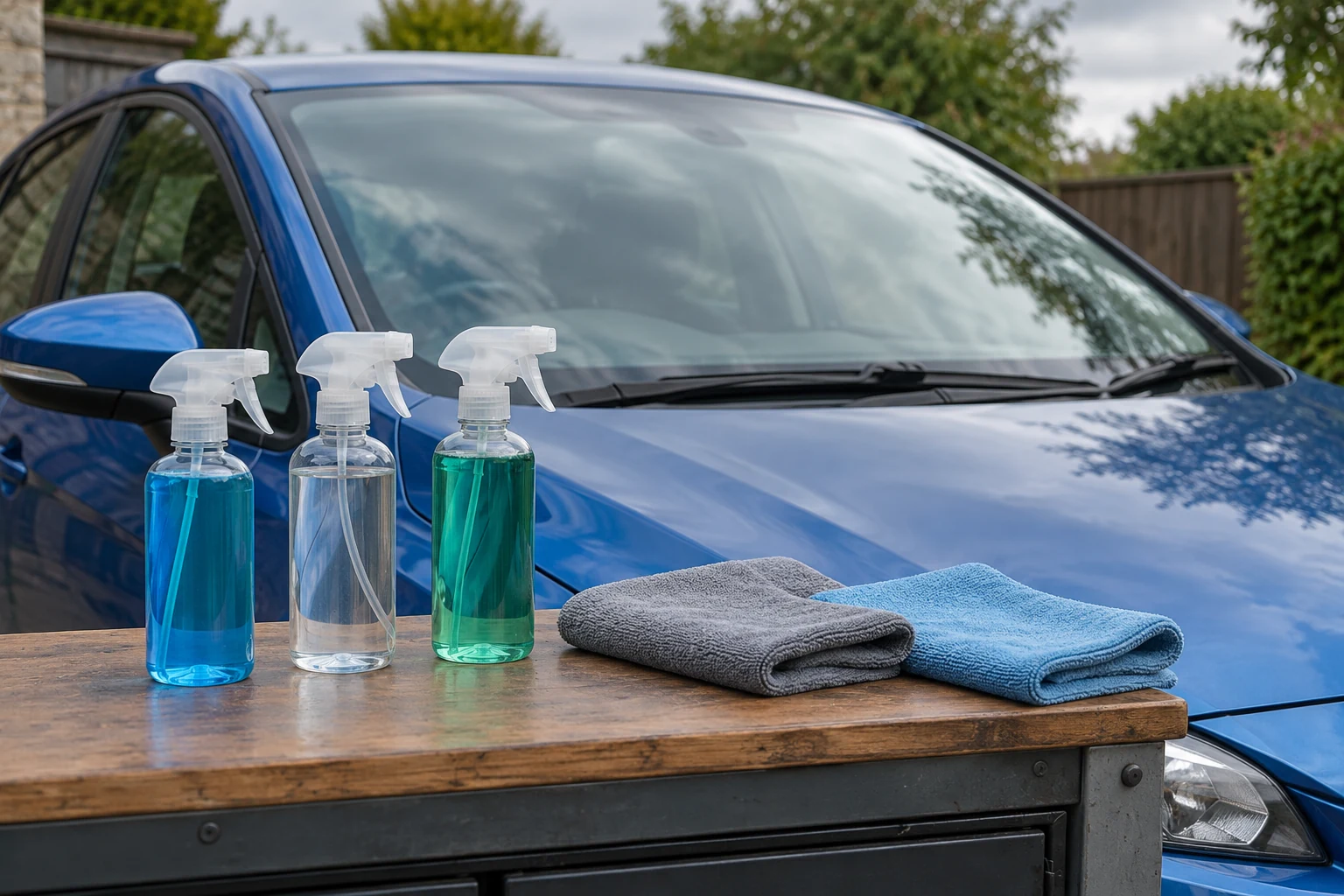
Choose by the surface and the cleaning job
A car-glass cleaner should remove the film you have without leaving another layer to polish away. For most home routines, that means a dedicated spray, clean glass cloths and a separate dry finishing face. A cream glass polish belongs to a different job: deeper cleaning of suitable glass when ordinary washing and a spray have not been enough. Buying the stronger-looking bottle first can add work and compatibility questions that a routine spray avoids.
Start with the car’s handbook and any instructions for aftermarket tint, replacement glass or an existing glass coating. The word “glass” on a bottle does not establish suitability for every layer attached to it. Windscreen cameras, plastic windows and treated panoramic roofs also need their own care instructions. Keep cleaning separate from choosing a rain repellent; a clear finish does not require a water-beading treatment.
Before buying, identify which problem is actually visible:
- A greasy-looking film or wipe marks after washing: compare routine automotive glass sprays and your cloth condition.
- Loose dirt or gritty deposits: wash and rinse first rather than asking a glass cloth to do a wash mitt’s job.
- Persistent contamination on suitable untreated glass: consider whether a glass-polish method is permitted.
- A scratch, chip, damaged film or mark that remains after appropriate cleaning: arrange assessment instead of buying progressively stronger cleaners.
The options
These products offer different methods and roles. The comparison is based on manufacturer instructions and the exact selected bottle, rather than a cleaning-speed or visibility score.
| Option | Useful role | Main buying check |
|---|---|---|
| Autoglym Fast Glass 500ml | Routine spray; also has specified unpainted-trim uses | Match the surface instructions and keep finishing cloths clean |
| Gtechniq G6 Perfect Glass 500ml | Routine spray with a cloth-first application method | Have a second suitable cloth for residue removal |
| SONAX XTREME Glass Clear 500ml | Routine interior/exterior glass spray | Apply thinly and finish with a fresh dry face |
| Autoglym Car Glass Polish 500ml | Cream cleaner for deeper cleaning of suitable glass | Exclude aftermarket film and plastic; check coatings and roof care |
Autoglym Fast Glass: a straightforward routine spray
Fast Glass fits a kit where a dedicated glass-cleaning step follows the exterior wash. The maker’s spray-and-buff directions make cloth management central: turning a clean cloth or changing to another one matters more than saturating the window. Its other approved uses can be useful, but the cloth used for a dirty trim job should stay out of the glass-finishing pile.
For a separate glass-cleaning job
Autoglym Fast Glass 500ml
A 500ml cleaner for interior and exterior glass, without abrasives, waxes or silicones. Useful when you need a glass cleaner but already own the rest of your wash kit.
- 500ml spray
- Interior and exterior glass
- No abrasives, waxes or silicones
Use dedicated clean cloths. Check tint-film and vehicle-screen guidance; apply to the cloth for compatible displays, never spray directly onto electronics.
Gtechniq G6: a clearly defined two-cloth method
G6 is a sensible option if you prefer applying cleaner to the cloth. Gtechniq’s main application directions specify spraying an MF5, wiping the glass and removing residue with another suitable cloth. That gives each cloth a defined role and helps keep the spray off nearby trim. Use the bottle’s instructions for the actual surface; do not infer approval for a film or coating from the absence of streaks on ordinary glass.
For dedicated interior-glass cleaning
Gtechniq G6 Perfect Glass 500ml
A glass cleaner with a cloth-first application method. Gtechniq directs using a second suitable cloth to remove remaining residue and working out of direct sunlight.
- 500ml spray
- Apply to glass cloth
- Separate finishing cloth
Check aftermarket tint and coating guidance separately. Keep spray off electronics and use a clean finishing cloth; ordinary glass suitability does not approve a display coating.
SONAX XTREME Glass Clear: a thin application and dry finish
The selected SONAX is the 500ml XTREME Glass Clear, not a washer-reservoir concentrate or a rain-repellent product with a similar name. Its cleaning method includes a fresh dry finishing cloth or face. This suits a routine where the exterior has already been washed and the final glass step deals with remaining road film and water traces. A separate dry cloth is particularly useful once the first one starts carrying moisture.
For a routine exterior-glass finishing spray
SONAX XTREME Glass Clear 500ml
A 500ml glass cleaner for interior and exterior use. Its directions use a thin application, a suitable soft cloth and a fresh dry face or cloth to finish.
- 500ml trigger bottle
- Item 02382410
- Separate dry finishing cloth
Check vehicle, film and coating care first. Clean loose grit away before wiping; a routine glass spray does not repair scratches or automatically remove mineral etching.
Autoglym Car Glass Polish: buy for a defined deeper-cleaning need
The cream has a thin-film, drying and buffing sequence, so it is a different purchase from another routine spray. Check the exclusions before comparing bottle size. It is not suitable for aftermarket tint film, acrylic, Perspex or plastic windows; a vehicle’s restrictions on abrasive cleaning or roof glass also take priority. It is not a home repair for a scratched windscreen.
For deeper cleaning of suitable untreated glass
Autoglym Car Glass Polish 500ml
A cream glass cleaner with a thin-film, dry-and-buff method. This selected current UK bottle is 500ml, distinct from older 325ml listings.
- 500ml cream
- Apply a thin film
- Allow to dry, then buff
Not for aftermarket tint film, Perspex, acrylic, plastic windows or infotainment screens. Vehicle and roof restrictions apply; do not use as a scratch repair or assume suitability for coated glass.
Compare the complete kit, not just the liquid
A glass spray and an already contaminated cloth are a poor combination. If a cloth has been used for wax, dashboard dressing or tyre care, keep it away from the windscreen even if it feels soft. Dedicating clean cloths to glass also makes troubleshooting easier: you can change one part of the method without wondering what the cloth is transferring.
Buy enough cloths to separate cleaning from finishing for the size of your car. There is no universal number of windows per cloth. A small hatchback in light soiling needs a different amount of clean surface from an estate after a long wet motorway journey. The useful trigger for a change is a damp, dirty or smearing face, rather than a fixed window count. Our exterior-glass method explains that sequence.
Ready-to-use sprays also avoid mixing another bottle for a small finishing job. A large refill may make sense for regular use, but only if you can store it as directed and keep the smaller bottle correctly identified. Do not dilute a ready-to-use cleaner simply because it looks similar to a screenwash concentrate. The reservoir and the cloth-applied cleaner are separate product choices.
Film, coatings and interior glass change the choice
For an aftermarket window film, use the installer’s approved cleaning products and tools. Treat a factory-tinted pane and a sheet of applied film as different surfaces; colour alone does not tell you what is on the glass. Avoid testing an excluded cream on a small visible corner as a way of overriding a clear restriction.
An existing rain repellent may have its own maintenance cleaner and removal method. If you want to preserve it, check those directions before using a deeper-cleaning product. If you intend to remove it, use the coating maker’s removal advice rather than assuming any glass polish will do the job safely. The rain-repellent buying guide covers the permission and application questions separately.
Inside the car, overspray control and access are different from washing the exterior. Use the interior-glass guide for the inside face and keep products off screens, camera housings and other surfaces unless their instructions expressly allow use.
Make a small purchase solve the right problem
For an ordinary wash routine, start with one compatible spray and clean dedicated cloths. Judge the finished glass from more than one angle while the car is stationary. If a smear returns with each wipe, change the cloth and check product quantity before buying a second chemical. Too much liquid and a damp finishing face can make different sprays appear to have the same problem.
Add a cream only when you have a permitted deeper-cleaning task. Keep panoramic-roof care separate, because a product that is suitable for an untreated side window may still conflict with roof instructions. Buying around these actual jobs produces a compact useful kit without treating every window as a surface needing polishing and protection.
Common questions
Do I need glass polish as well as glass cleaner?
Usually only for a separate deeper-cleaning need on suitable glass. Routine washing, a compatible spray and clean cloths may be enough. A glass polish is not a scratch repair and may be excluded on films, plastics or roof glass.
Is car-glass cleaner the same as screenwash?
No. A cloth-applied cleaner finishes the glass; screenwash is made for the washer system at its specified dilution. Do not put a glass-cleaning spray or rain-repellent liquid in the reservoir unless expressly intended for it.
Can I use these cleaners on tinted windows?
Check whether the tint is in the glass or is an applied film, then follow the vehicle or installer’s instructions. Autoglym Car Glass Polish excludes aftermarket tint film. A broad glass claim does not override film restrictions.
Why do different glass cleaners all leave streaks?
The cloth, amount of liquid, surface temperature or an uncleaned opposite face may be the common cause. Change to clean dedicated cloths, use the specified amount and inspect both sides before switching products.
Will a glass cleaner remove hard-water etching?
A routine cleaner is not a reliable treatment for every mineral deposit or etched mark. Identify whether material remains on top or the glass is damaged, and use the vehicle or glass specialist’s advice before abrasive treatment.
Sources and product instructions
Follow the label and care instructions for the exact version and surface you own.
- Autoglym Fast Glass: routine cleaning and wax residue on unpainted trim
- Gtechniq G6 Perfect Glass: cleaning and cloth method
- SONAX XTREME Glass Clear 02382410: application and drying
- Autoglym Car Glass Polish 500ml: deep cleaning and material exclusions
- Tesla Model Y manual: glass cleaning and windscreen-treatment restrictions