
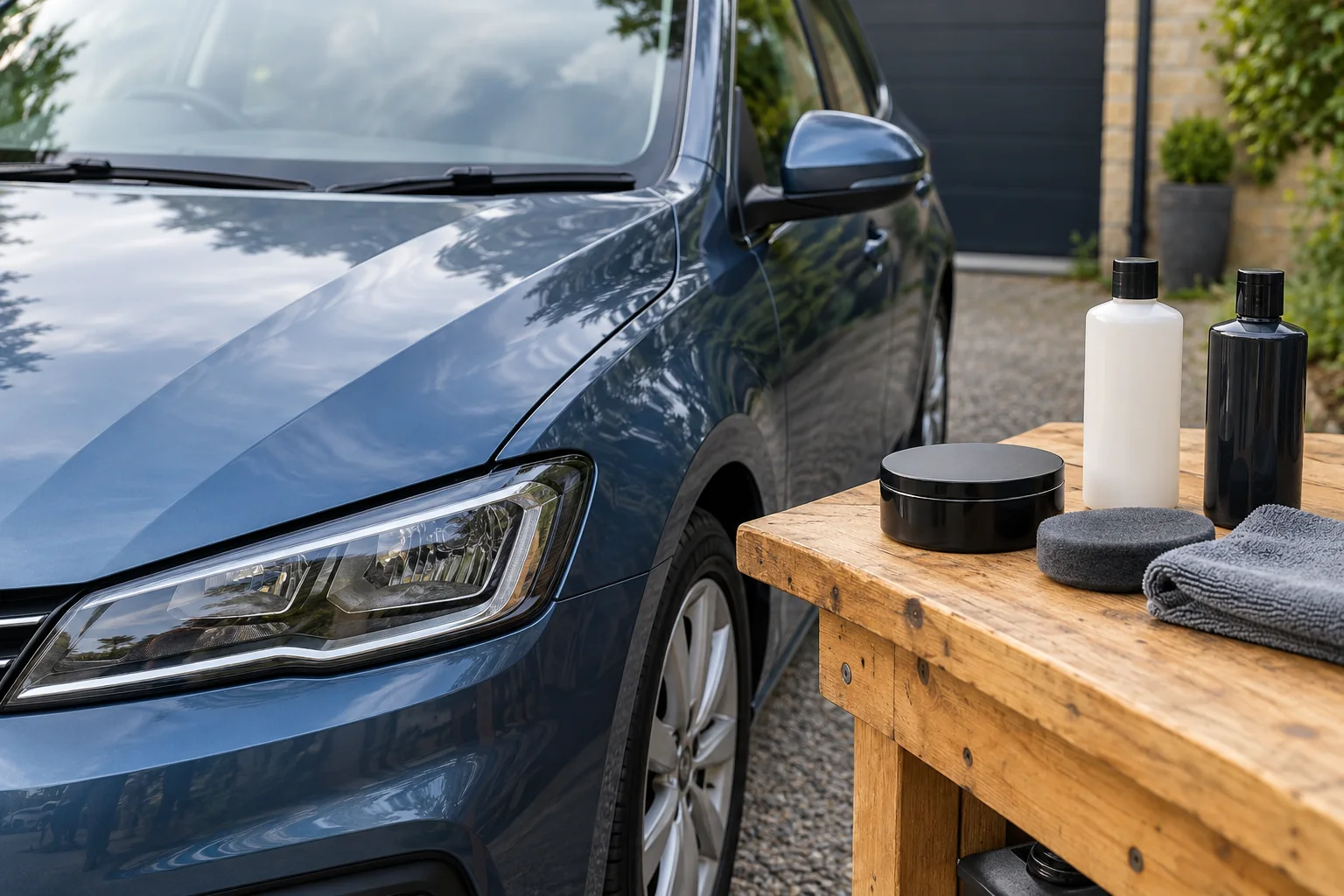
Start with the job, rather than the bottle name
A dull-looking car does not always need polish. Road film, dried mineral deposits, bonded contamination, scratches and failing lacquer are different problems. They can all spoil reflections, but they do not respond to the same product. Begin with a careful home wash and inspect clean paint in good light before deciding what comes next.
Wax and sealant are protective finishes. Polish is usually a preparation or correction product, although some formulations also fill marks or leave protection. These categories overlap: a bottle called “ceramic wax” may use a spray application and a product called “polish” may include protective ingredients. The instructions explain its role more reliably than the largest word on the label.
Do not assemble a three-stage routine just because three categories exist. For sound paint on an everyday car, a compatible wash followed by one straightforward protective finish may be the complete job.
| Product role | What it mainly does | What it cannot establish |
|---|---|---|
| Polish | Refines the surface or reduces the appearance of minor defects; some formulas also fill or protect | That a deep scratch is repairable or sufficient clear coat remains |
| Wax | Leaves a protective film, often applied by hand and buffed after the specified interval | Permanent scratch removal or suitability for every finish |
| Sealant | Leaves protection through a formulation-specific spray, wipe or rinse method | That every product can be applied wet or layered over a coating |
| All-in-one | Combines several preparation or finishing roles in one product | Permission to use any machine, pad or surface |
What polish can change
If you are considering a machine, read the beginner dual-action polisher guide before buying. It separates equipment, pad and liquid choices from the prior decision about whether the paint is suitable for correction.
Abrasive correction improves a defect by removing surrounding material. It has a limit: you cannot keep cutting down paint indefinitely to reach the bottom of a mark. Fillers can reduce the visible contrast of fine defects without representing permanent removal. Some products combine both effects, and added gloss does not tell you exactly how much correction occurred.
For an owner who wants a hand-applied preparation and finish, Super Resin Polish is a relevant all-in-one example. Its combination of roles explains why a strict “polish never protects” rule is inaccurate. It also demonstrates why application instructions matter: Autoglym specifies hand application, rather than treating it as a liquid for a dual-action machine.
For occasional hand polishing
Autoglym Super Resin Polish 500ml
An all-in-one hand polish for compatible painted bodywork that combines polishing, filling and protection. Consider it for a deliberate gloss-improvement step after washing and drying.
- 500ml bottle
- Hand application
- Polish, fill and protect
Not for matt or satin paint, wraps, vinyl decals or unpainted trim. It is not a cure for deep scratches or failing clear coat. Check existing coatings before adding a polish.
Identify matt or satin paint, wraps, paint-protection film and repaired panels before choosing a product. Their care requirements can differ from conventional gloss paint. Polishing a deliberately matt finish can change its appearance; an ordinary gloss-paint recommendation is not permission to proceed.
What wax adds to a simple routine
A paste wax chosen for a simple routine gives a deliberate application stage: spread a thin film, allow the product-specific interval and remove it with suitable clean textiles. You need enough time, shade and access to complete the process. Heavy loading commonly makes removal harder; it is not a reliable route to better protection.
Autoglym Ultra High Definition Wax is an example of a traditional carnauba-based kit with its own applicator and cloth. Its clean, dry paint instructions suit a separate finishing session. The exclusions for matt/satin surfaces, wraps and unpainted trim are part of the buying decision, not a minor detail to discover halfway across a panel.
For a traditional thin-coat wax routine
Autoglym Ultra High Definition Wax 120g
A carnauba-based paste-wax kit with an applicator and finishing cloth. It suits owners who have time to work on clean, dry paint and remove a thin hazed film.
- 120g wax
- Applicator and cloth included
- Clean, dry paint
Exclude matt or satin finishes, wraps, satin vinyl decals and unpainted rubber or plastic. Use the specific kit directions; a thicker coat does not improve the application.
A wax does not repair peeling lacquer, restore missing paint or clean away every contaminant. If paint remains gritty after washing, identify the contamination before application. Do not make clay treatment an automatic extra step: unnecessary mechanical decontamination adds work and can introduce marks.
What sealant changes about application
Spray protection can reduce the number of applicators and tins in a kit, but “spray” does not mean one universal method. Some products need clean dry paint and a controlled wipe. Others belong in the wet rinse stage. Applying either as though it were the other can leave uneven residue or fail to follow the intended process.
Turtle Wax Hybrid Solutions Ceramic Spray Coating belongs to the dry-panel spray-and-buff type. It is useful when that method fits your workspace; it should not be substituted for a rinse-on product simply because both mention ceramic ingredients. Follow its own curing and additional-coat directions.
For a dry-panel spray-and-buff finish
Turtle Wax Hybrid Solutions Ceramic Spray Coating 500ml
A separate spray coating for a freshly washed and dried car. Choose it when you prefer spreading and buffing a finishing spray to using a wet-applied wax.
- 500ml spray
- Apply to clean, dry surfaces
- Buff with clean microfibre
Follow the surface-preparation and curing directions. This is Ceramic Spray Coating, not Ceramic Wet Wax or the 3-in-1 Detailer; check specialist finishes and avoid soft convertible tops.
The word “ceramic” on a consumer spray does not make it interchangeable with a professional coating installation. Preparation, chemistry, film formation and maintenance can differ. Select it for a manageable application method and compatible surfaces, rather than assuming the name certifies a particular lifespan.
A sensible order for the work
- Identify the finish. Check the vehicle, repairer or film installer’s care instructions where relevant.
- Wash and inspect. Remove loose dirt and wash film before judging the paint. Dry as required for the next product.
- Deal with specific remaining contamination. Use only a suitable method for an identified problem; stop if you cannot identify the mark.
- Decide whether correction is justified. Leave acceptable paint alone. Get uncertain damage assessed before buying stronger abrasives.
- Apply one compatible protective finish. Follow the exact product’s wet/dry method, surface exclusions and working conditions.
- Maintain through careful washing. Store clean textiles separately and reassess the result rather than automatically repeating correction.
For a leased, recently repainted or warrantied car, establish the permitted treatment before attempting correction. A tidy finish today is not worth compromising a repair or coating condition you have not checked.
Layering without creating unnecessary work
Do not assume wax followed by sealant gives the strengths of both products. The upper product may need a different base, alter appearance or make future maintenance harder to interpret. Equally, adding an abrasive polish after protection can reduce or remove the finish you just applied.
Where a maker explicitly supports a combination, use that sequence and its waiting periods. Otherwise choose the product that suits the car and available time. For example, Autoglym permits Ultra High Definition Wax after Super Resin Polish, but this does not establish that every polish and every wax work together.
Keep a brief record of the product and method used, without turning it into a rigid calendar. If the next wash reveals streaking, drag or an odd-looking patch, you can investigate the actual application rather than add another layer to hide it.
Separate bonded deposits from paint defects
The clay-bar guide covers mechanical removal of suitable bonded contamination. Bird-dropping removal explains why a remaining mark after cleaning may need assessment rather than another cleaner.
Keep paint products off unpainted trim
If a pale mark remains beside a polished panel, follow wax-residue removal from plastic trim. Trim dressing is a later optional finish, rather than evidence that residue has been removed.
Check specialist finishes before adding protection
Use the matt and satin paint guide before any ordinary polish or gloss wax. Wraps and paint-protection film also need their own material and sheen checks.
Common questions
Do I need to polish before every wax application?
No. Sound, clean paint does not automatically need abrasive polishing before protection. Assess contamination and defects first, and follow the chosen wax’s preparation instructions. Repeated correction removes material without necessarily helping an ordinary maintenance wash.
Is wax better than sealant?
There is no universal winner. The permitted surfaces, application method, preparation, curing conditions and your willingness to maintain the finish matter more than the category name. Avoid choosing solely from an advertised durability figure.
Can I use wax over a ceramic coating?
Only where the coating maker or installer permits it. Another product can change the finish’s water behaviour and maintenance requirements. A coating-compatible maintenance product may be more appropriate than adding an unrelated wax.
Will polish remove a scratch that catches my nail?
Do not treat it as a routine polishing job. A catching scratch can indicate damage beyond sensible home correction. The test cannot establish remaining paint depth; seek professional assessment, especially where colour coat, primer or metal may be exposed.
Can an all-in-one replace separate polish and wax?
Sometimes, if it suits the actual finish and desired result. Some products combine cleaning, light polishing, filling and protection. Read the exact directions: Autoglym Super Resin Polish is for hand application, so the all-in-one label does not approve machine use.
Sources and product instructions
Follow the label and care instructions for the exact version and surface you own.