
Identify paint rather than judging appearance alone
Matt and satin describe how a surface looks, not everything it is made from. A factory low-sheen clearcoat, a repainted panel, a vinyl wrap and satin paint-protection film can look similar under soft light. Ask for the finish details before applying products. The method here concerns paint; use the separate wrap or film guide where those materials form the outer surface.
Keep the vehicle’s own care instructions nearby. Check whether any coating was added and whether a repaired panel has separate aftercare. A bodyshop’s restrictions on a recent repair can matter even when the rest of the vehicle is ready for routine washing. Do not assume every grey low-sheen panel shares the same history.
The aim is an even clean appearance at the original sheen. It is not a high-gloss reflection, and a patch that reflects more light is not necessarily cleaner. That distinction affects shampoo selection, drying pressure and the decision to stop when a mark remains.
Leave ordinary correction products out of the kit
The cited Mercedes-Benz matt-paint instructions warn against polishing and unsuitable rubbing, which can create shiny areas. Ordinary gloss waxes and paint-correction products belong to a different finishing method. Do not reach for a finishing polish because it sounds milder than a cutting compound: both need explicit surface approval.
Keep these away from the routine unless the vehicle instructions specifically allow the exact product and method:
- Abrasive compounds, scratch-removal pastes and polishing machines.
- Ordinary gloss waxes, glaze and shine-enhancing wash additives.
- Hard scrubbing pads, magic-eraser-style blocks and stiff brushes.
- Unapproved solvent spot cleaners and household stain recipes.
- Dry cloth wiping over dusty paint.
A small hidden-area check can reveal an immediate reaction but cannot make a prohibited product acceptable. Check the permission first. If the manual requires a named matt-care system, that is the starting point rather than the cheapest bottle carrying a general safe-for-paint claim.
Choose a wash that does not add a gloss finish
Auto Finesse includes Lather in its matt and satin care kit and describes the shampoo as free of waxes, fillers and gloss enhancers. That makes it a relevant option where the vehicle’s instructions permit this kind of pure shampoo. Use the received bottle’s dilution rather than an improvised strong mix.
For a permitted additive-free wrap or matt-finish wash
Auto Finesse Lather Car Shampoo 500ml
A 500ml pH-neutral contact-wash shampoo without waxes, fillers or gloss enhancers. Auto Finesse lists vinyl-wrap use and includes Lather in its matt/satin care system.
- 500ml single bottle
- LAT500 pure shampoo
- No wax or gloss-enhancing finish
Film installer and vehicle-paint instructions still take priority, followed by a small hidden-area check. This is not Wash N Gloss, a spot-removal solvent or a way to repair a shiny patch on matt paint.
A shampoo and an optional protection product solve different questions. You can complete a careful wash without adding a spray sealant. If protection is wanted, select it separately against the exact paint specification; a gloss product from the same brand is not an automatic companion.
Measure water and concentrate before starting. If the bucket has volume markings, use the amount actually filled, not its maximum capacity. A consistent mixture is easier to rinse and assess than adding another cap whenever the foam looks thinner.
Prepare for a cool, manageable wash
Park in shade and let panels cool. Move the hose, buckets and bottles into sensible positions so you can rinse an area before it dries. Have the clean drying towel ready. When sun or wind makes that difficult, postpone the job or reduce the section size rather than accepting dried shampoo.
Inspect the wash tool closely. Grit or hardened residue matters more than whether the mitt was expensive. Keep wheel, tyre and exhaust tools separate, and put a dropped mitt aside. If the lower car is especially dirty, prepare another clean tool rather than using the same surface for the roof and sills.
For grip and a supplied washbag
Autoglym Polar Mitt with Washbag
A 420gsm wash mitt with a tapered elasticated cuff, centre seam and included wash/storage bag. Useful when grip and a machine-washable cleanup routine matter to you.
- 420gsm construction
- Centre seam and tapered cuff
- Wash/storage bag included
Follow the temperature label on the supplied mitt: published Amazon and manufacturer temperatures differ. Store only when dry. It does not replace a pre-wash or make a dirty surface scratch-proof.
Pre-rinse loose dirt using the vehicle-permitted method. Use gentle contact only after abrasive material has been carried away. A dull finish can make dust less obvious, so look closely at lower doors and the rear of the vehicle instead of relying on a quick glance from the front.
Wash without concentrating force on one patch
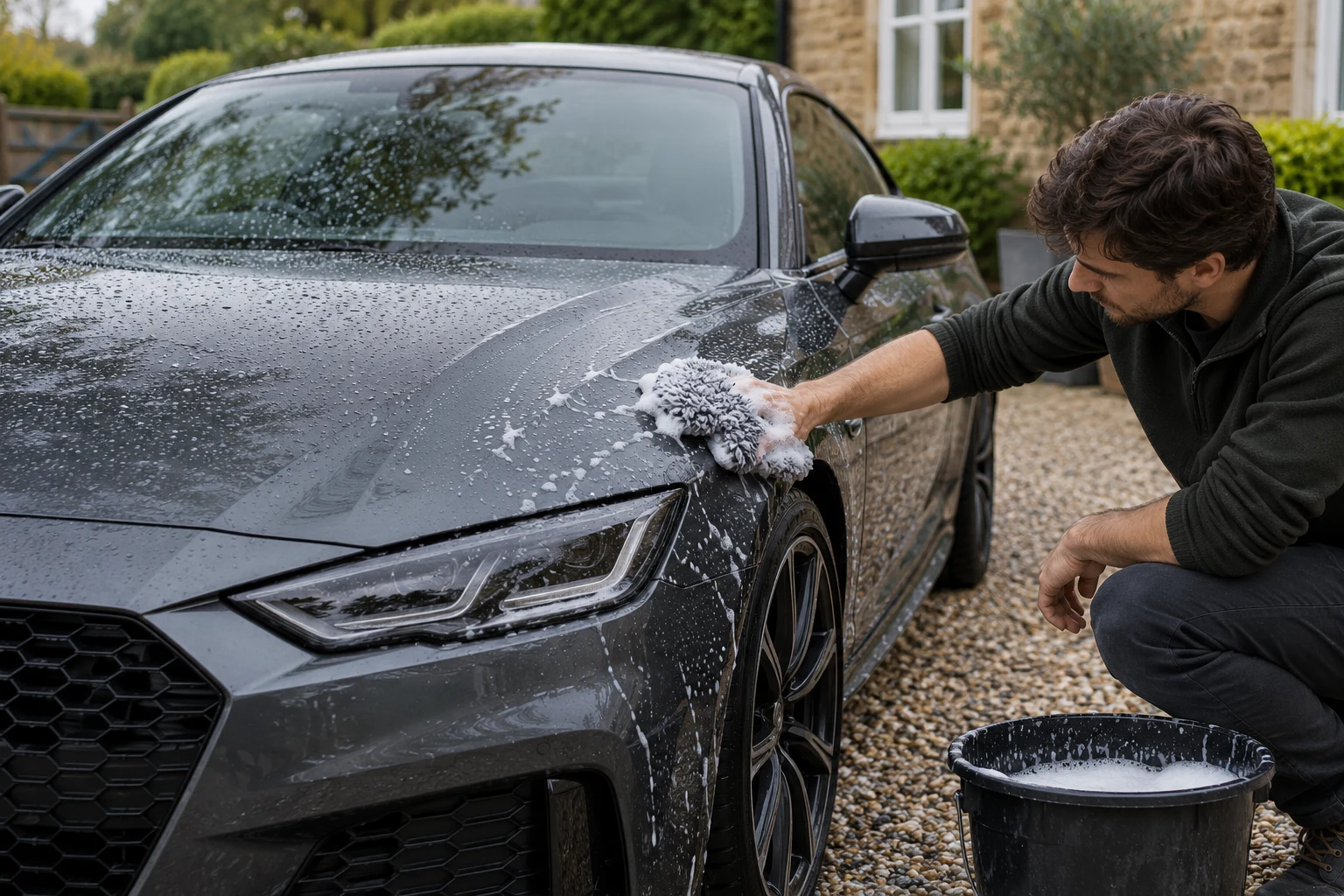
Work cleaner upper sections first, with light passes and frequent mitt cleaning. Keep the tool wet with the permitted solution. Do not press fingertips into a small stubborn mark or scrub a spot until it appears to match the surrounding panel.
Rinse completed areas before the solution dries. Follow the vehicle’s pressure-washer restrictions if using one; the general equipment guide does not supersede finish-specific care. A hose is useful where more controlled rinsing makes the job simpler.
After the rinse, inspect remaining marks before deciding what they are. A droplet outline, bird-residue stain and shiny rubbed patch do not all need the same next step. More contact is a decision, not the inevitable final stage of a wash.
Dry gently and assess the whole panel
Use a clean soft towel with light controlled contact. Avoid repeated buffing to bring up a shine. Support the towel so that its edge cannot touch the ground, then transfer grit back onto the paint. Change towels if the first becomes too wet or picks up contamination.
For an 80 × 60cm twisted-loop towel
Autoglym Ultra-Soft Drying Towel
A dedicated twisted-loop drying towel, listed at 80 × 60cm. Its shape offers a broad drying area without moving up to an especially long towel.
- 80 × 60cm
- Twisted-loop construction
- Dedicated car-drying towel
Wash separately before use and follow the care label. Current manufacturer directions allow machine washing up to 40°C without softener and recommend tumble drying; check the supplied drying setting.
Let the surface become fully dry before judging its appearance. A damp patch naturally reflects differently, and low winter light can make water trails stand out. Look at the panel from several normal viewing angles before deciding that it is permanently marked.
If you see a persistent glossy patch, stop. Do not try to blend it by rubbing the surrounding paint, applying a solvent or covering the whole panel with gloss protection. Ask a finish specialist to distinguish residue from changed texture. That prevents a small uncertain mark becoming a much larger repair question.
Remove contamination promptly, with the correct permission
Bird deposits, insects and tree residue should not be left indefinitely, but scraping them off dry adds avoidable friction. Use the mild permitted method first and seek product-specific guidance if the material remains. The site’s ordinary-paint contamination guides are useful for identifying the problem, but their chemical choices do not automatically transfer to matt paint.
Avoid treating a staining problem as a polishing problem. A chemical mark may remain after the contaminant has gone. Equally, a film of residue can look like a change in paint. Explain the original deposit, products used and whether anything dried on the panel when asking for help.
Keep routine maintenance simple
Choose a storage place that protects clean tools from dust and overspray. Label separate cloths by task, and wash them without leaving dressing or wax in the fibres. Someone borrowing the kit should be able to see which products belong to this finish.
After each wash, note only the observations that affect the next job: an edge needing inspection, a persistent stain or a towel needing replacement. You do not need a complicated calendar or a new product at every session. Consistent gentle care, a suitable shampoo and clear limits are more useful than chasing a showroom-gloss result that this paint was never intended to have.
Common questions
Can I use a normal car shampoo on matt paint?
Use the vehicle maker’s requirements and the exact shampoo’s suitability. A pure shampoo without wax or gloss enhancers may fit, but pH-neutral wording alone does not establish approval for every matt paint.
Can I polish a scratch out of satin paint?
Do not use a normal abrasive polishing method. It can change the sheen and leave a more visible patch. Ask a specialist who works with that exact finish to assess the damage.
Does matt paint need waxing?
Do not apply ordinary gloss wax. Some vehicles permit a specific matt-care protective product, but only use one approved for your finish. A product labelled matt does not override the vehicle instructions.
Is a matt wrap cleaned like matt paint?
The low-sheen appearance is similar, but the material and edge risks differ. Follow the film maker and installer’s care instructions and use the separate wrap guide.
Why does one area look shinier after cleaning?
It may be residue, a still-wet area or a permanent change from friction or an unsuitable product. Inspect when dry and stop rubbing. Seek finish-specific advice before trying a remover or polish.
Sources and product instructions
Follow the label and care instructions for the exact version and surface you own.