
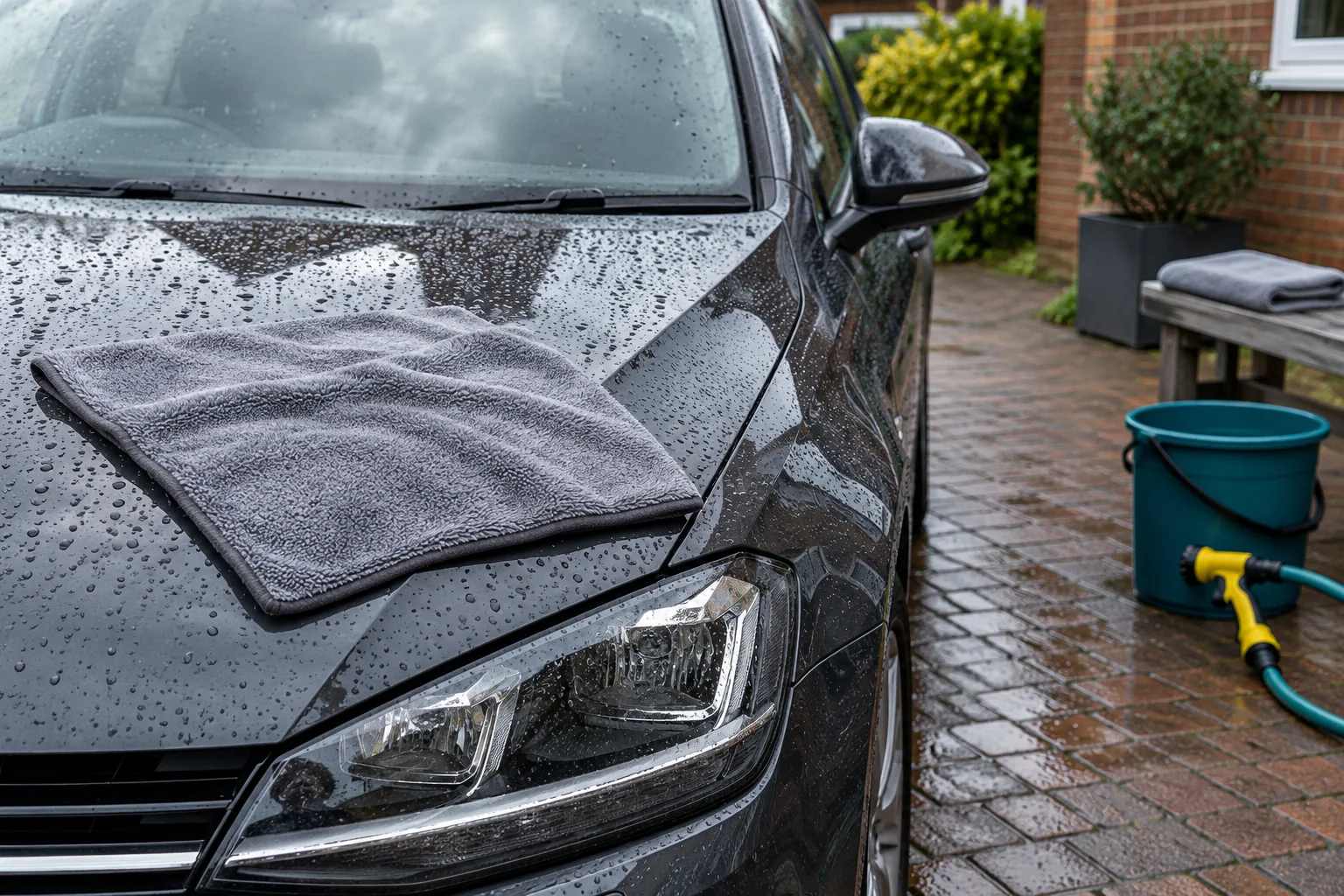
Dry a car only after loose dirt and shampoo have been rinsed away. Use a clean towel intended for car drying, support it clear of the ground and collect water with a light touch. Change to a clean, dry working section instead of pressing harder when the towel becomes wet.
That is the standard rinse-and-dry sequence. The shampoo versus wash-and-wax comparison helps separate a wash-stage finishing film from a later wet-wax application. If you are using a wet-applied wax or another product with its own drying method, follow that complete instruction instead. A drying aid is a particular chemical step, not a reason to improvise with any spray on the shelf.
Prepare the drying kit before you wash
Have the towel ready on a clean raised surface so you can start promptly after rinsing. Inspect it for grit, hardened residue, damaged edging or a forgotten label that could contact the finish. A towel previously used for wheels, dressing or polish removal should not automatically return to bodywork drying.
Choose a size you can manage with both hands. A large towel gives more available area, but an unsupported corner can reach the driveway when you work around a lower door. A second smaller clean towel is useful for edges and later drips.
1. Finish the rinse and assess the surface
Check that shampoo has been removed from accessible bodywork, trim edges and glass. If you can still see dirt, do not try to remove it during drying. Return to the appropriate washing step and rinse again.
A controlled final rinse may reduce the amount of water left to collect, but it does not guarantee an entirely dry or spot-free car. Keep the water method appropriate to the surface and equipment. A concentrated pressure jet is not a shortcut for forcing water out of delicate recesses.
Work out of strong sun where possible. If water is evaporating before you reach it, rinse and dry smaller areas or change the conditions. A giant towel cannot compensate for leaving rinse water to bake on hot paint.
2. Collect water without turning drying into polishing
Lay or guide the clean towel onto a rinsed area, using the handling method its maker recommends. Keep contact light. Fold or reposition it so you can work with a clean section rather than dragging the same wet face over the entire car.
Gtechniq’s MF2 is one manageable starting option with a published 60 × 90cm size and 450gsm construction. It is a drying textile, not a way to rub away marks left after washing.
For drying clean bodywork
Gtechniq MF2 Drying Towel
A 60 × 90cm, 450gsm microfibre towel intended for car drying. Its larger area gives you a dedicated drying tool instead of relying on a small polish-buffing cloth.
- 60 × 90cm
- 450gsm microfibre
- Dedicated drying towel
Use a light touch on clean bodywork after completing the chosen wash method. Inspect for grit, wash after use and follow the textile’s care label. A drying towel cannot make a dirty surface safe to wipe.
Start with accessible upper areas, then work around the car while keeping the trailing edge supported. The exact route may depend on the towel instructions and vehicle shape: Autoglym’s Ultra-Soft directions, for example, start with windows and other glass before paintwork. Do not substitute a blanket sequence for the product method you are following.
3. Support the towel around lower panels
Keep the fabric clear of tyres, exhaust areas and paving. Near the bottom of a panel, supporting the upper part of a towel with one hand while controlling the lower working area with the other can stop the unused edge dropping down.
The selected Autoglym towel has an 80 × 60cm format and published twisted-loop construction. Its care method is part of the choice, particularly if you rely on a washing machine or tumble dryer between washes.
For an 80 × 60cm twisted-loop towel
Autoglym Ultra-Soft Drying Towel
A dedicated twisted-loop drying towel, listed at 80 × 60cm. Its shape offers a broad drying area without moving up to an especially long towel.
- 80 × 60cm
- Twisted-loop construction
- Dedicated car-drying towel
Wash separately before use and follow the care label. Current manufacturer directions allow machine washing up to 40°C without softener and recommend tumble drying; check the supplied drying setting.
Do not use a bodywork towel as a convenient wheel-drying cloth and then return it to a door. Keep separate textiles for dirty or chemically different jobs. If a towel falls, stop using it on paint until it has been cleaned and checked.
4. Deal with water from mirrors, handles and trim
Water can emerge after the main surface looks dry. Keep a clean finishing cloth ready and revisit accessible drip points without forcing tools into openings. Be careful when opening a door or boot: trapped water may run onto the area you have just finished.
A later drip does not mean the shampoo failed or the towel is defective. Notice where it starts. A streak repeatedly appearing below a mirror is a different problem from pale rings across a bonnet. The water-spot troubleshooting page helps separate residue and spotting from that delayed release.
When the towel leaves streaks or stops collecting water
| What you notice | Possible issue to investigate | Next step |
|---|---|---|
| Water is smeared rather than collected | Towel is saturated or has residues | Change to a clean dry towel; review its wash method |
| The same line returns below trim | Fresh water is leaving a recess | Catch the later drip with a separate clean cloth |
| Pale circles remain after the water is gone | Mineral residue or another established mark | Use a cleaning diagnosis, not more drying pressure |
| Lint appears on glass or paint | Textile condition, preparation or laundering | Stop and inspect; follow the towel’s own care label |
Drying after a wet-applied finish
A product such as Rapid Aqua Wax is intended to be applied while the washed car is wet and spread or buffed with its specified cloths. That is a different method from adding a dry-panel spray coating after towel drying. Check the bottle, surface exclusions and cloth requirements before deciding which sequence you are doing.
You do not have to buy a drying chemical to carry out a normal wash. A suitable shampoo, full rinse and clean drying towel can be a complete wash-and-dry job. Add a compatible finishing product only when it serves the routine you want.
Clean and store the towel for next time
Use the manufacturer’s care label for temperature, detergent and drying. Avoid carrying a recommendation from one brand to another. Store the towel fully dry and away from wheel equipment, open chemical bottles and dusty shelf surfaces.
If you need a different size or textile, compare drying towels by documented construction and handling. A new towel should solve an actual gap; cleaning and supporting a serviceable towel may be the useful improvement.
Plan the winter wash around the finish
Cold, damp conditions can make the whole wash harder to complete. Use the winter routine before starting, and postpone water-based washing where runoff could freeze.
Reset the drying kit
After use, follow how to wash a car-drying towel and store it only when completely dry. If you add protection after drying, compare spray-sealant methods before choosing a wet or dry application.
Common questions
Can I let the car air dry?
Leaving rinse water to evaporate can leave mineral marks, particularly with hard water. For an ordinary wash, plan a controlled drying step rather than assuming moving air will carry all water away cleanly. Keep to any special instructions for the finish or wet-applied product.
Should I pat or pull a drying towel?
Follow the textile’s intended method and keep pressure light on a fully rinsed surface. Gtechniq specifies a light touch for its MF2. Reposition the towel to clean sections and support the edges; do not treat a drying pass as abrasive polishing.
Can I dry wheels with the same towel?
Keep wheel-drying textiles separate from bodywork towels. Wheels and their chemicals can introduce different contamination. Once a cloth has been used there, do not return it to painted panels during the same wash.
Do I need a drying aid?
Not necessarily. A clean dedicated towel is a normal drying tool after shampooing and rinsing. A compatible drying aid or wet-applied wax is an optional product with its own method. Do not use any available spray as though those methods are interchangeable.
Why are marks still visible after drying?
They may be shampoo residue, mineral deposits, earlier surface damage or fresh drips from trim. More rubbing with the drying towel will not reliably solve those different causes. Identify the pattern and use a suitable cleaning or professional assessment route if marks persist.
Sources and product instructions
Follow the label and care instructions for the exact version and surface you own.