
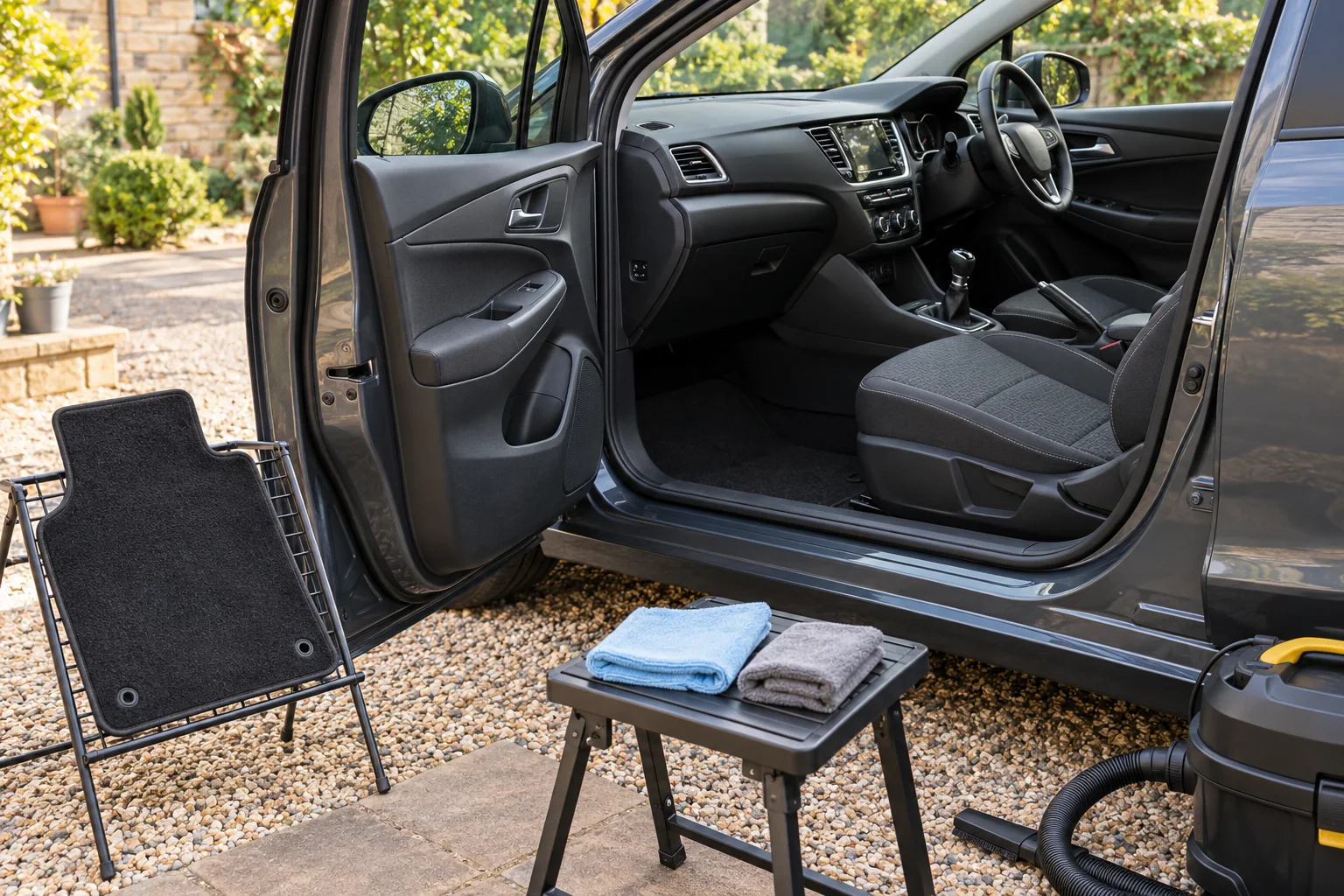
Choose a routine that can be finished
A useful interior clean does not require every seat to be shampooed each time. For an ordinary family car, clearing loose items, collecting dry dirt and wiping the appropriate surfaces may solve most of the immediate job. Leave extraction, difficult stains and specialist coverings for a separate planned clean.
Start with the condition of the cabin. If there is liquid in a footwell, a soaked seat or a persistent damp smell, investigate that issue before treating it as normal dust. If a mark appears to be coating damage or worn fabric, another cleaning pass may not help.
Work while parked safely, with enough room to open doors and without trailing equipment into a road or shared path. Keep children and pets away from chemicals, small objects and powered tools during the clean.
Put a small kit within reach
For permitted trim details that the vacuum nozzle cannot reach, choose an interior detailing brush by head size and material suitability. A brush loosens debris; collect it with the suitable vacuum rather than moving it into another gap.
You need a suitable vacuum and attachments, clean interior cloths, a compatible cleaner where required, and separate glass textiles. A light-duty detailing brush is optional if it improves access on a permitted surface. Use the vehicle care instructions to decide what actually needs a chemical.
Choose a drying opportunity before wetting anything. It is better to complete a dry clean and postpone seat work than to leave damp cushions that must be used immediately. Keep exterior wax cloths and wheel tools out of this kit.
1. Clear the cabin and check around controls
Remove rubbish, bottles, toys and other loose belongings. Check the driver's footwell for objects that could interfere with pedals. Do not reach blindly under a seat where there may be sharp items; inspect accessible spaces with suitable light.
Take out removable mats according to the vehicle instructions, noting their fixings. If a child restraint needs moving, follow its own manual for removal and refitting. The cover and harness do not inherit the vehicle-seat cleaning method.
Separate dry and wet jobs now. A dusty boot can be vacuumed; a wet mat needs appropriate cleaning and drying before return. Do not feed wet debris into a dry-only vacuum.
2. Loosen permitted dust, then collect it
On suitable textured trim and accessible details, a clean ultra-soft brush can help move light dust towards the vacuum. Use controlled movements and keep handles and nozzles off the finish. Follow a cloth-only instruction where the vehicle specifies one, especially on displays.
The Detail Factory set supplies two sizes for this kind of light detailing. It is optional equipment, not a reason to brush every surface. Keep it separate from brushes used on wheels or exterior chemicals.
For light dust and small interior details
Detail Factory Ultra-Soft Detailing Brush Set
Two grey-handled synthetic detailing brushes in different sizes. Their soft bristles and metal-free construction suit controlled light-duty work around compatible interior details.
- Two brush sizes
- Synthetic bristles
- Metal-free construction
Follow vehicle care before brushing delicate trim or displays. Grit and hard-part contact can still mark a surface; this is not a carpet-scrubbing set or a scratch-free guarantee.
Work around accessible upper details before the final footwell pass. Do not push brushes into vents or switch openings, and avoid flicking collected dust across a freshly cleaned seat.
3. Vacuum seats, carpets and the boot
Use the correct attachment for the material and gap. Clear dry grit before damp wiping so it does not become a slurry. Keep equipment clear of seat wiring and withdraw it before moving a seat. For embedded fur on compatible carpet, use the pet-hair sequence before the final vacuum pass.
A socket-powered option is the BLACK+DECKER PV1200AV-XJ. Check the 12V socket requirements and route the cable sensibly; it is not a cordless model. If your existing suitable vacuum already reaches these areas, another machine is unnecessary.
For cleaning from a suitable 12V socket
BLACK+DECKER 12V Pivot Car Vacuum
A corded car vacuum with a pivoting nose, built-in extendable crevice tool and upholstery brush. The five-metre cable provides reach without charging a separate vacuum battery.
- 12V car socket
- 5m power cable
- Pivoting nozzle
Check the vehicle socket rating and power-management instructions. This 12V cable-powered model is not cordless despite wording in the Amazon title. Choose it for dry debris, not seat extraction.
Empty the cup or bag as directed and check airflow if pickup weakens. Do not keep pushing a blocked nozzle through a dirty carpet in the hope that more passes will replace maintenance.
4. Clean each material only as needed
Use the least involved permitted method for the condition. A lightly moistened cloth may be enough where the vehicle specifies it. A surface-compatible cleaner is useful for appropriate contact grime, but a general interior label does not approve every display, steering control or seat covering.
Gtechniq I2 Tri-Clean offers a cloth-applied option for permitted interior materials. Put the cleaner on the specified cloth, control the moisture and remove residue as directed. Do not spray it into switches or openings.
For a controlled cloth-based interior clean
Gtechniq I2 Tri-Clean 500ml
A ready-to-use interior cleaner for compatible fabrics, plastics and leather. The UK directions apply the product to a damp microfibre cloth, then remove residue with a clean cloth.
- 500ml spray
- Cloth application
- Separate from fabric protection
Vehicle material instructions take priority. Test discreetly, keep liquid out of openings and do not treat broad material claims as permission to clean every screen or child restraint.
Keep more involved upholstery jobs separate:
- For woven seats, follow fabric-seat cleaning, including testing and drying.
- For leather and leather substitutes, identify the finish using leather-seat care.
- For a new cleaner, compare ready-to-use and concentrate choices.
Do not apply an extra dressing just to make a panel visibly shiny. A clean appropriate finish is a valid outcome. Keep products that could leave slippery residue away from pedals and control surfaces.
5. Finish the inside glass
Once dusty and adjacent damp work is complete, clean the compatible interior glass. Use dedicated textiles, follow the cleaner's light application and change cloth faces before they become loaded. A separate clean finishing cloth helps avoid redistributing the dirt you have removed.
Fast Glass is a routine option for compatible glass. Keep direct spray away from electronics and check aftermarket tint or coating instructions separately. See the inside-glass guide if haze or streaks remain.
For a separate glass-cleaning job
Autoglym Fast Glass 500ml
A 500ml cleaner for interior and exterior glass, without abrasives, waxes or silicones. Useful when you need a glass cleaner but already own the rest of your wash kit.
- 500ml spray
- Interior and exterior glass
- No abrasives, waxes or silicones
Use dedicated clean cloths. Check tint-film and vehicle-screen guidance; apply to the cloth for compatible displays, never spray directly onto electronics.
6. Refit, dry and check before driving
Return mats only when suitably dry and fit the correct mat to its fixings. Check pedal clearance and do not stack a second mat over the driver's mat. Refit any removed restraint according to its manual, and check that seat belts and seat mechanisms are clear.
Collect bottles, brushes and vacuum attachments before closing the car. Assess visibility and allow treated areas to dry properly. Do not leave the cabin unsecured to achieve ventilation, or assume seat heating is a permitted drying method.
Adjust the routine to the mess
For a quick reset, prioritise loose objects, dry footwell dirt and visibility. For pet travel, add the carpet-hair step. In winter, pay extra attention to wet mats and interior haze, using the winter routine for the exterior and drying decisions.
Use the actual condition to decide when to repeat each task. This keeps cleaning manageable and helps you recognise the point where a stain, leak or damaged covering needs a different kind of help.
Follow the material-specific methods
Use separate guides for fabric mats, rubber mats, dashboard and door trim and infotainment screens. Suede-like and synthetic-leather upholstery also need their own surface checks.
Common questions
How often should I clean the interior?
Use the condition and use of the car rather than a universal schedule. Remove spills and loose hazards promptly, then vacuum or wipe where needed. Frequent family or pet travel may need smaller, more regular sessions.
Do I need an interior dressing?
Not for every routine. Clean the permitted surface and assess it first. A dressing is a separate material-specific decision and should not leave steering, pedals or other control surfaces slippery.
Should I remove the seats to clean underneath?
That is outside this ordinary routine. Seats may have electrical connectors, restraint components and specific fixing requirements. Clean accessible areas without disturbing them, or ask a suitable professional.
Can I use one cloth for everything?
Keep glass finishing cloths separate from other interior textiles, and keep all interior cloths out of wheel and tyre work. Change to clean faces or spare cloths rather than spreading residue from one surface to another.
What if I only have time for a short clean?
Prioritise visibility, loose objects near controls, wet spills and dry debris in the areas you use. Leave deep seat cleaning until you can follow the full process and allow proper drying.
Sources and product instructions
Follow the label and care instructions for the exact version and surface you own.
- BLACK+DECKER PV1200AV-XJ: 12V supply, cable and pivoting nozzle
- Gtechniq I2 Tri-Clean: UK material and cloth application guidance
- Detail Factory Ultra-Soft Synthetic Detailing Brush Set
- Autoglym Fast Glass: application and screen precautions
- Volvo interior-care example: material-specific instructions and controls