
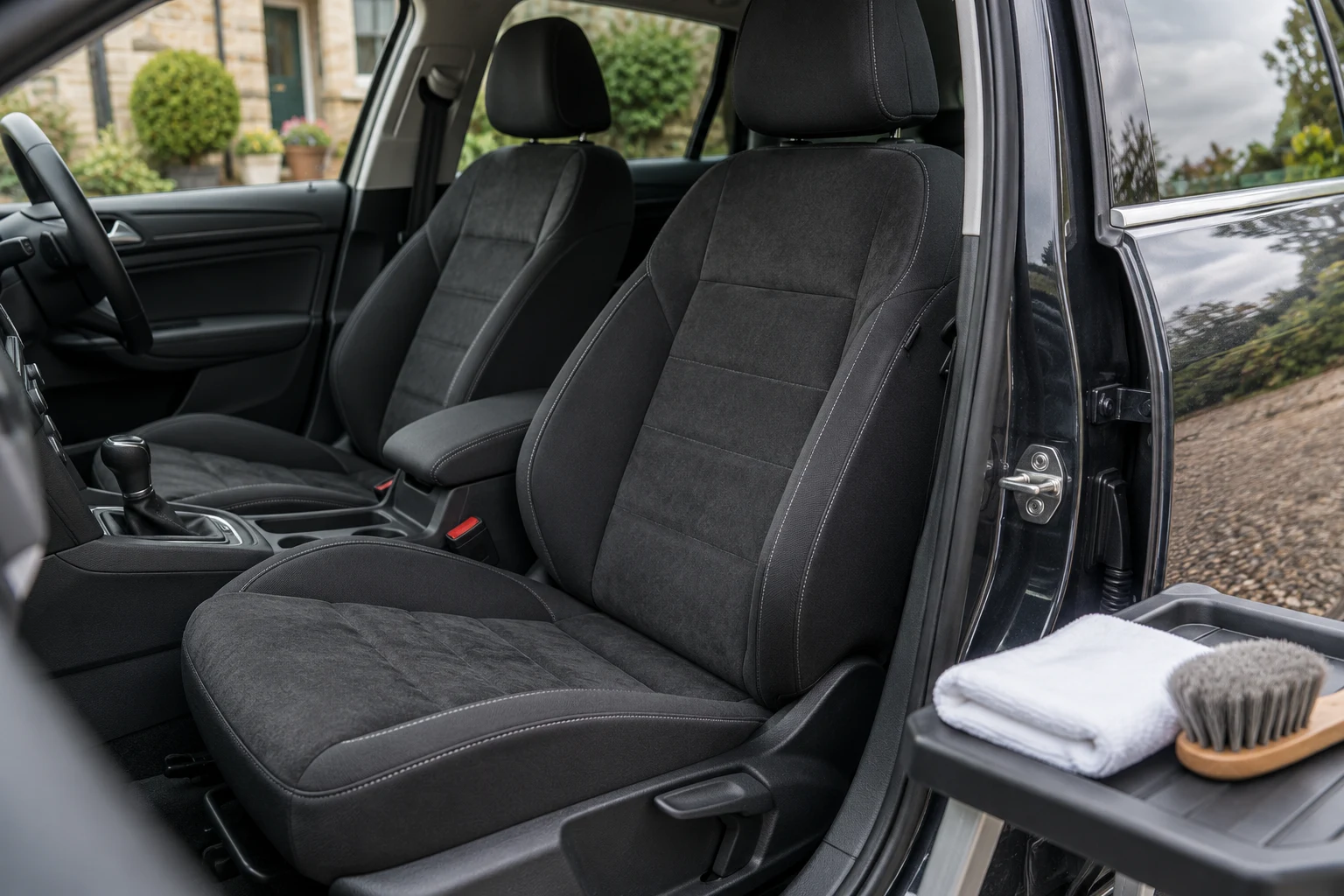
Identify the material before treating the nap
“Suede-like” describes an appearance, not a single upholstery material. A soft short-pile insert might be Alcantara, another synthetic suede, a branded textile or actual suede leather. Check the vehicle’s trim specification and care instructions before choosing a cleaner. A method approved for one should not be transferred to another because they feel similar.
The seat assembly matters too. Seams, perforations, heating, ventilation, sensors and adjacent materials can restrict moisture even when the textile itself accepts a particular cleaner. Do not remove fitted car-seat covers or disconnect equipment to follow a general fabric-washing instruction.
For routine dust and light marks, begin with the material’s permitted gentle maintenance. A matted or shiny patch may be wear or altered nap rather than a deposit requiring stronger chemistry. If the covering is damaged, repeatedly wet, mouldy or persistently odorous, get appropriate advice rather than treating it as a small surface stain.
Start with loose dust and a clean working area
Park and remove belongings so they cannot catch or rub the covering while you clean. Keep hooks, keys and abrasive clothing fastenings away from the nap. Work with clean interior tools; a brush that has cleaned a floor mat is not ready for a delicate insert simply because the bristles look tidy.
For identified Alcantara, the material maker describes dust removal using a soft brush, dry cloth or vacuum, followed by a slightly moistened white cotton cloth for routine care. Follow the vehicle’s narrower directions and use attachments permitted for the covering. Do not drag a hard nozzle corner over the surface or force it into seams.
A white cloth helps make unexpected colour transfer visible. Avoid printed materials that can release ink, and do not assume a coloured general-purpose cloth has the same role. Keep the amount of moisture controlled rather than soaking the fabric to see whether it darkens evenly.
Distinguish a spill, surface dirt and wear
If a spill has just occurred, follow the material’s stain guidance promptly and avoid spreading it. Identify the substance if possible. A watery drink, oily cosmetic and ingrained dust may need different responses; one universal rubbing recipe cannot account for them all.
Let a suitable test area dry before deciding the texture and colour are unchanged. Damp nap can look darker, and the direction of the pile can change how light falls on it. Compare in consistent light instead of judging a wet treated patch against a dry neighbouring panel.
| Observation | Question to resolve | Useful next step |
|---|---|---|
| Loose dust and crumbs | Is dry maintenance enough? | Use the approved soft dusting/vacuum method |
| A local spill or mark | What is the substance and exact material? | Follow its stain-specific instructions |
| Shiny or flattened high-contact area | Is this soil or wear? | Gentle permitted care, then specialist assessment if unchanged |
| Colour transfer or changed texture | Is the method affecting the finish? | Stop the treatment and obtain material advice |
Choose one permitted cleaning route
For a straightforward maintenance wipe, you may not need a dedicated chemical. If a cleaner is required, check both its material claim and the vehicle instructions. Test on a discreet part of the same covering and complete the required dry assessment. A successful plastic test does not establish suitability for a suede-like textile.
SONAX’s 400ml foam method
SONAX XTREME Upholstery+Alcantara Cleaner is a dedicated textile/Alcantara option where the vehicle allows its method. The selected product is the 400ml aerosol, separate from the 500ml propellant-free version. Its instructions call for vacuuming, a colourfastness test, controlled damp preparation and removal of the released dirt with a rinsed damp cloth.
For a permitted foam hand-cleaning method on Alcantara or textiles
SONAX XTREME Upholstery+Alcantara Cleaner 400ml
The 400ml aerosol formula has a vacuum-first, colourfastness-test and damp-cloth method. SONAX describes treating a complete defined surface, a five-to-ten-minute working interval and removal with a rinsed damp cloth.
- 400ml aerosol
- Item 02063000
- Hand-cleaning foam, not tank detergent
Confirm the exact vehicle material and follow its narrower instructions. This is not the 500ml propellant-free variant, an extraction-tank detergent or permission to soak a seat. Use gentle tools and stop if colour or nap changes.
The maker describes treating a complete defined surface to avoid visible differences and gives a five-to-ten-minute working interval. Apply that only within the vehicle’s permitted moisture limits. A defined seat insert is not an instruction to flood the entire seat assembly, and a complete-surface method should not be improvised where the covering’s instructions conflict.
Choose the gentle cloth route where required rather than assuming a firm upholstery brush is suitable. The tool that works on hard-wearing mat carpet may disturb the nap on a delicate seat. Follow the exact cleaner and material instructions together, including the finishing and drying stages.
Gtechniq’s cloth-applied alternative
Gtechniq I2 Tri-Clean’s current UK material guidance includes synthetic suede. Its application method puts the product on a damp suitable microfibre cloth, followed by wiping with a clean cloth. It is an alternative where approved, not a second product to layer over the SONAX foam.
For a controlled cloth-based interior clean
Gtechniq I2 Tri-Clean 500ml
A ready-to-use interior cleaner for compatible fabrics, plastics and leather. The UK directions apply the product to a damp microfibre cloth, then remove residue with a clean cloth.
- 500ml spray
- Cloth application
- Separate from fabric protection
Vehicle material instructions take priority. Test discreetly, keep liquid out of openings and do not treat broad material claims as permission to clean every screen or child restraint.
The material maker’s cloth requirement still takes priority. If your vehicle or covering specifies a different method, choose that route or ask for clarification before adding a cleaner. Broad “interior” wording is not enough to resolve an unknown branded fabric.
Work gently and remove the loosened dirt
Keep the clean working face in contact with the surface without scrubbing aggressively at one dark point. Change cloth faces as they collect soil. Repeatedly moving a dirty cloth across the insert can spread residue and make the original stain harder to identify.
Use the chosen method’s residue-removal stage and control any moisture near seams and adjoining leather-like or plastic panels. Do not combine household detergents, alcohol, leather balm and textile spray in an attempt to remove the last shadow. Stop if colour, feel or nap begins to change.
If the mark does not improve after the permitted process, let the area dry and reassess. A remaining patch can be wear, dye transfer or another problem outside routine surface cleaning. More pressure is not evidence-based escalation.
Dry and assess the nap without heat shortcuts
Arrange secure, weather-appropriate ventilation and leave the seat unused until properly dry. Do not use an improvised heater, hairdryer or seat heating as a universal drying method. A dry-looking top does not prove that moisture below the covering has gone.
For identified Alcantara, follow the maker’s gentle after-drying nap-care instructions where the vehicle permits them. Do not brush aggressively to force every fibre into the same appearance. Natural light and pile direction can produce a visible shade change without it being residual dirt.
Steam and extraction are separate decisions. Alcantara’s general material information includes specialised limits, but it does not approve every installed car seat for a machine method. The seat-extraction guide starts with covering and assembly approval; it is not the default next step for a suede-like insert.
Keep routine care lighter
Use the interior routine to remove loose debris before it accumulates. Keep clean soft cloths identifiable and store them away from mats, wax and dressing. Prompt permitted care and a clear material identity are more useful than buying several increasingly strong cleaners for an unknown soft-touch fabric.
Common questions
Is every suede-like car seat made from Alcantara?
No. Similar-looking materials include other synthetic textiles and actual suede leather. Check the vehicle specification or upholstery maker before using Alcantara-specific instructions.
Can I use leather balm on a suede-like insert?
Do not assume it is appropriate. A textile nap is a different surface from finished smooth leather, and balm or dressing can change its appearance. Follow the exact material’s care instructions.
Should I brush the seat while it is wet?
Use only the agitation and finishing steps permitted by the material and selected cleaner. Alcantara’s routine guidance is gentle; a brush suitable for carpet mats may be too aggressive for a delicate insert.
Can I put SONAX Alcantara foam in an extractor?
No extraction-tank use is established for the selected hand-cleaning foam. Use it by its own application and cloth-removal directions, and use a separately approved machine detergent if extraction is permitted.
Can I steam-clean or extract Alcantara car seats?
Do not make either the default. The installed covering and seat assembly must both permit the exact method. General material guidance does not override vehicle restrictions on moisture, heat, sensors or seams.
Sources and product instructions
Follow the label and care instructions for the exact version and surface you own.