
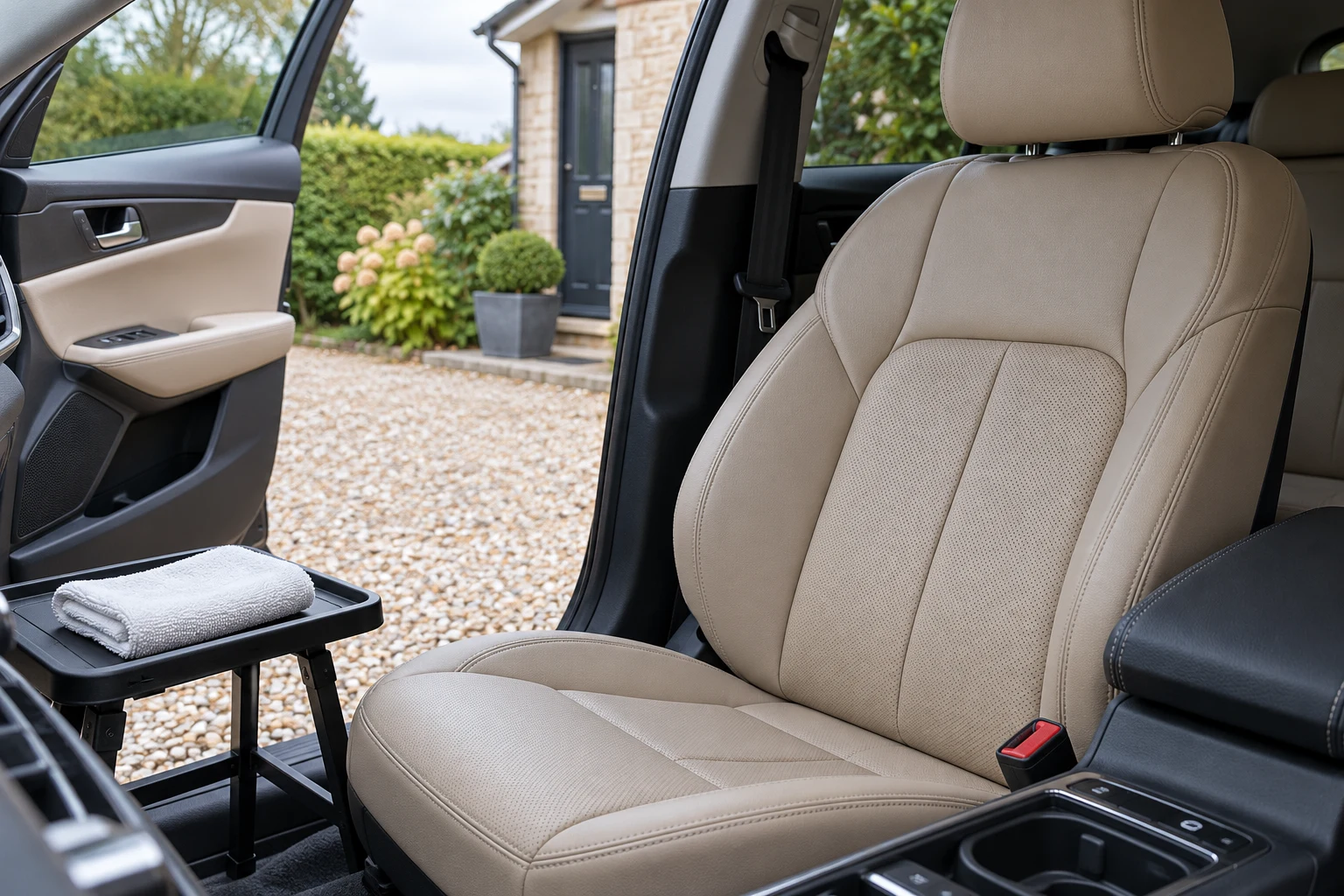
Identify the covering rather than treating it as natural leather
Synthetic leather is an umbrella term for several manufactured coverings. A seat described as vegan leather, leatherette or a branded leather alternative may have a coating and backing with specific care requirements. Start with the vehicle’s material description and cleaning instructions rather than relying on the look of the grain.
The useful aim is to remove dirt and cleaning residue while keeping the intended feel and finish. A glossy surface is not proof that it is nourished, and a balm sold for natural leather is not automatically needed on a synthetic covering. Do not borrow claims about replacing natural oils to justify oiling a coated artificial material.
Check the seat assembly as well as the surface. Perforations, seams, heating, ventilation, occupancy sensors and airbags can restrict moisture and tools. Material compatibility on a flat sample does not approve soaking the installed seat, opening seams or applying cleaner to its electrical components.
Start with the vehicle’s routine method
Many ordinary marks are best approached with gentle approved maintenance before a stronger product. Tesla’s Model Y guidance for its own vegan leather is a specific example of why the vehicle instructions matter: it gives material care and warns against harsh chemicals. That does not mean the same Tesla method applies to every artificial-leather seat.
Remove belongings and loose debris first. Vacuum with an attachment suitable for the covering, keeping hard edges from rubbing over the face. Do not feed a tool blindly into the seat structure or disconnect wiring to improve access. If the seat needs moving, clear hands and tools before operating it.
Keep a soft clean cloth available for the permitted routine wipe. Use controlled moisture where allowed, and avoid pushing liquid into stitched or perforated areas. A simple permitted water-based method can be sufficient; it should not be treated as incomplete because no protective dressing has been added.
Choose a cleaner only where its use is permitted
Match the product to the covering, vehicle and complete removal method. Test on a discreet part of the same surface and let the test dry before judging colour, tackiness or sheen. Stop if the cloth picks up unexpected colour or the finish changes.
A product’s “leather” name is not enough by itself. Some cleaners explicitly cover automotive faux leather; others are intended for particular natural-leather finishes. Likewise, a broad vegan-leather claim does not override the seat maker’s chemical restrictions.
Autoglym Leather Cleaner for permitted automotive faux leather
Autoglym’s current product description explicitly includes automotive faux leather. Its method applies the cleaner sparingly to a cloth, followed by the prescribed damp removal and drying. Keep the exclusion of unsealed, suede and highly porous surfaces in mind, and confirm the exact covering allows the method.
For compatible automotive leather
Autoglym Leather Cleaner 500ml
A pH-neutral, silicone-free cleaner for compatible automotive leather and faux leather. It is a cleaning step with a natural matt finish, rather than a shiny dashboard dressing.
- 500ml spray
- pH-neutral formulation
- Automotive leather cleaner
Not for unsealed leather, suede or highly porous materials. Test an inconspicuous area, apply sparingly to a cloth and avoid flooding perforations; follow the vehicle’s instructions.
The maker’s recommendation of a leather balm in its broader leather-care sequence should not be transferred automatically to your synthetic upholstery. Follow the vehicle’s approved aftercare for that material. Cleaning and conditioning are different purchases, and a cleaner being suitable does not establish that every companion product is needed.
Gtechniq I2 as a cloth-applied alternative
Gtechniq’s current UK I2 material guidance includes vegan leather. Its directions use a damp suitable cloth for application and a clean cloth afterwards. Choose it only where the vehicle permits it and use it as an alternative to another cleaner, not a second stage layered over the same mark.
For a controlled cloth-based interior clean
Gtechniq I2 Tri-Clean 500ml
A ready-to-use interior cleaner for compatible fabrics, plastics and leather. The UK directions apply the product to a damp microfibre cloth, then remove residue with a clean cloth.
- 500ml spray
- Cloth application
- Separate from fabric protection
Vehicle material instructions take priority. Test discreetly, keep liquid out of openings and do not treat broad material claims as permission to clean every screen or child restraint.
A dedicated interior cloth helps keep wax, tyre-care chemicals and dirty mat residue away from the seats. Autoglym Hi-Tech Interior Microfibre is one option where the covering permits that cloth type. Inspect it before each use, and reserve a separate clean face or cloth for residue removal.
For a dedicated soft cloth in the interior kit
Autoglym Hi-Tech Interior Microfibre
A single 40 × 40cm interior microfibre cloth for dust removal and permitted interior-cleaning work. Fold to clean faces and keep it separate from wheels, exterior dressing and dirty mat tools.
- One cloth
- 40 × 40cm
- HTIM interior microfibre
Use only where the particular surface permits this type of cloth. Display care can require a different specified cloth. Wash as the maker directs without fabric softener and inspect before each use.
Clean a manageable panel with controlled moisture
Work on one defined area so the amount of liquid and removal stage remain easy to control. Apply by the product’s specified cloth route rather than spraying the seat directly. Keep the cloth damp only to the degree allowed by the method, without dripping into seams or openings.
Use gentle passes and turn to a clean face as dirt transfers. Do not grind an isolated stain until its sheen matches the surrounding material. A worn or polished patch can be a change to the finish rather than a deposit you can wipe away.
Complete the prescribed removal step. A dirty cloth can leave loosened soil behind, while a heavy film can feel sticky once dry. Do not rinse by flooding the seat to compensate for an uncertain amount of cleaner. Use the approved controlled method or obtain advice if too much product has been applied.
Deal with stains without attacking the coating
| What you see | Useful check | Avoid |
|---|---|---|
| Ordinary surface dirt | Permitted gentle cleaning and residue removal | Aggressive scrubbing |
| Dye transfer from clothing | Vehicle/material stain guidance | Unapproved solvent or abrasive eraser |
| Sticky or altered finish | Residue versus coating deterioration | Repeated stronger cleaner applications |
| Cracks, peeling or abrasion | Upholstery assessment | Oil, heat or dressing presented as a repair |
Denim transfer, cosmetics and ink can be difficult, particularly on a light covering. Identify the substance and ask for the relevant stain advice if the permitted routine does not work. Household alcohol, bleach and abrasive pads should not become universal recipes for artificial leather.
If the coating is peeling or cracking, do not apply heat, adhesive or colouring products as part of cleaning. An upholstery specialist can assess repair or replacement options. A care bottle does not prove that a failed coating has been restored.
Finish dry and preserve the intended feel
Allow the seat to dry as the vehicle and cleaner direct before use. Arrange ventilation securely and keep rain out. Seat heating and a hairdryer are not universal drying tools; do not use heat to hurry an uncertain damp patch.
Inspect the dry result in consistent light. Check the surface for residue without adding a gloss dressing to hide an uneven appearance. Keep products off belts, buckles and controls unless their own instructions expressly permit use, and do not treat a child restraint’s covering as part of the vehicle-seat method.
Keep maintenance proportionate to the use
Remove small spills promptly by the permitted method and clear loose debris during the interior routine. Clean cloths and a clear material identity make it easier to manage a light mark before several products or contaminants build up.
Use the natural-leather guide only for that identified material and the suede-like guide for soft inserts. A mixed seat may need more than one method, but it does not need every surface treated with the same liquid.
Common questions
Does synthetic leather need natural-leather conditioner?
Do not assume so. The covering may have a manufactured coating with different care requirements. Follow its approved aftercare rather than transferring claims about natural-leather oils or nourishment.
Can Autoglym Leather Cleaner be used on faux leather?
Its current description includes automotive faux leather, subject to the vehicle’s approval and the product’s exclusions. Use the cloth-applied method and do not infer that a companion balm is also suitable.
Can I extract a perforated synthetic-leather seat?
No permission is established by the perforations or the material’s name. Check the exact covering and seat assembly. This guide uses controlled surface cleaning, not saturation or spray extraction.
How should I remove denim dye from a light seat?
Use the vehicle or material maker’s stain-specific advice. If the permitted gentle clean does not improve it, seek specialist help rather than escalating to solvents or abrasive erasers.
Will cleaner repair peeling synthetic leather?
No. Peeling, cracks and abrasion need upholstery assessment. A cleaner or dressing can alter appearance but does not establish a repair of the damaged coating.
Sources and product instructions
Follow the label and care instructions for the exact version and surface you own.