
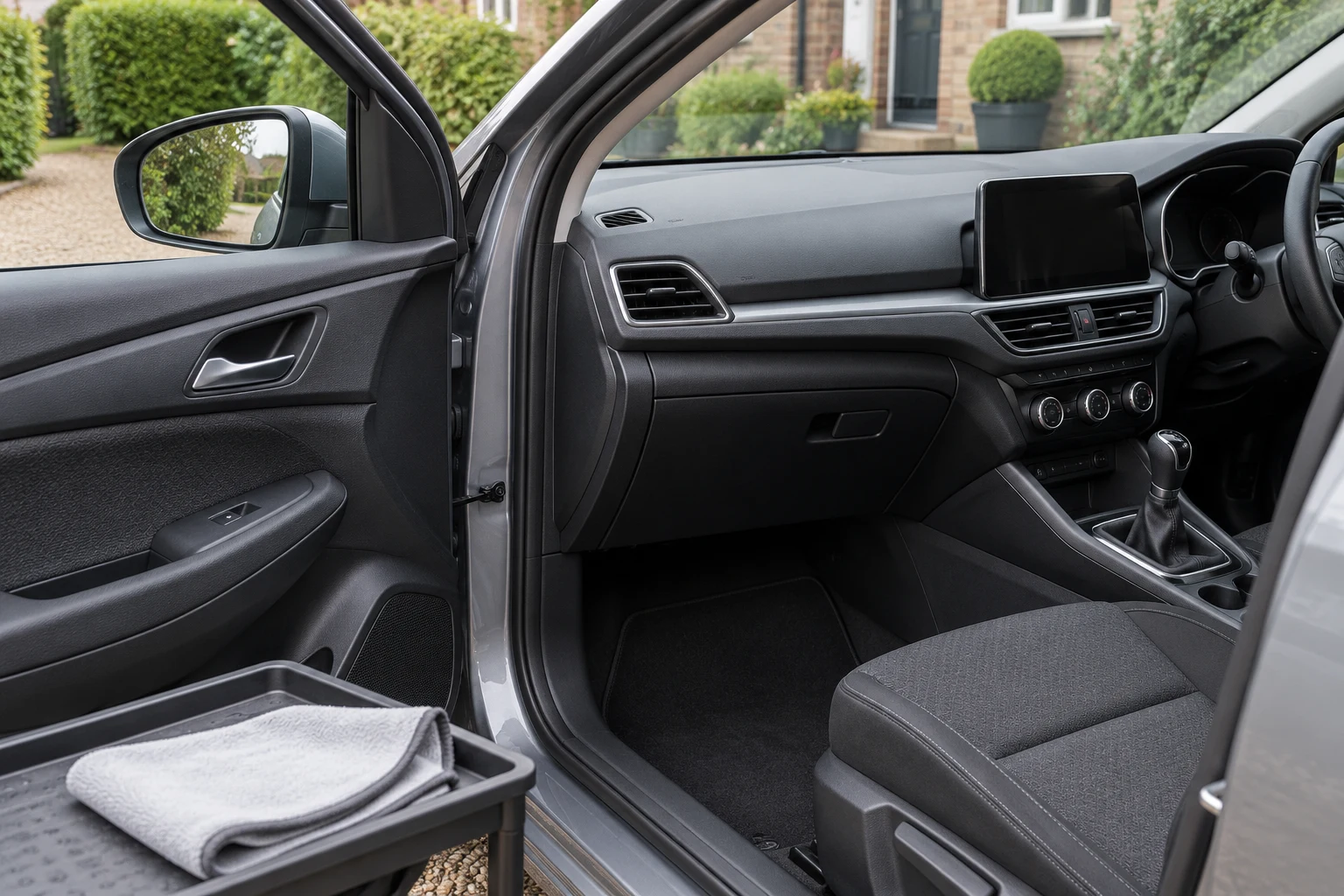
Map the materials before using one cleaner everywhere
A dashboard and door card can contain textured plastic, soft-touch coatings, leather or synthetic leather, fabric inserts, gloss-black panels, wood, metal and electronic controls. They share a small area but do not necessarily share a cleaning method. Start with the vehicle’s interior-care information and identify the surface actually carrying the mark.
The useful routine is to remove loose dust, use a permitted cloth method for remaining dirt and leave the surface dry without heavy residue. You do not need a shiny dressing to finish an ordinary clean. A glossy reflection across the windscreen or a slippery control is not a useful result.
Keep screens and clear instrument covers separate from surrounding trim. A cleaner suitable for a textured door panel is not automatically allowed on a display or its anti-glare layer. The infotainment-screen guide covers that narrower decision; do not extend a “hard surfaces” description across every component in the cabin.
Prepare the cabin and a small clean kit
Where brushing is permitted, the interior detailing-brush comparison helps match a small or broad head to the accessible area. It does not override restrictions on displays, coated gloss trim or controls.
Park and arrange enough access to work without reaching across the steering wheel or leaning on controls. Remove loose belongings and collect hard objects from door pockets before wiping them. Follow the vehicle’s advice on ignition, powered displays and moving seats. Keep cloths, fingers and vacuum attachments away from mechanisms when adjusting anything.
Have separate clean cloths for dusty trim, a permitted damp-cleaning stage and sensitive gloss or display work. A cloth that has cleaned mats or carried tyre dressing should stay out of this kit. Check for grit, dried product and hard labels before touching a finished panel.
Autoglym Hi-Tech Interior Microfibre is a useful dedicated interior-cloth option where the surface permits it. Fold to clean faces and change face or cloth as dirt transfers; an entire dashboard should not be wiped with the same visibly dirty patch.
For a dedicated soft cloth in the interior kit
Autoglym Hi-Tech Interior Microfibre
A single 40 × 40cm interior microfibre cloth for dust removal and permitted interior-cleaning work. Fold to clean faces and keep it separate from wheels, exterior dressing and dirty mat tools.
- One cloth
- 40 × 40cm
- HTIM interior microfibre
Use only where the particular surface permits this type of cloth. Display care can require a different specified cloth. Wash as the maker directs without fabric softener and inspect before each use.
Remove loose dust without forcing it into gaps
Begin with a gentle dry or lightly damp method permitted by the vehicle. Accessible loose debris can be vacuumed with a suitable attachment, but avoid dragging hard nozzle edges over gloss-black or clear plastic. Use an approved soft tool only where it suits the particular finish.
Do not push a brush through airbag seams, force bristles behind switches or spray into vents. The aim is to clean accessible surfaces, not investigate how the dashboard is assembled. Compressed air and aggressive brushing can move dirt into places you cannot inspect or reach.
Door pockets may be dirtier than upper trim. Treat them as a separate stage with clean tools, then change cloths before returning to a visible panel. This keeps gritty lower-door residue away from the surfaces most likely to show marks.
Choose a cloth method for remaining dirt
Read the exact cleaner’s instructions and the vehicle’s narrower restrictions together. Some manufacturers recommend a clean cloth lightly moistened with water for their interior trim. Volvo’s cited guidance is one example, including special care for high-gloss surfaces. An approved water-only result is a complete clean, not a missing chemical stage.
Where a suitable interior cleaner is permitted, control it with the specified cloth route near electronics and mixed materials. Test discreetly on the same finish and assess after drying. Stop if colour transfers, the surface becomes tacky or a coating changes appearance.
Autoglym Interior Shampoo offers a hand-cleaning option for compatible ordinary interior surfaces. Its instructions expressly exclude displays and infotainment systems, despite listing many other interior uses. Near those areas, the maker also calls for cloth application to prevent overspray.
For fabric seats and removable mats
Autoglym Interior Shampoo 500ml
A ready-to-use cleaner for compatible interior fabrics and hard surfaces. Useful for local cleaning after vacuuming, without introducing an extraction machine.
- 500ml spray
- Fabric and carpet cleaning
- Use after vacuuming
Vacuum first and apply lightly on compatible fabric. Not suitable for displays or infotainment. Autoglym permits leather use through a soft clean cloth, rather than direct spraying; vehicle material care still governs use.
Gtechniq I2 Tri-Clean is an alternative where the vehicle permits it. Its UK directions put the product on a damp suitable cloth and use a clean cloth afterwards. Choose one compatible method rather than using several cleaners consecutively on the same panel.
For a controlled cloth-based interior clean
Gtechniq I2 Tri-Clean 500ml
A ready-to-use interior cleaner for compatible fabrics, plastics and leather. The UK directions apply the product to a damp microfibre cloth, then remove residue with a clean cloth.
- 500ml spray
- Cloth application
- Separate from fabric protection
Vehicle material instructions take priority. Test discreetly, keep liquid out of openings and do not treat broad material claims as permission to clean every screen or child restraint.
Work one defined surface at a time
Clean a manageable panel or section so that you can control moisture and remove residue. Follow the product’s required amount and movement; do not increase pressure to compensate for an unidentified stain. On textured plastic, work gently into accessible texture without scraping at one point.
For a mixed door card, stop at the material boundary and change method where needed. A fabric insert, synthetic-leather armrest and gloss switch surround may require different tools. Keep moisture away from switch openings, speaker grilles and electrical seams. Do not direct spray at the component simply because the bottle has a trigger.
Use the cleaner’s removal step, turning or replacing cloth faces as necessary. A dirty damp cloth can redistribute soil and leave a film. Finish the accessible surface as directed, and assess colour and sheen after it is dry rather than comparing a wet treated area with a dry untreated one.
Give gloss and clear plastics a separate pass
| Surface | Useful approach | Do not assume |
|---|---|---|
| Textured plastic | Vehicle-approved cloth and cleaner method | Every all-purpose dilution is suitable |
| Gloss-black trim | Clean soft cloth, minimal permitted pressure and moisture | A brush suitable for a door pocket is safe here |
| Display or instrument cover | Its own screen/clear-plastic instructions | Ordinary glass or dashboard cleaner is approved |
| Synthetic-leather insert | Material-specific covering and assembly checks | Natural-leather balm is needed |
| Fabric or suede-like insert | The relevant textile method | The surrounding plastic’s cleaner suits it |
Use the synthetic-leather guide or suede-like upholstery guide for inserts with those materials. If a clear cover or gloss coating is already scratched or peeling, wiping harder cannot restore the missing finish.
Know when the mark needs another assessment
A shiny patch may be polished wear rather than dirt, while sticky soft-touch trim can be deteriorating material. Avoid repeatedly applying cleaner to either without establishing the cause. A clean cloth that begins collecting colour is a reason to stop and seek finish-specific advice.
Food, ink, adhesive and cosmetics can also require different treatment. Do not adopt a household solvent recipe or transfer a paint tar remover onto a door card. An exterior product’s ability to dissolve residue does not establish compatibility with interior coatings, airbags or adjacent plastics.
For a persistent mark, note the material, likely cause and product already used before asking the vehicle maker or a suitable specialist. That is more useful than layering several chemicals and losing track of what changed the surface.
Finish with an accessible-surface check
Remove any remaining cleaner by the permitted method and let the area dry. Check that no cloth, brush or liquid remains around controls, and leave airbag seams and openings clear. Do not add dressing to pedals, the steering wheel grip or other controls as a finishing shortcut.
Clean and store the interior cloths according to their labels. Keep sensitive-surface cloths identifiable so they do not later become mat or exterior-tool wipes. A regular light dust-and-wipe stage in the interior routine helps prevent several layers of dirt and old product building into a difficult diagnostic job.
Common questions
Can I use the same cleaner on the whole dashboard?
Only if every material and component permits it. Dashboards can mix textured plastic, gloss finishes, fabric, leather-like coverings and displays. Stop at material boundaries and follow the narrower instructions.
Is Autoglym Interior Shampoo suitable for infotainment screens?
No. Its current instructions explicitly exclude displays and infotainment systems. Keep it for compatible permitted interior surfaces and use the screen’s own care method.
Should dashboard trim be shiny after cleaning?
A shiny finish is not required. Aim to remove dirt and residue while preserving the intended finish. Avoid products that create distracting reflections or leave controls slippery.
Why is a soft-touch panel sticky after cleaning?
It could be residue, an incompatible cleaner or deterioration of the coating. Stop repeating the chemical step and seek finish-specific advice, particularly if colour transfers or the surface changes.
Can I brush around airbag seams and switches?
Do not force tools into seams or openings. Clean accessible surrounding surfaces by the permitted cloth method and keep cleaner out of controls. Do not dismantle trim as part of a routine clean.
Sources and product instructions
Follow the label and care instructions for the exact version and surface you own.
- Volvo V90 Twin Engine: interior plastic, metal, wood and gloss-finish care
- Autoglym Interior Shampoo: hand-cleaning method and display exclusion
- Gtechniq I2 Tri-Clean: materials and damp-cloth method
- Autoglym Hi-Tech Interior Microfibre: interior/display uses and cloth care
- Tesla Model Y: seat materials, screens and interior cleaning limits