
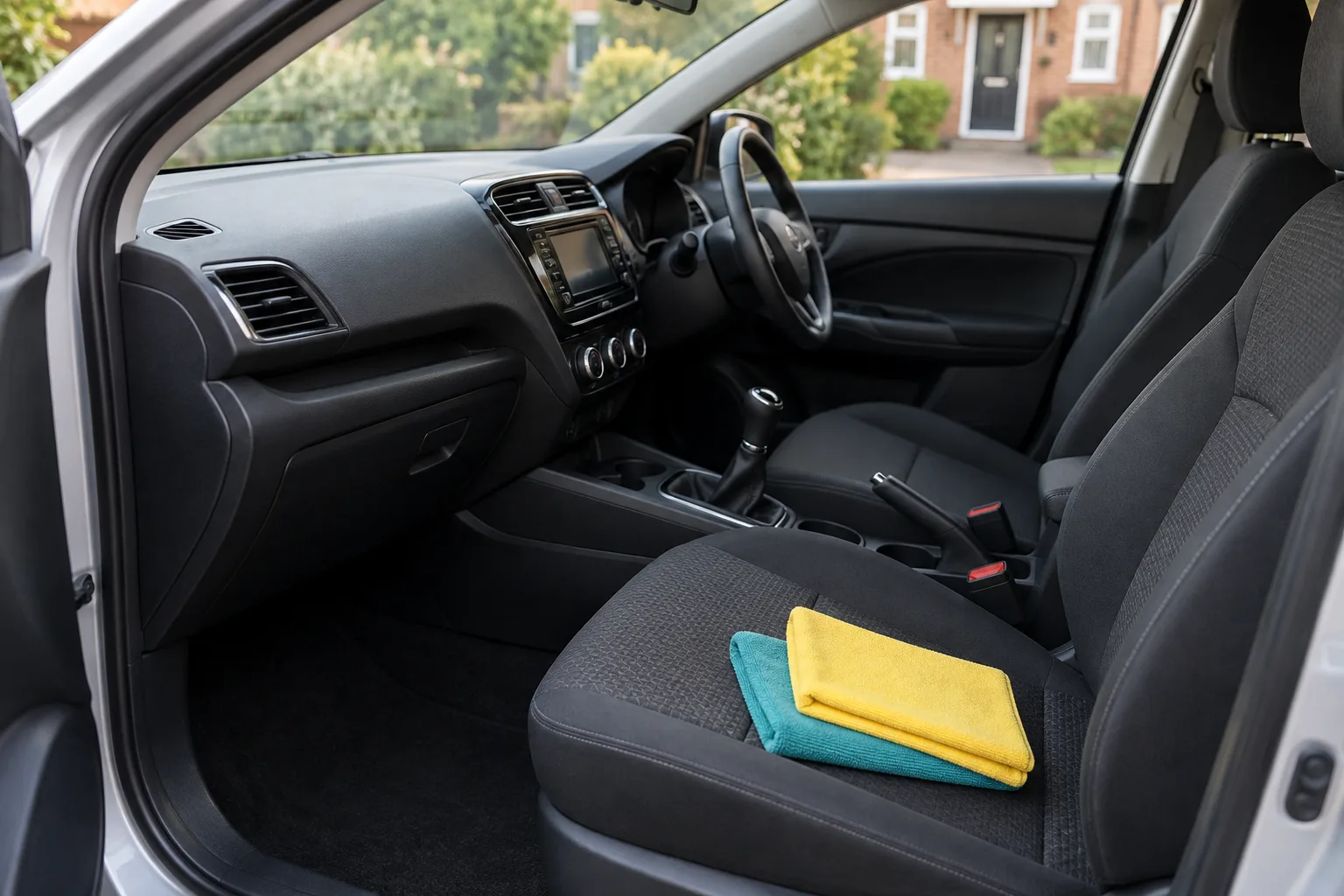
Start with the dry mess
Remove loose belongings and take out removable mats before working around the seats and footwells. Vacuum accessible dry debris with the tools suited to your vacuum and the surfaces you are cleaning. Avoid pulling cables or forcing a nozzle into seat mechanisms.
Check the vacuum’s instructions before picking up liquid. A dry vacuum and a wet-and-dry machine are different tools. Do not judge suitability from suction claims alone: a useful crevice tool, reachable hose and manageable body can make more difference inside a car.
Choose the method for the surface
A useful interior routine starts with loose belongings and dry debris, then deals with individual materials. Choose between dry pickup, local hand cleaning, liquid pickup and spray extraction deliberately: these are separate machine functions. Work on one permitted surface at a time, leave enough drying time and finish glass with clean dedicated cloths rather than carrying upholstery or dressing residue onto it.
| Your next job | Start here | What to establish first |
|---|---|---|
| Everyday cabin reset | Follow the interior routine | Dry debris, material checks and manageable cleaning stages |
| Fabric seat marks | Clean compatible fabric seats | Vehicle permission, a discreet test and controlled moisture |
| Leather-looking upholstery | Check synthetic-leather care | The actual covering, rather than appearance or marketing name |
| Screens and glossy controls | Use screen-specific care | The vehicle maker’s permitted cloth, liquid and application |
| Deep cleaning with a machine | Assess an extractor | Seat suitability, matching detergent and a realistic drying window |
| Streaky windscreen interior | Clean inside glass | Film or coating approval and uncontaminated finishing cloths |
Choose the interior equipment
- Choosing a car vacuum: compare socket-powered and cordless options, attachments and dry-use limits.
- Choosing an upholstery cleaner for car seats: separate ready-to-use sprays, concentrate and extraction decisions.
- Choosing interior detailing brushes: choose small or broad soft heads for permitted trim.
Follow a routine for the actual material
Start with a simple interior car-cleaning routine, then use the detailed method for the surface that needs attention.
- Cleaning fabric car seats: dry debris, discreet testing, controlled moisture and proper drying.
- Cleaning leather car seats: identify coated, absorbent and synthetic surfaces before applying cleaner.
- Cleaning inside car glass without streaks: dedicated cloths, compatible cleaner and residue removal.
- Removing pet hair from car carpets: loosen embedded hair gently and collect it with a suitable vacuum.
Mats and individual interior materials
Choose the method for the actual surface and installed component. A general interior cleaner is not permission to wet every part of the cabin.
- Cleaning removable fabric car mats: vacuum, hand clean where permitted and dry the face and backing before secure refitting.
- Cleaning rubber car mats: remove dirt and residue without adding slippery dressing.
- Cleaning dashboard and door trim: separate textured plastic, gloss panels, inserts and controls.
- Cleaning infotainment screens: follow the display’s cloth and liquid restrictions.
- Cleaning suede-like car upholstery: identify the textile and protect its nap.
- Cleaning synthetic-leather car upholstery: use compatible surface care without assuming natural-leather balm is needed.
Dry pickup, liquid pickup and spray extraction
- Choosing a wet-and-dry vacuum for car cleaning: compare reach, tools and the correct bag/filter setups.
- Choosing an upholstery extractor for car seats: compare complete machine, nozzle and detergent systems.
- Using an upholstery extractor on compatible car seats: confirm seat approval, dry-vacuum first and control solution delivery, recovery and drying.
Exterior glass, rain treatments and panoramic roofs
Clean glass first, then consider whether an optional treatment is permitted. Roof glass and mouldings have their own care limits.
- Choosing a car-glass cleaner: compare routine sprays with a separate glass-polish role.
- Cleaning exterior car glass: wash first, manage cloths and inspect both faces.
- Choosing a windscreen rain repellent: check vehicle permission, format and the complete method.
- Applying rain repellent to a windscreen: keep the selected product’s preparation, wait and removal stages together.
- Cleaning a panoramic glass roof: plan safe access and follow roof-specific glass, moulding and drainage limits.
Adapt the routine for winter
- A winter car-cleaning routine: choose a workable wash window, keep visibility clear and deal with damp mats.
- Cleaning road salt from bodywork: rinse before contact, assess remaining film and keep sensitive areas clear of strong jets.
Clean by material
Fabric seats and carpets
Choose a product intended for the material, patch-test as its directions require and avoid soaking a seat in an attempt to remove a mark. A spray cleaner and an extraction machine involve different amounts of moisture and different drying needs.
Before extraction, check your vehicle’s care guidance and the cleaner’s instructions. Seat electronics, heating elements and sensitive fabrics can change what is appropriate. Deep staining or persistent odours may be better assessed by a professional.
A fabric-cleaning spray
For local marks on compatible fabric and mats, Interior Shampoo is a simpler starting point than an extractor. Vacuum first, test a hidden area and work lightly. Keep it away from displays and infotainment systems.
For fabric seats and removable mats
Autoglym Interior Shampoo 500ml
A ready-to-use cleaner for compatible interior fabrics and hard surfaces. Useful for local cleaning after vacuuming, without introducing an extraction machine.
- 500ml spray
- Fabric and carpet cleaning
- Use after vacuuming
Vacuum first and apply lightly on compatible fabric. Not suitable for displays or infotainment. Autoglym permits leather use through a soft clean cloth, rather than direct spraying; vehicle material care still governs use.
Leather and imitation leather
Do not assume that all seat coverings need leather balm. Check the vehicle’s material description and care instructions first, especially for perforated coverings, suede-like materials and synthetic upholstery. Choose a cleaner specifically compatible with the surface.
An option for automotive leather
If the vehicle’s care guide permits it, this dedicated cleaner offers a separate leather-cleaning step. Apply sparingly to a cloth and follow its wipe-off directions. It is unsuitable for suede, unsealed leather and highly porous coverings.
For compatible automotive leather
Autoglym Leather Cleaner 500ml
A pH-neutral, silicone-free cleaner for compatible automotive leather and faux leather. It is a cleaning step with a natural matt finish, rather than a shiny dashboard dressing.
- 500ml spray
- pH-neutral formulation
- Automotive leather cleaner
Not for unsealed leather, suede or highly porous materials. Test an inconspicuous area, apply sparingly to a cloth and avoid flooding perforations; follow the vehicle’s instructions.
Screens and controls
Treat displays and glossy trim separately from upholstery. Follow the vehicle manufacturer’s directions rather than applying an all-purpose cleaner to every surface. Keep liquids away from openings and electronics.
Give glass its own cloths
Keep glass cloths separate from wax and dressing applicators. Work in manageable sections, using the amount and application method specified by the glass cleaner. If a finish remains streaky, check the cloth and product residue before adding more liquid.
Aftermarket tint films and coated surfaces require their own compatibility check. A product sold for glass is not automatically approved for every film or screen.
A single-purpose glass option
Fast Glass is a 500ml spray for interior and exterior glass. Autoglym directs a light application, spreading with a microfibre cloth and buffing while turning the cloth regularly. For compatible screens, apply to the cloth rather than spraying onto electronics; follow your vehicle’s directions first.
For a separate glass-cleaning job
Autoglym Fast Glass 500ml
A 500ml cleaner for interior and exterior glass, without abrasives, waxes or silicones. Useful when you need a glass cleaner but already own the rest of your wash kit.
- 500ml spray
- Interior and exterior glass
- No abrasives, waxes or silicones
Use dedicated clean cloths. Check tint-film and vehicle-screen guidance; apply to the cloth for compatible displays, never spray directly onto electronics.
Pair the cleaner with a dedicated glass cloth
A glass cloth is useful when ordinary buffing cloths have collected polish or dressing residue. The MF5 is a single 40 × 40cm cloth; keep a clean section for finishing, or use a second clean cloth when needed.
A cloth reserved for glass
Gtechniq MF5 Power Glass Cloth
A 40 × 40cm microfibre cloth with a fishscale weave intended for glass cleaning. Keep it apart from wax and tyre-dressing textiles so residues do not travel onto the windows.
- 40 × 40cm
- Fishscale weave
- Single glass cloth
This listing is one cloth. A second clean cloth can help with a final buff. Wash as directed and check tint-film or display instructions before treating those surfaces like ordinary glass.
Keep the interior kit small
A useful starting kit may be a suitable vacuum with a crevice tool, a surface-compatible cleaner and a few clean cloths separated by task. Buy an extractor or specialist brush only when you have a specific job for it.
Common questions
Can one cleaner do the whole interior?
Interior materials differ. Check each cleaner against fabric, leather, screens, plastics and any specialist finish instead of assuming general interior wording covers everything.
Should I spray directly onto a screen?
Follow the vehicle and screen maker’s cleaning instructions. Avoid introducing liquid into controls, openings and electronics; a general glass-cleaner label does not settle every screen’s requirements.
How much liquid should I use on seats?
Use the upholstery product’s exact method and avoid soaking the material. Check a discreet area first and allow proper drying before assessing the result.
Why does glass look streaky?
Possible causes include residue, too much product or an unsuitable or dirty cloth. Use clean dedicated glass textiles and follow the cleaner’s finishing method.
Can I use glass cleaner on tinted windows?
Check both the cleaner and tint supplier’s instructions. Compatibility with ordinary glass alone does not establish suitability for an aftermarket film or coating.
Sources and product instructions
Follow the label and care instructions for the exact version and surface you own.