
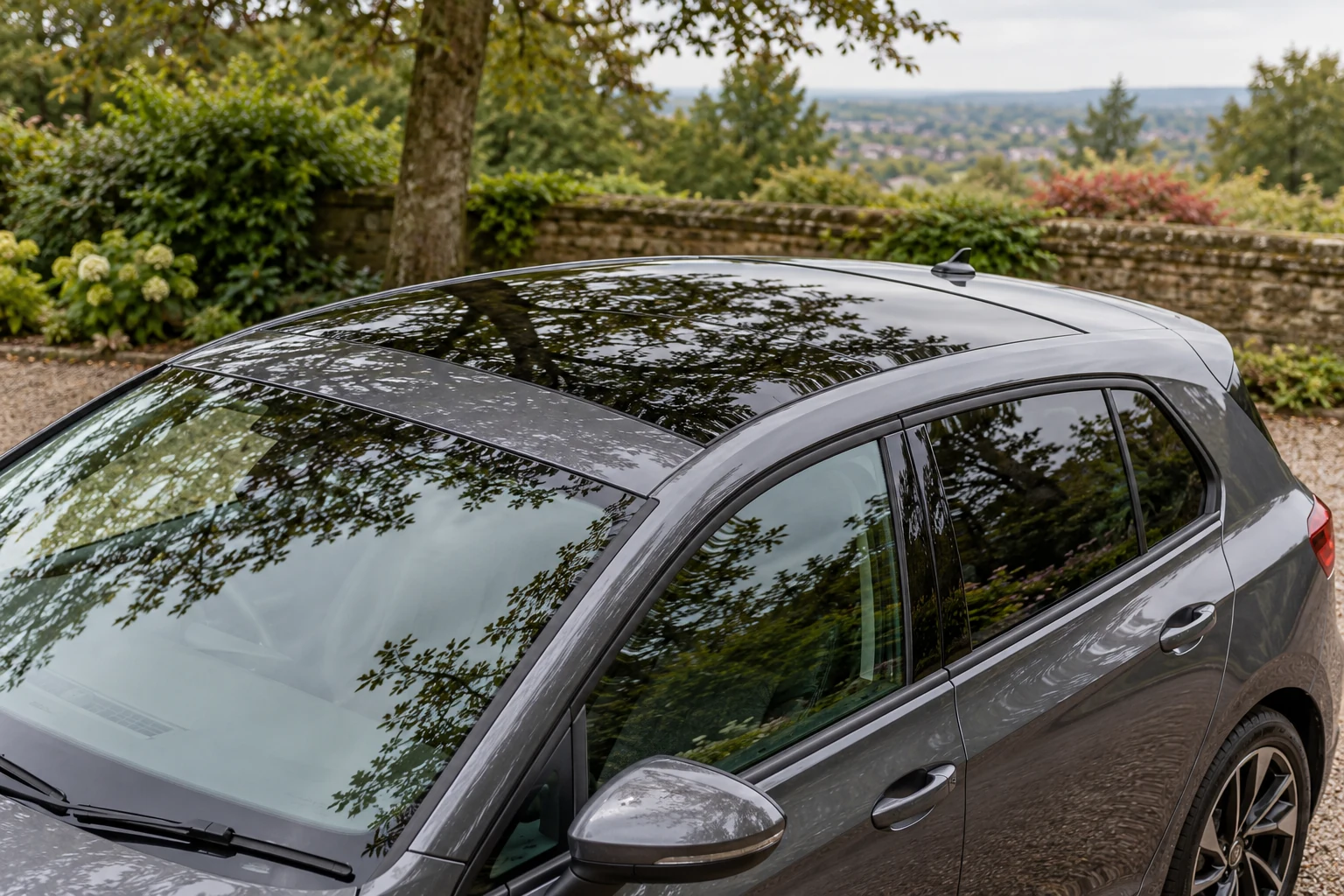
Treat the roof as a separate surface
A panoramic glass roof combines glass, surrounding mouldings, seals and sometimes a moving mechanism. It may also have coatings or aftermarket film with their own care instructions. Cleaning it is therefore more than repeating the windscreen method at a greater height. Start with the instructions for the exact car and roof, including whether the roof and sunblind need to be closed before washing.
Volvo’s XC40 guidance provides a useful specific example: it calls for the panoramic roof and sunvisor to be closed for washing, excludes abrasive polish on the glass and excludes wax on the rubber roof mouldings. Those are not instructions for every car, but they show why an ordinary glass product’s general suitability cannot override the roof handbook.
The useful goal is clean glass and accessible surrounding surfaces, with the roof operating normally and no water being driven into gaps. This guide does not cover dismantling a roof cassette, adjusting the mechanism or clearing hidden drain pipes. Persistent leaks or movement problems need the vehicle maker’s procedure or professional assessment.
Plan safe access before getting the roof wet
Work with the car parked on stable level ground and the roof cool. Look at what you can reach from each side without stretching across the glass or resting your weight on it. Do not stand, kneel or sit on a panoramic roof. If the centre cannot be reached comfortably with a suitable approved tool or stable access arrangement, use a professional wash that can follow the roof instructions.
Avoid improvising a slippery step from a bucket, tyre or door sill. Reaching further by pulling on a seal or opening the roof during a wash creates another problem rather than solving the access issue. Move around the car, keep the work area clear and stop if you cannot keep your balance while controlling the tool.
Check the wash equipment before starting:
- A clean suitable wash tool that has not been used on wheels or gritty lower panels.
- Shampoo permitted for the roof and surrounding materials, at its correct dilution.
- A controlled rinse method permitted by the vehicle.
- Clean drying and glass-finishing cloths for the accessible areas.
- The vehicle’s instructions for roof closure, mouldings and any maintenance points.
1. Close and inspect the roof
Follow the vehicle’s wash preparation, including the required position of the roof and blind. Remove accessible loose leaves or debris by the permitted gentle method before they are washed into an edge. Do not probe under seals or slide tools into a drainage opening you cannot identify confidently.
Look for an obviously displaced moulding, split seal, cracked pane or pre-existing leak. If something looks damaged, resolve it before directing wash water around it. Cleaning is not a way to test how much water a suspect seal can withstand. A roof that has recently been repaired or had glass replaced may also need installer-specific care.
2. Rinse and wash within the vehicle’s limits
Remove loose dirt with the permitted rinse method, then wash the accessible glass and surrounding exterior surfaces gently. Keep the wash tool clean and do not drag a gritty lower-panel mitt over the roof. If a deposit remains, identify it rather than pressing harder against the glass.
Gtechniq GWash is a routine shampoo option where the vehicle, coating and roof instructions allow it. The selected bottle’s wash dilution applies; a roof does not need a stronger mix simply because it is harder to reach. Our shampoo guide explains routine product selection separately.
A standalone bucket-wash shampoo
Gtechniq GWash 500ml
A concentrated, pH-neutral shampoo for a regular contact wash. A useful single-bottle choice when you already own a mitt and towels and do not need another boxed set.
- 500ml concentrate
- Bucket-wash shampoo
- pH-neutral formulation
Use the dilution on your UK bottle. This is GWash, not Ceramic GWash or a snow-foam pre-wash; follow your coating or finish supplier’s care instructions.
Use a controlled rinse and avoid aiming water directly into seals, joints or roof openings. There is no universal pressure-washer distance that establishes safety for every panoramic roof. Follow your vehicle and equipment instructions, and use the pressure-washing guide for the broader equipment decisions. The roof’s narrower restrictions still take priority.
3. Dry without loading the glass or pulling mouldings
Use clean suitable drying materials on areas you can reach safely. Do not press your body onto the glass while trying to remove the last drop from the centre. Change position and work in manageable sections. Pay attention to accessible edges where water can later run back over a finished area.
A cloth should not be pushed into a roof channel to soak up unseen water. Keep drying to the surfaces the vehicle permits you to touch. If water continues to appear from an unusual location, inspect the accessible exterior and seek guidance rather than pulling the seal away to explore.
4. Finish remaining film only if the surface permits it
After the ordinary wash, a compatible glass spray can help with remaining film on accessible roof glass. Autoglym Fast Glass is one routine option, subject to vehicle, coating and film approval. Control application and keep the cloth flat on the glass. Do not let broad cleaner claims become permission to treat the mechanism or hidden channels.
For a separate glass-cleaning job
Autoglym Fast Glass 500ml
A 500ml cleaner for interior and exterior glass, without abrasives, waxes or silicones. Useful when you need a glass cleaner but already own the rest of your wash kit.
- 500ml spray
- Interior and exterior glass
- No abrasives, waxes or silicones
Use dedicated clean cloths. Check tint-film and vehicle-screen guidance; apply to the cloth for compatible displays, never spray directly onto electronics.
A dedicated Gtechniq MF5 can serve the finishing role where appropriate. Keep it free from wax and trim dressing and change to a clean dry face when needed. A large roof may need more clean cloth surface than a side window; judge the cloth’s condition rather than allocating a fixed number of wipes.
A cloth reserved for glass
Gtechniq MF5 Power Glass Cloth
A 40 × 40cm microfibre cloth with a fishscale weave intended for glass cleaning. Keep it apart from wax and tyre-dressing textiles so residues do not travel onto the windows.
- 40 × 40cm
- Fishscale weave
- Single glass cloth
This listing is one cloth. A second clean cloth can help with a final buff. Wash as directed and check tint-film or display instructions before treating those surfaces like ordinary glass.
Keep polishing, coatings and seal care separate
Do not automatically apply a glass polish or rain repellent to a panoramic roof. A product that is suitable for untreated windscreen glass may conflict with the roof’s care instructions. Volvo’s abrasive-polish restriction is a clear example. An apparent water spot is not sufficient reason to use an abrasive pad, clay or polishing compound on unknown roof glass.
Likewise, black rubber around the roof is not automatically a candidate for the dressing used on a bumper. Follow the seal and moulding instructions, including any exclusion of wax or silicone products. Our rubber-seal guide explains the distinction between cleaning and optional approved treatment; it does not replace roof-specific directions.
| Observation | Next step | Keep out of the routine |
|---|---|---|
| Ordinary dust or road film | Permitted wash and glass-finishing method | Strong cleaners chosen only because access is awkward |
| Leaves at an accessible edge | Gentle removal allowed by the handbook | Probing hidden drain tubes |
| Persistent mineral-looking marks | Roof/glass maker advice on deposits and coatings | Unapproved abrasive polish |
| Leak, displaced seal or movement fault | Vehicle specialist assessment | Compressed air, wire or dismantling to investigate |
Inspect and put the kit away
Check the accessible glass and edges while stationary. Follow the vehicle’s advice before operating the roof again, particularly if water remains around the opening. Do not cycle a suspect mechanism repeatedly to see whether a problem clears itself.
Clean the roof wash tool and finishing cloths before storage, keeping them separate from wheels and dressing equipment. An ordinary wash completed within the roof’s limits is enough for routine care. Stubborn deposits, leaks and damaged seals are distinct follow-up tasks, rather than reasons to keep adding chemicals to the same cleaning session.
Common questions
Can I use ordinary glass cleaner on a panoramic roof?
Only if the roof, vehicle, coating and any film instructions permit it. A routine compatible spray may be suitable after washing, but a broad glass-cleaner claim does not override roof-specific restrictions.
Can I polish water spots off panoramic roof glass?
Do not assume polishing is allowed. Volvo’s XC40 instructions, for example, exclude abrasive polish on panoramic glass. Identify the surface and mark, then obtain roof or glass-maker advice before stronger treatment.
Should the sunblind be open while washing?
Follow the instructions for your exact car. Some vehicles specify both the panoramic roof and sunvisor should be closed. There is no single correct blind position for every roof system.
How should I clear panoramic-roof drains?
Remove only accessible loose debris by the vehicle-approved method. Do not use wire, compressed air or an improvised flush in unidentified drain tubes. Blockage, leaks or recurring water entry need the manufacturer’s procedure or specialist help.
Can I put trim dressing on the rubber around the roof?
Only if the vehicle permits that treatment for those mouldings. Roof seals can have different restrictions from bumper trim or door seals. Volvo’s cited guidance excludes wax on rubber roof mouldings.
Sources and product instructions
Follow the label and care instructions for the exact version and surface you own.