
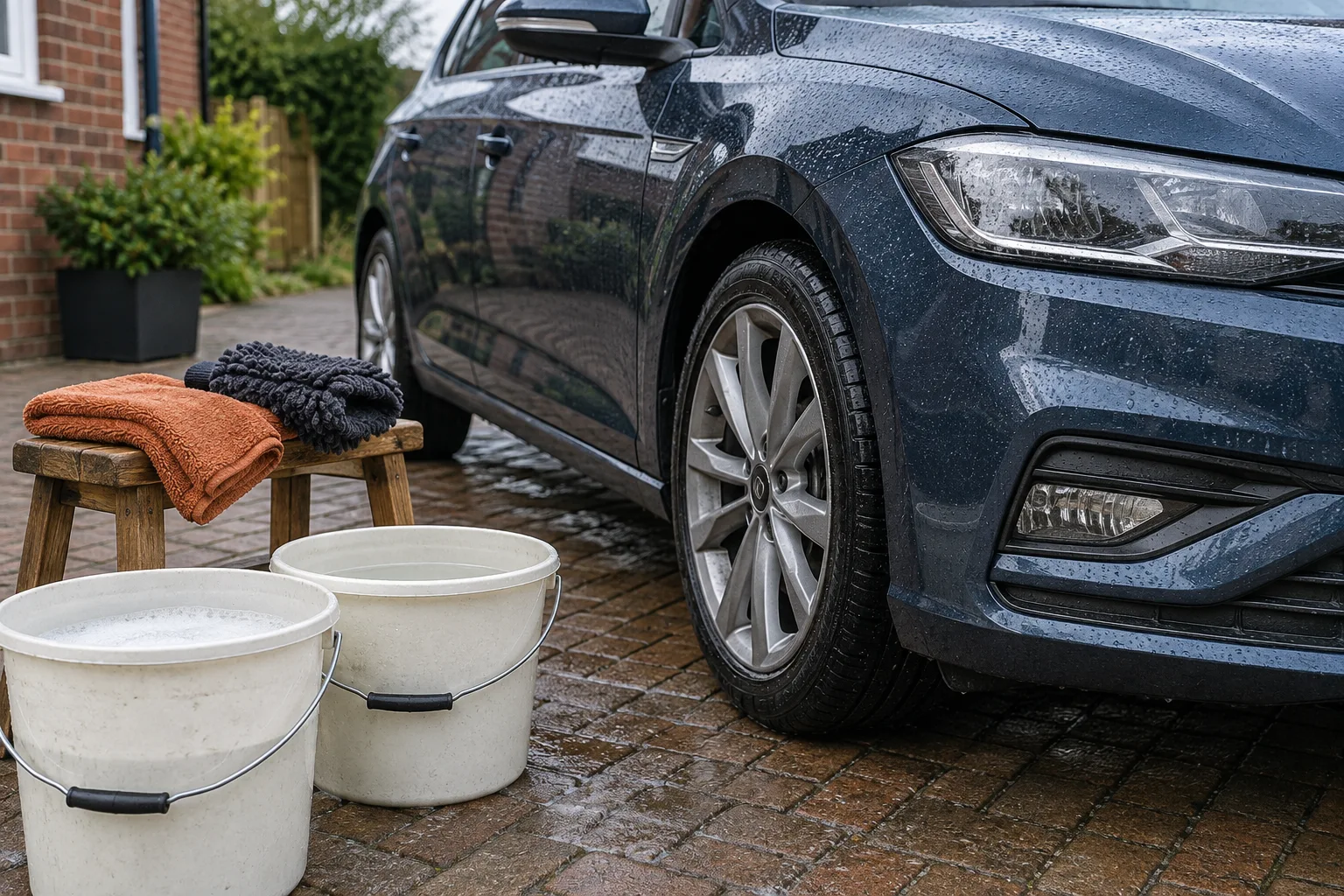
Choose the job before the product
Washing, polishing and protecting are different steps. A routine wash removes dirt. A polishing product may change the finish through abrasives, fillers or a combination of ingredients. A wax or sealant adds a finishing layer according to its own formulation and application instructions.
Names such as “ceramic” and “polish” do not tell you everything about a product. Check what the manufacturer says it does, where it can be used and how the surface needs preparing. Do not assume that two similarly named bottles work in the same way.
Decide whether the paint needs cleaning, protection or assessment
Inspect after a suitable wash and drying stage so loose dirt does not disguise the problem. A deposit on top of the finish, a loss of gloss and missing paint require different decisions. Choose the least involved permitted method that addresses the actual job. Optional protection, machine polishing and roof reproofing should each have a clear reason, compatible preparation and enough time to finish.
| Your next job | Start here | What to establish first |
|---|---|---|
| Choosing a finishing product | Separate wax, polish and sealant | The job, surface approval and wet/dry starting condition |
| A simple protective finish | Compare spray-sealant methods | Application, removal and curing as one complete method |
| Spots or bonded deposits remain | Identify and treat tar locally | Confirm the deposit; sap, fallout and finish damage differ |
| Considering clay | Assess clay suitability | Preparation, lubrication and the risk of marring |
| A scratch or failing clear coat | Recognise assessment signs | Depth, exposed layers and uncertain repair history |
| Matt or satin paint | Check the surface-specific route | Installer or vehicle care instructions before gloss products |
Choose protection and understand correction
- Wax versus polish versus sealant: separate preparation, defect improvement and protection without adding unnecessary stages.
- Choosing a car wax for a simple routine: compare two paste-wax kits, thin application and finish restrictions.
- Choosing a spray sealant: choose between dry-panel, wet-or-dry and rinse-stage methods.
- Choosing a dual-action polisher for beginners: check the machine, pad, liquid and paint together before buying.
- When scratches need professional assessment: recognise stop signs and prepare for a useful repair discussion.
Remove the contamination that washing leaves behind
Identify the deposit and check the finish before choosing a separate treatment. A mark in the paint needs a different assessment from material sitting on top of it.
- Removing bird droppings from car paint: soften before lifting and assess any mark left behind.
- Removing tree sap from car paint: distinguish washable sticky film, hardened deposits and finish damage.
- Removing tar spots from car paint: use a compatible local treatment and remove residue fully.
- Removing insect remains from bodywork: choose the correct softening and rinse method.
- Removing iron fallout from paintwork: follow the selected bodywork method before deciding on clay or protection.
- Using a clay bar: check suitability, lubrication, working-face cleanliness and marring risk.
Choose a compatible decontamination system
- Choosing an iron-fallout remover for bodywork: compare paint approval, restrictions, pack and complete application method.
- Choosing a tar remover for car paint: check adjacent trim, repairs and cloth-first methods before buying.
- Clay bar versus clay mitt: compare the tool, matching lubricant, inspection and ownership requirements.
Coatings, wraps, film and low-sheen paint
Choose the method for the actual outer surface. A product approved for ordinary gloss paint does not automatically suit a film, coating or matt finish.
- Washing a ceramic-coated car: routine shampoo, controlled contact, drying and installer assessment.
- Caring for a car wrap: identify the film, preserve the sheen and keep tools and pressure away from vulnerable edges.
- Cleaning paint-protection film: distinguish routine surface dirt from staining, lifting and damage.
- Caring for matt and satin car paint: clean without an ordinary polishing or gloss-wax stage.
Exterior plastic trim and rubber seals
Identify the material and clean it before choosing an optional finish. A darker appearance is not proof of residue removal or a permanent repair.
- Cleaning exterior black plastic trim: start with washing, then inspect the dry surface.
- Choosing an exterior plastic-trim dressing: compare ready-to-use gels, a concentrate and controlled applicators.
- Removing wax residue from plastic trim: use a supported local method before optional dressing.
- Cleaning exterior rubber seals: separate gentle cleaning from vehicle-approved care and repair assessment.
Convertible roofs and exterior metal
- Cleaning a fabric convertible roof: remove loose dirt, use a compatible cleaner and rinse thoroughly.
- Cleaning a vinyl convertible roof: keep vinyl, fabric and flexible-window methods separate.
- Choosing a fabric roof cleaning and protection kit: compare a boxed system with separate-product routines and missing tools.
- Reproofing a fabric convertible roof: follow one complete moisture, application and curing workflow.
- Cleaning stainless-steel exhaust tips: work fully cold and polish only a confirmed suitable finish.
Keep an ordinary finish manageable
For an everyday car, choose a finishing method you can complete after washing. A wet-applied wax and a spray-and-buff product have different starting conditions. Applying one as though it were the other is not a shortcut.
Our beginner kit guide compares two sets with different finishing products. Follow the label on the version you buy, including any exclusions for glass, trim or specialist finishes. Claims about protection duration depend on the product and conditions; they are not a guarantee for your car.
A small wash-and-finish set
For ordinary compatible bodywork, this set combines shampoo with Rapid Aqua Wax. Its wet-application method is useful if that fits your routine; it does not replace paint correction or suit every specialist finish.
For a compact wash-and-finish set
Autoglym Bodywork Wash & Protect
Foaming Car Wash, Rapid Aqua Wax and two microfibre cloths cover a simple wash-and-wax routine. The wax is applied to wet bodywork after rinsing.
- Foaming Car Wash 500ml
- Rapid Aqua Wax 500ml
- Two microfibre cloths
You still need buckets and a wash mitt. The included cloths do not replace a dedicated drying towel for ordinary washes without the wet-wax step.
A spray finish for a clean, dry car
If you already own shampoo and prefer to dry before applying protection, Turtle Wax Ceramic Spray Coating is a separate option. Spread a light application and buff with clean microfibre as directed. Choose one compatible finishing method; you do not need to layer this over the wet-wax kit.
For a dry-panel spray-and-buff finish
Turtle Wax Hybrid Solutions Ceramic Spray Coating 500ml
A separate spray coating for a freshly washed and dried car. Choose it when you prefer spreading and buffing a finishing spray to using a wet-applied wax.
- 500ml spray
- Apply to clean, dry surfaces
- Buff with clean microfibre
Follow the surface-preparation and curing directions. This is Ceramic Spray Coating, not Ceramic Wet Wax or the 3-in-1 Detailer; check specialist finishes and avoid soft convertible tops.
Check specialist surfaces first
Matt and satin finishes, wraps, paint-protection films and existing coatings may have specific cleaning and finishing requirements. Use the instructions from the vehicle, finish or installer. A product that produces gloss on ordinary paint may be the wrong choice for a surface intended to remain matt.
For example, Autoglym Super Resin Polish excludes matt and satin paint, wraps and satin vinyl decals. Its directions also exclude unpainted rubber and plastic trim. That is a product-specific restriction, not a reason to assume that every polish has identical limits.
Do not apply polish to unpainted trim or unfamiliar surfaces without checking the product’s suitability. Masking or avoiding sensitive areas can be part of a polishing process, but the exact method must come from the product and equipment guidance.
When you want to hand-polish
Super Resin Polish combines polishing, filling and protection. It belongs to an occasional, deliberate paint-care step rather than every wash. Use only on compatible clean, dry painted bodywork and follow its hand-application directions.
For occasional hand polishing
Autoglym Super Resin Polish 500ml
An all-in-one hand polish for compatible painted bodywork that combines polishing, filling and protection. Consider it for a deliberate gloss-improvement step after washing and drying.
- 500ml bottle
- Hand application
- Polish, fill and protect
Not for matt or satin paint, wraps, vinyl decals or unpainted trim. It is not a cure for deep scratches or failing clear coat. Check existing coatings before adding a polish.
Add an applicator only if you need one
The matching Perfect Polish Applicator helps spread a thin layer while working around trim. Keep a separate pad for each product or task, then clean and dry it before storage. A serviceable compatible pad you already own can fill the same job.
Controlled hand application
Autoglym Perfect Polish Applicator — Twin Pack
Two shaped foam applicators for compatible polishes and dressings. Autoglym lists Super Resin Polish among their intended uses; the pointed edges help you work around trim.
- Two applicators
- Shaped foam
- Wash and air dry
Reserve a separate applicator for tyre dressing. After use, wash in clean warm water and air dry. Check the bottle’s method; these are not machine-polishing pads.
Know when to stop
A wash does not promise scratch removal. A mark that catches your fingernail, exposed primer, failing clear coat or uncertain paint history needs assessment rather than an automatic recommendation for stronger compound.
Machine polishing introduces pad, product, speed and technique choices. Buying a dual-action machine does not remove the need to understand them. For a first attempt, get guidance appropriate to the exact equipment and surface, or ask a professional to assess the job.
Common questions
Does washing remove scratches?
An ordinary wash removes dirt. Persistent scratches and other defects need separate assessment; washing or adding protection does not restore missing paint.
Is polish the same as wax?
They have different purposes. Read the exact formula and finish instructions: a corrective or resin polish and a protective wax or spray are not automatically interchangeable.
Can I apply a spray to a wet car?
Only when that product’s method requires or permits it. A wet-applied wax and a spray intended for clean, dry panels have different sequences.
Can I use these products on matt paint?
Check the finish supplier and each product’s exclusions. Gloss-enhancing polishes and protective products may be unsuitable for a deliberately matt finish.
Does water beading prove how long protection lasts?
No. Visible water behaviour alone does not measure protection life or the condition of the underlying finish. Follow the product or coating’s maintenance guidance.
Sources and product instructions
Follow the label and care instructions for the exact version and surface you own.