
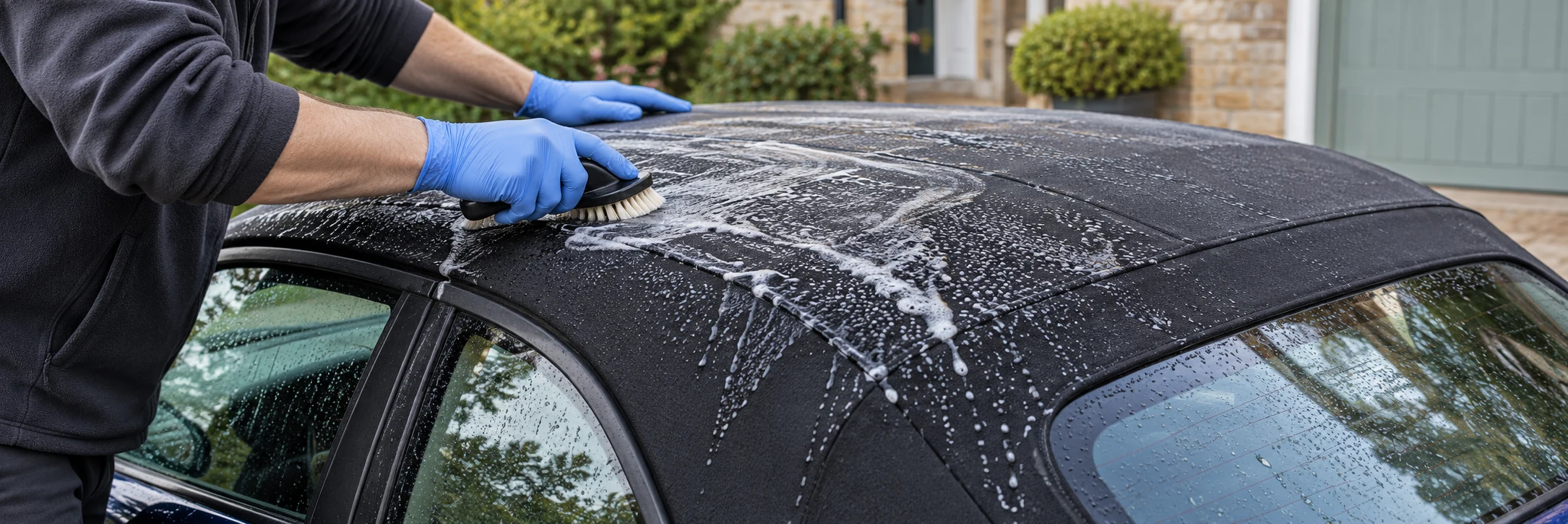
Confirm the roof material and condition
A fabric hood can have a woven textile face, seams, a supporting structure and a separate window material. Descriptions such as mohair or canvas are useful clues, but the vehicle or roof supplier should identify the actual covering. If it is vinyl, use the vinyl-roof method instead of choosing a fabric bottle because it says convertible on the front.
Close and secure the roof as the vehicle manual directs. Check for tears, loose stitching, split window joins, damaged seals and existing leaks before adding water. Photograph a concern while the area is dry. A cleaner or proofer does not repair the roof structure, and extra scrubbing can obscure the original problem.
Choose shade and a weather window that lets you complete the whole cleaning stage. If you intend to protect the roof afterwards, plan for that product’s separate moisture and curing requirements too. A short break in rain may be enough for rinsing but unsuitable for a complete cleaning-and-protection job.
Remove loose debris before introducing liquid
Before buying separate bottles, compare fabric-roof cleaning and protection systems. Check which cleaning tools are supplied and whether any later protector needs damp or thoroughly dry fabric.
Use a clean soft brush or a vacuum with a suitable soft attachment where the vehicle permits it. Lift loose leaves and surface dust without driving them into the weave. Support the tool and avoid dragging a hard nozzle across the fabric, window or paint.
Check folds and seams visually, but do not force a brush underneath trim or into a drainage system. Drain inspection and repair are vehicle-specific tasks. A wet footwell is not a reason to push wire through an unidentified hole during cleaning.
Keep roof tools separate from wheel and tyre equipment. A brush that has carried brake dust or dressing can leave a new contamination problem in the fabric. Cleanliness and suitable softness matter more than using a large collection of detailing brushes.
Choose the cleaner before deciding the application method
Renovo’s fabric cleaner is a separate cleaning purchase. Use its own preparation and brush-application instructions; it is not a bottle to dilute using another brand’s kit recipe. A hidden-area colourfastness test comes before broad application.
For separate cleaning of a compatible fabric hood
Renovo Fabric Soft Top Cleaner 500ml
A 500ml fabric-roof cleaner, applied with a separate brush and rinsed away. It is a cleaning stage, without a fabric protector or colour reviver included.
- 500ml bottle
- Fabric cleaner only
- Separate application brush required
Fabric only, not vinyl. Test colourfastness, use the bottle method without dilution or mixing, and avoid pressure washing. Cleaners and applicators are not interchangeable with a proofer or dye.
Meguiar’s G2016EU offers a ready-to-use roof-cleaning alternative with explicit fabric and vinyl coverage. That broad material coverage still needs the particular roof’s approval. It does not make the cleaner appropriate for every plastic rear window, painted trim piece or interior lining.
For a cleaner with explicit fabric-and-vinyl roof coverage
Meguiar’s Convertible & Cabriolet Cleaner 473ml
A 473ml ready-to-use convertible-top cleaner. Meguiar’s specifies cool shaded working, a colourfastness test, gentle agitation with a soft brush or wash mitt, and thorough rinsing.
- 473ml ready-to-use bottle
- G2016EU roof cleaner
- Protection and soft tools separate
Confirm the particular roof permits it. This bottle is a cleaner without a weatherproofer or tools included. Keep it separate from glass/plastic-window care, interior cleaners and fabric or vinyl protection stages.
Match the preparation to the bottle
| Cleaner | Preparation and application | Rinsing decision |
|---|---|---|
| Renovo Fabric Soft Top Cleaner | Dampen as directed; apply undiluted with a clean 5cm brush. Normal working interval is 10–20 minutes. | Agitate gently with the permitted soft tool and water, then rinse; avoid drying or excessive force. |
| Meguiar’s G2016EU | Ready to use on a cool roof in shade; spray and gently work with a suitable soft brush or mitt. | Rinse thoroughly; do not add concentrate or transfer another product’s dwell interval. |
| Current Autoglym STCPKIT/1 | For this version, mix 250ml cleaner with 500ml water; use the supplied white sponge on a damp hood. | Use low-pressure water until cleaner has gone; this kit then proceeds to its damp-fabric protection stage. |
These examples explain why the method must match the pack. The roof’s restrictions and received label take priority, including colourfastness checks and any changes between versions.
Choose one cleaning system for the job. Layering products to increase strength makes dwell and rinsing decisions less clear. If the first permitted method leaves a stubborn mark, inspect it and seek advice before introducing a different chemical into damp fabric.
Work evenly with a suitable soft tool
Follow the received cleaner’s directions for dampening, application and working time. Treat the roof systematically so you know which areas have been completed. Use a soft tool allowed by both cleaner and roof instructions, concentrating on controlled movement rather than force.
Do not assume an aggressive brush is necessary because green staining looks ingrained. Hard bristles and repeated local scrubbing can affect the surface or stitching. Stop if fibres lift, colour transfers unexpectedly or the material changes appearance during the test.
Keep cleaner runs away from adjacent surfaces as directed, and remove them promptly with a suitable clean cloth. Check nearby glass, trim and paint repeatedly through the job. A cloth used to catch chemical runs should not then dry the bonnet without proper cleaning.
Rinse until cleaner residue has gone
Use gentle low-pressure water according to the roof instructions. Work through the cleaned areas rather than giving the top one quick splash. Residue can remain where runoff gathers and can interfere with the later protection stage. Pay attention to the water leaving the fabric as well as the top face.
Do not substitute a pressure jet for patient rinsing. It introduces unnecessary risk at seams and seals, and high force does not prove the cleaner has been removed throughout the treated area. If water is entering the cabin, stop and investigate the leak rather than completing the planned chemical stages.
Inspect the result after the appropriate drying stage. A wet roof can look darker and more uniform than a dry one. Persistent staining, fading and worn fibre are different conditions; do not diagnose them by how much foam a second application produces.
A matched kit can simplify the next stage
The current Autoglym kit contains its own white cleaning sponge and blue protector applicator. Its instructions differ from older spray versions, so check the actual contents and label. Use the supplied system as directed rather than mixing its protector into a Renovo cleaning recipe.
For a matched fabric-roof system with two application sponges
Autoglym Soft Top Clean & Protect Complete Kit
The selected current kit contains 500ml Soft Top Cleaner, 500ml Soft Top Protector, a white cleaning sponge and a blue protector applicator. It separates cleaning and protection, with the protector applied to a clean damp hood.
- 500ml cleaner + 500ml protector
- White cleaning / blue application sponges
- Fabric roof; damp-surface protection
For compatible mohair, double duck, fabric and canvas hoods, not vinyl. Follow the received version: older spray kits have different instructions. Completely rinse cleaner before protection; let the treated roof dry fully before driving or folding.
Keep cleaner and protector containers distinct during use. Prepare separate tools, and avoid dipping a protector applicator into leftover cleaning solution. Buying a matched box removes some selection decisions, but it does not remove the need to rinse properly or wait for the right surface condition.
Decide whether to protect the roof now
Cleaning and reproofing are separate stages. A roof that has been cleaned properly may need a compatible protector, but protection should not be used to conceal remaining dirt or a suspected leak. Read the reproofing guide before starting that stage.
Moisture requirements are particularly important. Autoglym’s selected system proceeds onto clean damp fabric. Gtechniq’s current I1 instructions call for fabric significantly drier than touch dry. Those methods cannot be merged into a general instruction to wait an arbitrary number of hours and then apply anything.
If the weather will not allow the chosen protection stage, finish cleaning appropriately and plan the next stage when the correct conditions are available. Keep the roof raised while drying. Avoid parking in a way that allows fresh tree debris or bird deposits to settle onto an otherwise prepared surface.
Recognise the limits of cleaning
A good result is a cleaner roof without newly disturbed fibres, seams or adjacent materials. It is not necessarily a return to factory colour. Worn patches, damaged stitching, window separation and internal moisture need a roof specialist’s assessment.
Stop escalating the method if stains remain after the permitted process. Strong household cleaners, drill brushes, steam and repeated prolonged wetting are not a substitute for diagnosis. Describe the material, cleaner and observed change when asking for help. That keeps maintenance focused on care rather than turning a cleaning job into an unplanned restoration.
Put the roof kit away clean
Rinse and dry permitted tools according to their own instructions, then store them apart from wheel brushes. Keep cleaner and protector in their labelled containers. A clean soft brush ready for the next session is more useful than leaving dirty tools in a sealed wet bag, where you cannot inspect their condition before reuse.
Common questions
Can I pressure wash a fabric convertible roof?
Do not use a pressure jet for the method here. Renovo and Autoglym specify gentler rinsing, and Ford warns of leakage and seal damage from high pressure. Follow the particular vehicle’s restrictions.
Should the roof be wet or dry before cleaning?
It depends on the cleaner. Remove loose debris first, then follow the exact bottle’s preparation. Do not confuse dampening for cleaning with the different moisture requirements of a later protector.
Can I use a household mould remover on the roof?
Do not use an unapproved household cleaner or bleach mixture. Persistent growth, damaged fabric or contamination inside the car needs suitable specialist advice rather than repeated harsh treatment.
Do I need to recolour the roof after cleaning?
No. Cleaning, recolouring and protection are separate choices. Fading or wear may remain after dirt is removed. Do not add a colour reviver unless the material, condition and complete method have been assessed.
When can I lower the roof afterwards?
Keep it raised until the material and seams are fully dry and any protector’s drying or curing requirements are met. A dry-looking face does not prove that folded areas will not trap moisture.
Sources and product instructions
Follow the label and care instructions for the exact version and surface you own.