
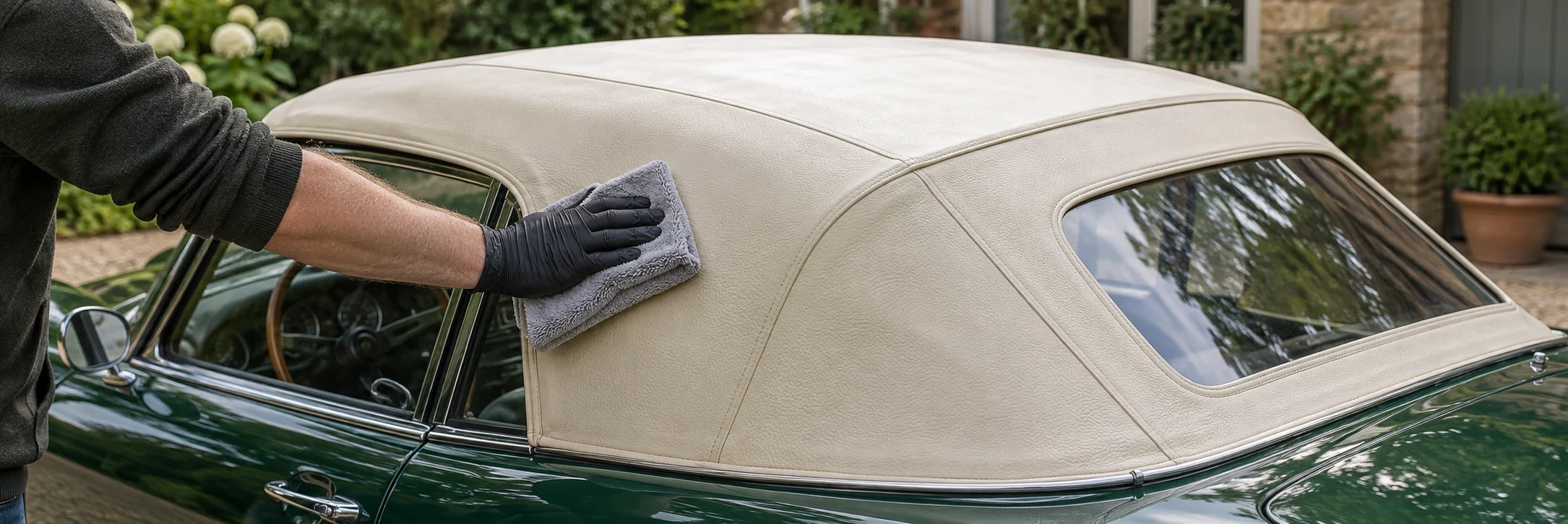
Establish what the roof is made from
A vinyl convertible roof needs a different product decision from a woven fabric hood. Check the vehicle documentation, replacement-roof invoice or supplier’s specification. A classic car may have a replacement covering that differs from the original catalogue description, so the model name alone may not settle the question.
Inspect the face, seams, window joins and seals while the roof is closed and dry. Look for brittleness, cracking, lifting sections and signs of water entry. Cleaning can remove surface dirt; it cannot restore failed material. Ask a roof specialist about damage before introducing water into an area already known to leak.
Keep the covering, window and rubber seals as separate materials in your plan. A product suitable for the vinyl face is not automatically suitable for a flexible rear screen or the mechanism beneath it. Do not coat everything with one spray simply because the pieces sit next to each other.
Choose a vinyl-approved cleaner
Renovo’s Vinyl Soft Top Cleaner is a dedicated choice for confirmed vinyl roofs. It is distinct from the company’s Fabric Soft Top Cleaner, despite similar bottles and a shared brand. Check the full name and pack before starting and test an inconspicuous area as directed.
For a confirmed vinyl convertible roof
Renovo Vinyl Soft Top Cleaner 500ml
A 500ml cleaner specifically for vinyl soft tops, with a brush-application and rinse method. It is separate from Renovo’s fabric cleaner and from its vinyl protector.
- 500ml bottle
- Vinyl-only cleaner
- Protector and tools separate
Not for fabric hoods. Confirm roof and window materials, test a hidden area and avoid pressure washing. Keep the roof up through cleaning and drying; roof-cleaner approval does not establish approval for plastic rear windows.
Renovo’s normal method uses a clean 5cm application brush, followed by a 10–20-minute working interval, gentle agitation with water and thorough rinsing. Keep the product from drying and use the received label for the exact conditions. Do not automatically extend the working time because a patch looks darker.
Use the received instructions for preparation, application and working time. This is not an opportunity to copy a fabric cleaner’s dilution or borrow a household degreaser recipe. Keep a separate clean container and application brush if the method calls for them, and label anything temporarily decanted during the job.
Meguiar’s G2016EU is an alternative roof cleaner with explicit vinyl and fabric coverage. Its ready-to-use application differs from brush-applied Renovo. Choose one method and follow it through, including rinsing, rather than blending the two products into a stronger treatment.
For a cleaner with explicit fabric-and-vinyl roof coverage
Meguiar’s Convertible & Cabriolet Cleaner 473ml
A 473ml ready-to-use convertible-top cleaner. Meguiar’s specifies cool shaded working, a colourfastness test, gentle agitation with a soft brush or wash mitt, and thorough rinsing.
- 473ml ready-to-use bottle
- G2016EU roof cleaner
- Protection and soft tools separate
Confirm the particular roof permits it. This bottle is a cleaner without a weatherproofer or tools included. Keep it separate from glass/plastic-window care, interior cleaners and fabric or vinyl protection stages.
A broad materials claim does not override the roof maker. If the covering has a special coating, recent repair or existing treatment, confirm compatibility first. A small test is useful for detecting a reaction, but it does not establish long-term suitability for a product the vehicle prohibits.
Set up a controlled working area
Work on a cool roof out of direct sunlight. Keep it closed and secured as the manual directs, with windows positioned appropriately for washing. Have clean soft cloths and gentle rinse water ready before applying chemical. If the roof begins drying rapidly, conditions are making the job harder to control.
Remove loose leaves and dirt with a suitable soft tool. Avoid dragging grit along the vinyl grain or pushing debris under seams. A vacuum attachment should have a clean soft contact edge where permitted; do not let a hard nozzle scrape across a window or painted rail.
Keep wheel brushes and tyre applicators away from the roof kit, using task-separated textiles for runoff and finishing. Use separate cloths for catching runoff and for the final clean surface. Put dropped tools aside until cleaned. These simple habits prevent an avoidable transfer of brake dust, grit or greasy dressing.
Clean the grain without abrading it
Apply the chosen cleaner using its specified method, working across a manageable area with even coverage. Allow the instructed time without letting the product dry. Agitate gently using a suitable soft brush, sponge or cloth rather than pressing hard into a small patch.
Pay attention to seams and textured areas, but do not use a stiff brush to force the grain clean. The aim is to loosen dirt, not smooth the surface. If the vinyl begins changing sheen or colour during the test, stop and seek advice rather than spreading the treatment further.
Keep product away from the flexible window unless that exact use is approved. Catch runs on surrounding surfaces promptly using the relevant method. Avoid stretching across the car with a bottle in one hand and an unsupported brush in the other; repositioning makes careful control easier.
Rinse thoroughly with gentle water
Remove the cleaner using the roof-approved rinse method. Work systematically so that residues are carried away rather than redistributed. Check places where runoff gathers and where the roof meets trim. A quick splash over the broad face may leave product around the edges.
Do not use pressure to make up for incomplete rinsing. Renovo advises against pressure washers on its soft-top method, and Ford warns that high-pressure water can lead to leakage and seal damage. Keep a jet away from vulnerable joins and do not direct water beneath trim in an attempt to clean hidden surfaces.
If liquid enters the cabin, stop. Identify the source with appropriate help rather than adding protector and hoping it will seal the problem. Water entry is a different task from removing dirt from the outside face.
Dry before folding or applying a treatment
Remove accessible clean water with a soft cloth where allowed, then keep the roof raised until fully dry. Inspect seams and folds rather than relying only on the broad top surface. Folding damp material can trap moisture and move dirt into contact areas that are difficult to clean later.
Do not use a heat gun or concentrated hot airflow to hurry the job. Temperature and exposure affect the covering, windows and nearby seals. Choose conditions that allow normal drying and leave enough time to complete the work without needing the roof down immediately afterwards.
Once dry, judge whether remaining patches are dirt, wear or staining. A dark wet surface can temporarily hide differences. Repeat only an allowed cleaning stage where necessary; stop escalating if the finish is already changing or the condition is uncertain.
Keep vinyl protection separate from fabric reproofing
If a vinyl protector is wanted, use a product and method approved for the particular covering. Renovo has a separate Vinyl Soft Top Protector with a dry-surface preparation. Its fabric Ultra Proofer is not the same treatment. Neither product is a substitute for repairing cracks, failed seams or window joins.
Avoid tyre dressing or an interior shine spray as an improvised roof finish. Greasy residue can collect dust and spread onto glass or paint. A desired dark appearance does not establish a material-care benefit, and a high-gloss coating may be different from the roof’s original finish.
Check surrounding surfaces after any permitted treatment and remove unwanted residue according to its instructions. Keep the roof raised for the complete drying period. Do not rush straight from wiping the face into folding it inside the car.
Maintain the roof between deeper cleans
Remove fresh deposits promptly using the mild approved method, and keep loose leaves from collecting around accessible edges. Give plastic windows their own clean cloth and instructions; do not use a roof brush to scrub them. Keep the cleaning bottle clearly marked as vinyl so it is not mistaken for a fabric product next time.
Refer cracks, brittleness, persistent internal moisture and separated seams to a specialist. Describe the covering and products used, and provide a dry photograph of the area. A sensible maintenance routine preserves a serviceable roof and helps you recognise when the next step belongs to repair rather than stronger cleaning.
Common questions
How do I tell vinyl from a fabric hood?
Use the vehicle specification or roof supplier’s record. A grained surface can suggest vinyl and a woven face can suggest fabric, but appearance alone is not enough for choosing chemicals.
Can I use a fabric-roof cleaner on vinyl?
Only if that exact cleaner explicitly covers vinyl and the roof maker permits it. Renovo separates its vinyl and fabric cleaners; Meguiar’s G2016EU lists both materials. Do not generalise across bottles.
Should I put fabric waterproofer on a vinyl roof?
No. Select a vinyl-specific treatment only where the vehicle and product instructions permit it. Fabric impregnation and vinyl surface care are different systems.
Can the same cleaner be used on the plastic rear window?
Do not assume so. Flexible plastic windows can have separate soap, cloth and solvent restrictions. Follow the window or vehicle instructions and keep roof-cleaning chemicals off it unless approved.
Will cleaning fix a cracked vinyl hood?
No. Cracking, brittleness, seam failure and window separation need assessment. Dressing can change appearance but cannot restore a damaged roof’s structure or make a leak repair.
Sources and product instructions
Follow the label and care instructions for the exact version and surface you own.