
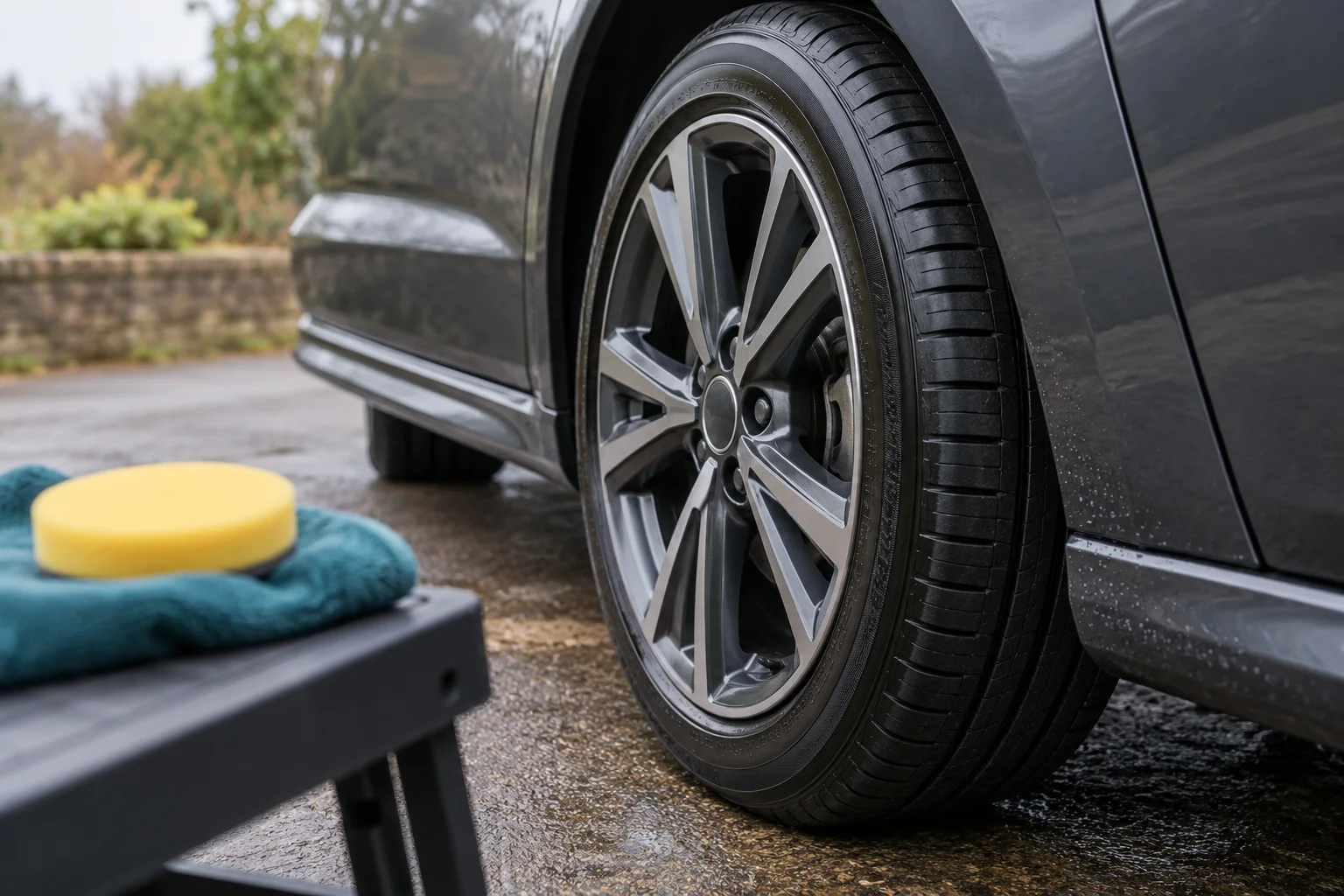
Identify the specks before changing products
Tyre-dressing sling is product thrown from the rotating tyre onto nearby bodywork. Similar marks can also come from application overspray, dirty runoff or water trapped around the wheel. Timing and location help you investigate, but a photograph of a spot does not prove its source.
If marks were already present before the car moved, overspray or drips are more likely explanations than rotation throwing product. If they appear after driving, look at the application amount, residue in lettering and the exact product's settling instructions. Do not buy a stronger or thicker dressing before checking how the existing one was used.
Start with whether dressing belongs in the routine
A dressing is optional. Follow the tyre maker's care before applying it, even if the bottle describes broad suitability. Michelin's sidewall guidance, for example, cautions against cleaning products, especially silicone-containing products. Where your tyre instructions restrict the treatment, finish with the permitted wash and leave the sidewalls undressed.
Dressing also cannot repair cracks, cuts, bulges or aged rubber. Suspected tyre damage needs professional advice separately from a cosmetic wash. A deeper black appearance after application should never be used to decide that a tyre is in good condition.
Work through the likely causes
| What you notice | What to check | Useful response |
|---|---|---|
| Wet product collected around lettering | Too much product or incomplete spreading | Use the product’s excess-removal method and a more controlled layer next time |
| Marks before the car moves | Overspray, drips or a contaminated applicator | Control placement and clean affected surfaces by an appropriate method |
| Patchy gel on recently washed rubber | Whether that gel requires dry sidewalls | Follow its dry-preparation instruction; do not borrow a spray’s wet-use permission |
| Specks after leaving immediately | Product-specific drying or settling was incomplete | Allow the instructed process; no universal wait applies |
| Residue returns despite careful application | Old product, contamination or another source | Reassess preparation and identify the material before adding more dressing |
Reduce surplus rather than chasing a stronger formula
Use the amount and spreading method specified for the dressing. A heavily saturated pad can deliver a large dose even when you add very little fresh gel. Inspect the applicator and the sidewall rather than judging only what leaves the bottle.
Work a controlled layer around the permitted sidewall area, keeping tread, brakes and other excluded surfaces clear. Pay attention to raised letters, grooves and the junction near the rim where surplus can remain. Do not add another coat simply to hide a patchy area before understanding why it looks uneven.
Autoglym's High Performance Tyre Gel provides one example: clean, dry sidewalls and a small amount on the recommended applicator, with its own gloss or immediate satin wipe-off method. Wet application can look patchy. That preparation belongs to the gel; it does not mean every spray dressing prohibits wet tyres.
For controlled dressing on permitted sidewalls
Autoglym High Performance Tyre Gel 500ml
A hand-applied tyre gel with a gloss or satin finishing method. Use a small amount on the recommended applicator and work it into clean, dry sidewalls.
- 500ml bottle
- Clean, dry sidewalls
- Hand application
Use only if your tyre maker permits dressing. Keep off tread, brakes and control surfaces; not for motorcycle or bicycle tyres. Wet application can leave a patchy finish, and excess product still needs controlling.
A gel still needs its excess handled correctly
Meguiar's Endurance removes the spray plume from application, but its manufacturer specifically advises wiping off excess to help prevent spin-off. Gel is a format, not a guarantee that an unspread surplus layer will stay in place during driving.
The selected 473 ml UK bottle is a separate product from an applicator bundle or a spray variant. Follow its label and use guidance for preparation, spreading and settling. Do not substitute a fixed waiting period copied from another bottle or assume a glossy surface is ready simply because the product is called long-lasting.
For a hand-applied gloss finish
Meguiar’s Endurance High Gloss Tyre Gel 473ml
A 473ml gel dressing for clean, cool, dry car-tyre sidewalls where the tyre maker permits its use. A foam pad helps spread a controlled layer without spray overshoot.
- 473ml gel
- Foam-pad application
- Remove excess product
Remove excess as directed to help prevent spin-off; the gel format does not guarantee zero sling. Keep off tread and do not use on motorcycles, bicycles or other two-wheeled vehicles.
Choose the finish by its proper method, not by leaving progressively more liquid on the rubber. If you prefer a subdued appearance, use the product's permitted wipe-off approach or leave the tyre undressed. A particular sheen is not worth an uncontrolled film.
Use an applicator you can control on the tyre profile
A large pad can be awkward on a narrow sidewall. Keep its working face within the intended area and avoid rolling dressing over the tread shoulder or onto the rim. Use a dedicated cloth for any instructed wipe-off and keep it away from bodywork drying towels.
The Meguiar's X3090 has a soft foam pad and contoured grip, with a protective sleeve for storage. It can help place a suitable dressing accurately, but it cannot correct an incompatible product or a pad carrying too much old residue.
For controlled sidewall application
Meguiar’s Tyre Dressing Applicator
A soft foam dressing pad with a contoured grip and protective storage sleeve. The selected listing is the applicator, separate from Endurance gel.
- Soft foam pad
- Contoured grip
- Protective sleeve
Reserve it for tyre dressing and match it to the sidewall profile. Keep dressing off tread and brakes; the sleeve contains residue but does not clean a contaminated pad.
Inspect the foam for damage and contamination. Clean or replace it according to its care rather than pressing harder to make a ragged edge spread evenly. The sleeve contains residue; it does not make the pad clean for another job.
Let the product complete its own finishing process
Have time available to finish the instructed method before the vehicle is needed. Drying and settling depend on the specific formula and conditions. There is no single five-, ten- or thirty-minute rule established for every dressing here.
Do not try to speed the process by driving, using a heater or adding an improvised solvent. Follow the bottle, control visible excess and leave out the treatment when you cannot complete it appropriately. For comparison of the named preparation methods, see spray versus gel.
If the product repeatedly transfers despite correct permitted preparation and application, stop using it while the cause is clarified. Ask the maker about the exact product, tyre surface and routine, rather than layering another formula over the residue.
Clean affected bodywork without spreading the problem
Use a bodywork-compatible washing method for the affected surface and separate clean paint tools. Do not wipe specks away with the tyre applicator or the cloth used to remove dressing. Avoid dry-rubbing gritty spots or using an improvised strong solvent on an uncertain finish.
If residue persists, identify it and check the vehicle or finish supplier's care before escalating treatment. If unexplained fluid continues to appear without any dressing application, do not assume it is a cosmetic product issue; obtain an appropriate assessment of the source.
For the next wash, use permitted sidewall preparation, separate tools and a deliberately controlled application. Fixing the amount, preparation or timing often answers the practical question before another product purchase is needed.
Common questions
Does tyre dressing sling only because the product is poor?
No. Excess product, residue trapped in lettering, inappropriate wet preparation or an incomplete finishing process can all matter. First distinguish rotational sling from overspray, drips or dirty runoff. Check the exact application method before replacing the bottle.
Will switching from spray to gel stop sling?
Not by itself. Gel avoids a spray plume but can still transfer if surplus remains. Meguiar’s Endurance guidance calls for removing excess to help prevent spin-off. Match the tyre-maker restrictions and follow the chosen product’s preparation, spreading and settling method.
How long should I wait before driving after dressing?
Follow the exact label and use directions. No universal waiting time is established for every formula and condition. Plan enough time to complete the instructed process, control excess and skip the treatment when you cannot finish it appropriately.
Can I apply gel to wet rubber to save time?
Do not borrow a spray product’s wet-use permission. The featured gels require clean, dry preparation; Autoglym warns that wet gel application can produce a patchy result. Use the method for the actual bottle or leave the tyre undressed.
Can I wipe dressing specks off with the tyre cloth?
Keep the tyre applicator and dressing wipe-off cloth away from bodywork. Use an appropriate paint-cleaning method and separate clean tools, avoiding dry rubbing or improvised solvents on an uncertain surface. Identify persistent marks before stronger treatment.
Sources and product instructions
Follow the label and care instructions for the exact version and surface you own.
- Autoglym High Performance Tyre Gel: dry-sidewall and application instructions
- Meguiar’s Endurance High Gloss Tyre Gel G7516EU
- Meguiar’s Endurance: remove excess to prevent spin-off
- Meguiar’s Tyre Dressing Applicator X3090
- Autoglym Instant Tyre Dressing: wet/dry and sponge application
- Michelin: sidewall damage and cleaning-product cautions