
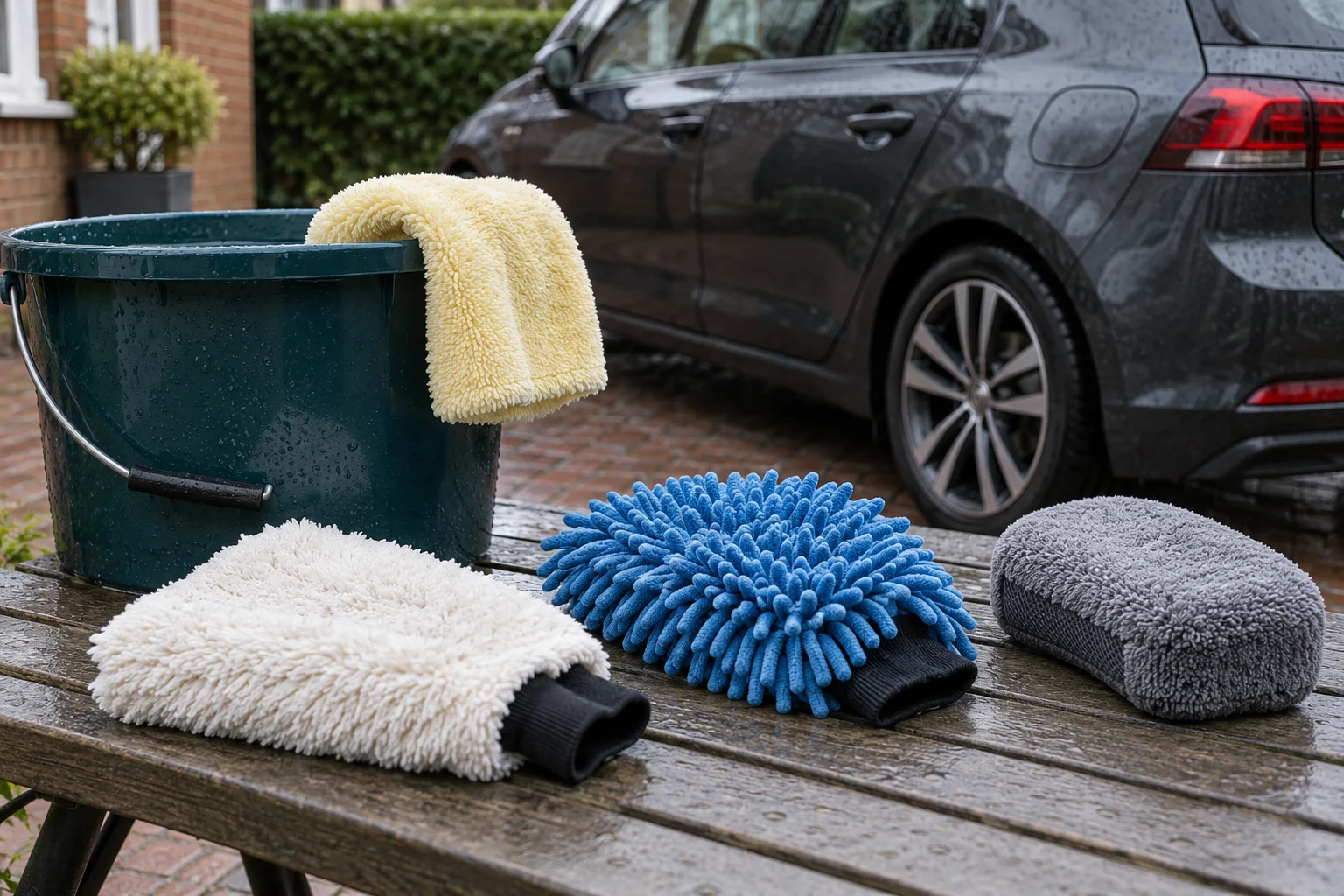
Choose a wash mitt you can control, rinse and clean properly. Fibre softness matters, but so do cuff fit, seams, how heavy the mitt feels when wet and whether its care method suits you. No mitt makes washing scratch-proof if grit remains on the car or in the fibres.
These three microfibre options have clear practical differences: a plush machine-washable mitt, a hand-wash-only noodle mitt with a mesh section, and a seamed mitt supplied with a washbag. All belong in a complete routine that starts with rinsing and keeps wheel equipment separate.
Start with grip and manageable size
A mitt that slips on your hand becomes difficult to control around mirrors, sills and lower doors. Look for a cuff that will hold comfortably without forcing your hand, and consider whether an internal seam or finger division will make it easier to guide. A very large pad can carry solution but may feel cumbersome around detailed areas.
Allow for wet weight. Catalogue photographs show a dry textile; the tool will behave differently once loaded with wash solution. If you cannot try it before purchase, compare construction and dimensions where published, then check the retailer’s exact variant. A large-looking photograph does not establish how it fits your hand.
Three mitts with different care requirements
| Mitt | Useful distinction | Care decision |
|---|---|---|
| Meguiar’s Super Thick Microfibre | Plush mitt; selected UK model X3002EU | Manufacturer states machine washable; check supplied cycle label |
| Autoglym Microfibre Noodle Mitt | Noodle fibres, cuff and separate mesh section | Hand-wash only; mesh must not touch paint |
| Autoglym Polar Mitt | 420gsm, tapered cuff, centre seam and washbag | Machine washable; use the supplied temperature label |
Meguiar’s: a plush reusable bodywork mitt
Consider this option if you want a conventional microfibre mitt and a machine-washable cleanup method. It is also a logical individual purchase when your boxed kit provides liquids and buffing cloths but no contact-wash tool.
A reusable bodywork wash tool
Meguiar’s Super Thick Microfibre Wash Mitt
A microfibre mitt for contact washing the bodywork. Meguiar’s specifies machine washing, so it can be cleaned and reused as part of your regular wash routine.
- Microfibre
- Machine washable
- Separate from wheel-cleaning tools
Rinse it frequently during the wash and keep it separate from wheel tools. A dirty mitt can mark paint; no mitt guarantees scratch-free washing.
Autoglym noodle mitt: a hand-washed alternative
The noodle construction is the main washing face; the mesh is a separate feature with restrictions. Do not treat that rougher section as a way to scrub remaining insects from painted panels. It is a useful option only if you are willing to follow the hand-washing and drying method afterwards.
For a hand-washed noodle mitt
Autoglym Microfibre Noodle Wash Mitt
A red microfibre mitt with an elasticated cuff and a separate mesh section. An option if you prefer a noodle texture and are happy to hand wash the tool after use.
- Microfibre noodles
- Elasticated cuff
- Hand-wash only
Do not use the mesh on paintwork. Hand wash separately in cold water and air dry; do not machine wash or tumble dry. Keep wheel-cleaning tools separate from this bodywork mitt.
Autoglym Polar Mitt: seam, cuff and a dedicated bag
The Polar Mitt provides another approach to grip, with its tapered cuff and central seam. Its bag can help keep the dry mitt identifiable in storage. The name does not mean it should be used with snow-foam pre-wash as a contact shampoo; select the actual wash chemical for the task.
For grip and a supplied washbag
Autoglym Polar Mitt with Washbag
A 420gsm wash mitt with a tapered elasticated cuff, centre seam and included wash/storage bag. Useful when grip and a machine-washable cleanup routine matter to you.
- 420gsm construction
- Centre seam and tapered cuff
- Wash/storage bag included
Follow the temperature label on the supplied mitt: published Amazon and manufacturer temperatures differ. Store only when dry. It does not replace a pre-wash or make a dirty surface scratch-proof.
The Polar Mitt’s Amazon listing and current manufacturer page publish different wash temperatures. Follow the sewn-in instructions on the version supplied, and ask the manufacturer if those are missing or unclear. Do not assume a temperature from a different mitt in the same range.
Microfibre noodles, plush loops or a wash pad?
Different constructions change how the tool sits in your hand and how easily you can inspect it. A noodle surface exposes individual strands; a plush surface presents a denser face. Neither description proves that dirt will disappear into the textile or stay harmlessly trapped throughout a wash.
A wash pad is an alternative if you prefer holding rather than wearing the tool, but that adds a grip decision around lower panels. It should still be kept loaded with suitable shampoo and cleaned between sections. Choose a tool you can handle predictably rather than automatically choosing the deepest pile.
Build rinsing into the way you use it
Rinse away loose dirt before the first contact. Wash manageable areas from the upper surfaces down, rinse the mitt in separate water and check it before loading fresh shampoo. If you see or feel grit, stop; the answer is cleaning or changing the tool, not working around the contamination.
Keep a bodywork mitt distinct from wheel tools. If you use a second textile on very dirty lower sections, identify and clean it separately rather than returning it directly to the roof. Our two-bucket explainer shows how the containers fit around that routine.
Treat cleaning instructions as part of the purchase
A machine-washable mitt is convenient only if you can wash it using the permitted cycle and drying method. A hand-wash-only mitt can be straightforward for a small kit, but it needs time for proper rinsing and air drying. A washbag does not override the temperature or detergent limits on the label.
Inspect seams and fibres after cleaning. A damaged tool, trapped hard particles or residues from a different task are reasons to keep it away from bodywork. Replacing an unsuitable mitt costs less effort than trying to rescue a rushed wash with more pressure.
What to buy alongside it
Most people need suitable shampoo, separate wash and rinse containers and a drying towel before adding a second or third bodywork mitt. If the tool you already own is clean, intact and manageable, changing the brand may not improve the routine. Put the next purchase towards a genuine missing job instead.
The shampoo guide covers chemical choice, while the complete washing routine explains how to join preparation, washing and drying without carrying dirty equipment between stages.
Keep the mitt ready for the next wash
Follow wash-mitt cleaning for inspection, label-specific laundry and complete drying. Keep it within a separate bodywork-tool stream instead of mixing it with wheel equipment.
Common questions
Is a noodle mitt better than a plush mitt?
Construction changes feel, grip and inspection, but it does not establish a universal winner. Compare the cuff, seams and care method, then use either tool with correct rinsing and a clean surface. A dirty soft mitt can still mark paint.
Can every microfibre mitt go in the washing machine?
No. Autoglym’s noodle mitt is hand-wash only, while its Polar Mitt and the selected Meguiar’s mitt are stated to be machine washable. Follow the instructions for the exact product supplied, including temperature, detergent and drying restrictions.
Can I use the mesh side on paint?
Not on the Autoglym noodle mitt: its manufacturer specifically excludes mesh use on paintwork. Use the intended soft washing face and identify stubborn contamination separately. Do not assume that a useful-looking scrub section is compatible with every exterior material.
What should I do if I drop a mitt?
Put it aside until it has been thoroughly cleaned and inspected. Grit from paving can remain between fibres even if the surface looks acceptable. Keep a spare clean tool if needed; a quick dip and continued rubbing is not a reliable check.
Do I need one mitt for every part of the car?
You do need to keep wheel equipment separate from paintwork. Additional bodywork mitts are a practical choice when they help keep dirty lower areas apart from upper panels. Buying more tools only helps if you can identify, clean and store each one properly.
Sources and product instructions
Follow the label and care instructions for the exact version and surface you own.