
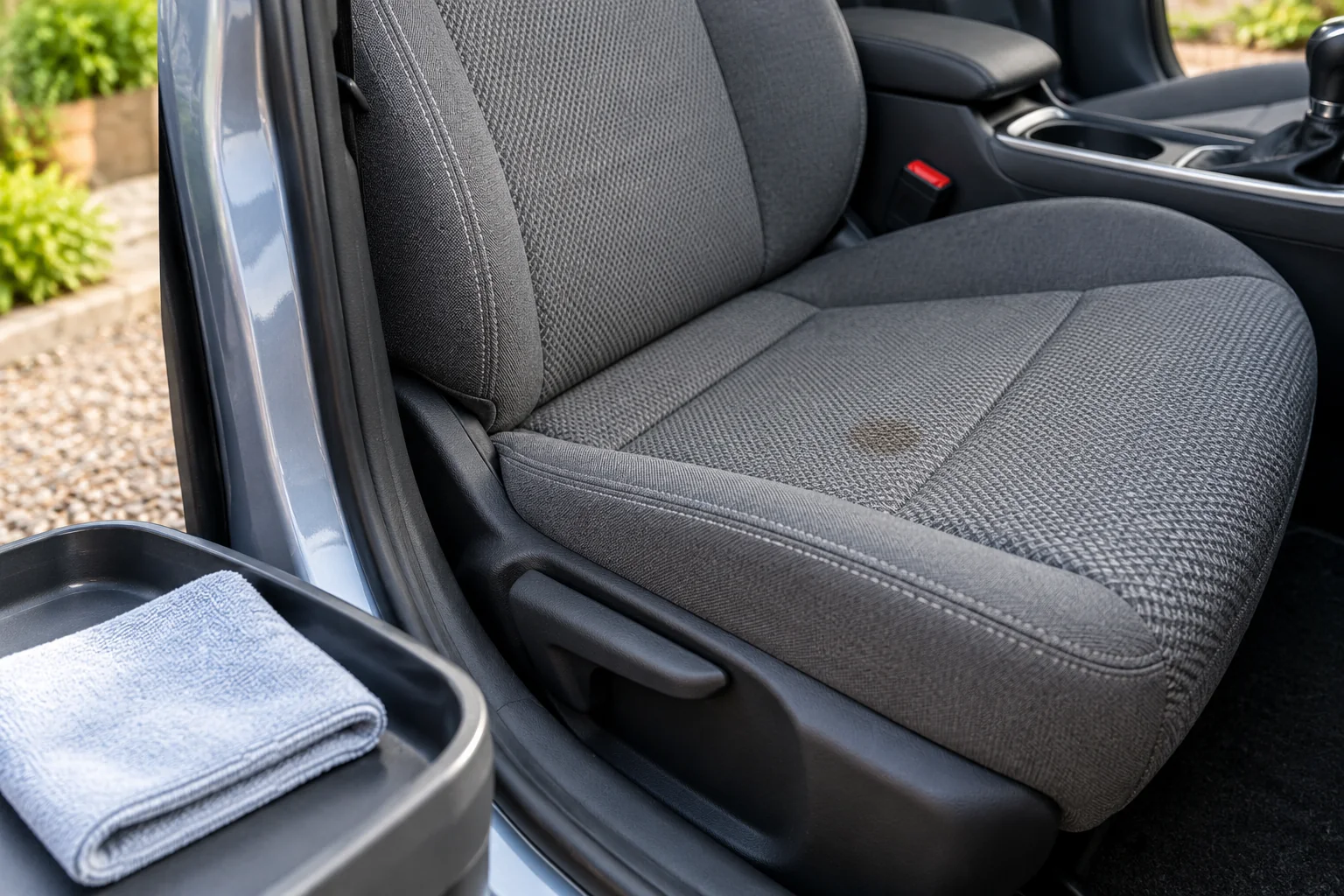
Decide whether this is a surface clean or a deeper problem
For ordinary dust, crumbs and light marks, cleaning fabric car seats usually starts with dry pickup and a small amount of compatible cleaner. The aim is to lift dirt from the covering and remove it, while keeping moisture under control. Wetting the whole cushion is not proof of a deeper clean.
First look at what happened. A fresh drink spill may have travelled into padding; a dry muddy mark may be mostly on top; faded fabric may not be dirty at all. If the seat is heavily saturated, smells persistently damp, has visible mould or has damaged material, get appropriate professional advice instead of treating it as routine stain removal.
This guide covers the vehicle's fabric upholstery. Child car-seat covers, harnesses and buckles have separate cleaning rules. Follow the restraint manual and remove the restraint only in accordance with its fitting instructions.
Prepare a small, separate interior kit
You need a vacuum approved for dry debris, suitable non-damaging attachments, a compatible fabric cleaner, clean cloths or the exact tool the label calls for, and a drying plan. Keep these textiles separate from wheel chemicals, wax and tyre dressing.
Look up the actual covering in the vehicle care information. Suede-like panels and mixed-material seats should not be treated as ordinary woven cloth by appearance alone. Seat seams, inserts and surrounding plastics may need different treatment within the same seat.
For cleaner selection, the upholstery buying guide compares ready-to-use products with a concentrate. Choose one compatible method for the job; there is no need to layer several cleaners over the same mark.
1. Remove loose dirt before adding moisture
Take out belongings and collect visible hard objects by hand where safe. Vacuum the dry seat surface using an attachment permitted for the material. Work along accessible seams without forcing a nozzle into the seat or rubbing hard plastic edges across the fabric.
Do not pull at seat wiring, remove connectors or feed a tool blindly under the seat. If moving the seat improves access, withdraw your equipment and hands before operating the mechanism. Deal with embedded pet hair on compatible carpet as a separate dry task.
Dry vacuuming first helps distinguish the actual mark from loose dirt. Otherwise, adding cleaner can turn dusty debris into a larger damp patch and load the cloth before you reach the stain itself.
2. Test the cleaner and let the test area dry
Choose a discreet part of the same covering, rather than assuming a hidden plastic panel provides a useful test for fabric. Follow the product's test method and look for colour transfer, water marking or a changed texture after drying.
If the test reacts, stop. Do not dilute an unsuitable ready-to-use product at random or try to cancel its effects with another chemical. Check the vehicle instructions or ask the upholstery supplier for a permitted approach.
A light hand-cleaning option
Autoglym Interior Shampoo provides a ready-to-use route for compatible fabric. The maker's process begins with vacuuming and uses light application with clean tools. Keep the operation controlled and follow its residue-removal directions rather than soaking the cushion.
For fabric seats and removable mats
Autoglym Interior Shampoo 500ml
A ready-to-use cleaner for compatible interior fabrics and hard surfaces. Useful for local cleaning after vacuuming, without introducing an extraction machine.
- 500ml spray
- Fabric and carpet cleaning
- Use after vacuuming
Vacuum first and apply lightly on compatible fabric. Not suitable for displays or infotainment. Autoglym permits leather use through a soft clean cloth, rather than direct spraying; vehicle material care still governs use.
3. Work a manageable area with the prescribed method
Apply the cleaner exactly as its directions specify. For a cloth-based method, use a clean working face and keep the amount modest. Address a manageable part of the covering so you can control the wet edge and remove dirty residue before moving on.
Use gentle movement and avoid grinding a concentrated mark into the weave. A stain can have a different cause from general seat grime, so repeated pressure on one point may change the appearance without removing the underlying problem. Follow any product-specific stain directions instead of combining household remedies.
A cloth-applied alternative
Gtechniq's UK I2 Tri-Clean directions put product on a damp microfibre cloth and use a clean cloth afterwards. It is another hand-cleaning choice where the seat-care instructions permit it. You do not need to use it after Interior Shampoo; select one appropriate process.
For a controlled cloth-based interior clean
Gtechniq I2 Tri-Clean 500ml
A ready-to-use interior cleaner for compatible fabrics, plastics and leather. The UK directions apply the product to a damp microfibre cloth, then remove residue with a clean cloth.
- 500ml spray
- Cloth application
- Separate from fabric protection
Vehicle material instructions take priority. Test discreetly, keep liquid out of openings and do not treat broad material claims as permission to clean every screen or child restraint.
4. Remove the dirt you have loosened
A wet-looking seat is not the finishing point. Use the label's removal step, changing to clean cloth faces and rinsing or replacing tools as required. Continuing with a dirty cloth can redistribute what you have just lifted.
Avoid leaving a heavy cleaner film. If the fabric feels sticky after drying, review the dose, mixing and removal process before adding more. Do not flood the surface to rinse away an uncertain amount of residue; use the permitted method or seek advice.
5. Give the seat a realistic drying opportunity
Choose a time when the car can remain unused long enough to dry properly. Ventilate in a secure, weather-appropriate way and keep rain out. Do not leave doors open unattended or use an improvised heater inside the cabin.
Seat heating is not a universal drying method. Follow the vehicle guidance rather than switching it on beneath a damp covering. In cold or persistently humid weather, postponing a wet clean may be more practical than wetting several seats that must be used again soon.
Only judge the finished colour and feel after drying. Shadows and damp fibres can make an area look different before the moisture has left it.
When concentrate or extraction changes the job
ValetPRO Advanced Interior Cleaner 1L can be useful for an owner who can measure and label a working solution. Its hand-cleaning and extraction directions are different. Confirm the version and label rather than using the machine dilution as a hand-spray recipe.
For owners who can measure a concentrate
ValetPRO Advanced Interior Cleaner 1L
A pH-neutral concentrate for compatible interior fabrics and hard surfaces. The manufacturer gives separate hand-cleaning and extraction dilutions rather than one mixture for every job.
- 1L concentrate
- Separate hand and machine dilutions
- Fabric and hard surfaces
Check the received label and distinguish the 1L concentrate from the ready-to-use version. A machine dilution does not establish that your seat or extractor permits it. Test for colour transfer.
A spray extractor adds liquid delivery and recovery, but does not make every car seat suitable for extraction. Check the seat assembly, machine and solution instructions together. A dry car vacuum cannot recover the applied solution.
Troubleshoot the result before repeating the clean
- A ring remains: allow full drying, then reassess uneven wetting or residue against the cleaner's method.
- Colour transfers to the cloth: stop and seek material-specific advice.
- The surface feels tacky: check concentration and residue removal.
- Odour returns: consider moisture or contamination below the covering rather than masking it with fragrance.
- The mark looks like abrasion or fading: cleaning cannot restore missing dye or damaged fibres.
Build lighter, regular dry cleaning into the interior routine. It is easier to assess a small mark on a generally clean seat than to diagnose several layers of dirt and old cleaning residue at once.
Keep specialist materials and machine cleaning separate
Use the suede-like upholstery guide for identified soft-pile inserts. If the vehicle permits extraction, compare upholstery extractors and follow the compatible-seat extraction method. A machine does not replace the covering and assembly checks.
Common questions
How long do fabric car seats take to dry?
There is no reliable universal time. The amount of liquid, padding, ventilation and conditions all matter. Assess the seat properly before using it; a dry-looking top layer does not prove that the cushion underneath is dry.
Should I scrub a stain with a stiff brush?
Only use agitation permitted for the covering and cleaner. Hard scrubbing can distort fibres or spread a mark. Begin with controlled cloth work and stop if the texture or colour changes.
Why did a ring appear after cleaning?
A boundary of residue, uneven wetting or contamination moving through the fabric can leave a visible edge. Let the area dry before judging it, check the product method and avoid repeatedly soaking the ring.
Can I clean a heated or ventilated fabric seat?
Follow the specific vehicle instructions. Heating elements, ventilation openings, sensors and connectors can restrict liquid use or extraction. The fact that a cleaner suits fabric does not settle the seat assembly.
Can a household steam cleaner replace upholstery cleaner?
Do not assume so. Heat and moisture can affect coverings, adhesives and seat components. Use steam only if the vehicle and equipment instructions explicitly permit that method for the exact material.
Sources and product instructions
Follow the label and care instructions for the exact version and surface you own.