
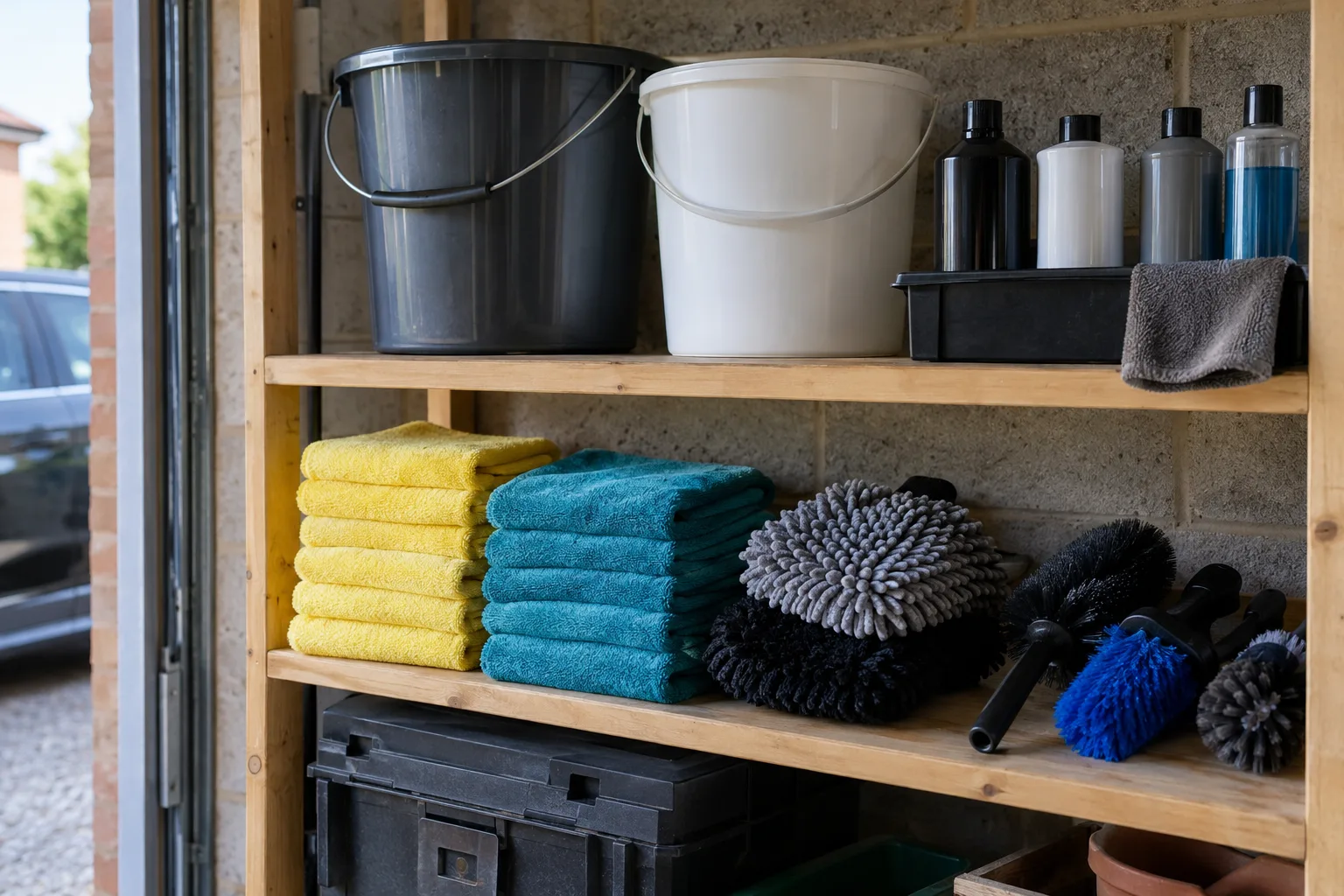
Clean kit is part of the routine
A towel or mitt is only useful if it is ready for the next job. Put equipment care at the end of the wash rather than leaving a damp collection of tools in a closed bucket.
Separate wheel tools from bodywork textiles, and keep glass cloths away from wax and dressing applicators. A labelled tub for each job makes the distinction easy to keep when the kit comes out again.
Reset the kit by what touched it
Sort by contamination and care instructions before deciding what can share a wash or a storage compartment. A paint-drying towel, a wheel cloth and an applicator carrying a finishing product are different cleaning jobs even when they are all soft textiles. Keep a clear route from used equipment through cleaning and drying to protected storage, with chemicals handled separately.
| Your next job | Start here | What to establish first |
|---|---|---|
| A dirty bodywork mitt | Follow the mitt’s care method | Hand/machine permission, trapped grit and drying limits |
| A drying towel that smears | Wash and reassess the towel | Residue, additives, hard particles and the textile’s label |
| Mixed cloths and applicators | Separate towels by task | Paint, glass, finishing, interior and wheel contamination |
| Limited garage space | Plan a compact kit | Actual shelf measurements and separate clean/used routes |
| Chemical bottles on a shelf | Check storage by product | Original packaging, access and product-specific conditions |
| Foam-lance residue or weak pickup | Use the maintenance guide | Shutdown, depressurising and model-approved cleaning |
Clean, dry and store the kit
- How to clean a wash mitt: remove loose dirt, follow the exact textile directions and know when to replace it.
- How to wash a car-drying towel: separate residues and respect the towel’s detergent and temperature limits.
- Organising a compact car-care kit: create clean-to-used routes and measure storage before buying boxes.
- Storing car-cleaning chemicals: use original labels and product-specific storage and disposal instructions.
- Separating microfibre towels by task: keep glass, drying, finishing, interior and wheel textiles identifiable.
Give the interior tools their own space
Keep interior detailing brushes, glass cloths and upholstery textiles away from wheel equipment. The interior routine explains which tools need to stay separate.
Follow the textile’s own care instructions
Different mitts and towels have different care requirements. Check the label or manufacturer’s instructions for hand washing, machine washing, temperature and drying. Do not assume that every item labelled microfibre accepts the same wash cycle.
A machine-washable mitt and a foam applicator can have different care requirements. Use the specific instructions for each item rather than putting everything through the same cycle.
After cleaning, inspect towels and mitts for trapped grit or damage. Retire or reassign an item that is no longer suitable for paintwork. Anything dropped on the ground needs cleaning before it goes back onto the car.
A detergent for the reusable textile kit
A dedicated microfibre detergent is useful when you regularly clean several detailing cloths. Gyeon TowelWash gives that wash a clearly labelled product; it is optional if your textile manufacturer already permits a suitable detergent you own.
For washing detailing textiles
Gyeon Q²M TowelWash 500ml
A dedicated detergent for cleaning reusable microfibre towels and compatible wash accessories. Useful for a growing textile kit when you want one clearly identified wash product.
- 500ml bottle
- Dedicated microfibre detergent
- No added fabric softener
Follow the textile’s care label and the detergent bottle for dose and cycle. Do not add softener or bleach. Detergent does not make hardened coating towels suitable for paintwork again.
Rinse accessories as directed
Follow the manufacturer’s cleanup routine for brushes, sprayers and foam equipment. Residue left in a bottle or lance can affect the next job. Before dismantling pressure equipment, follow the manual’s shutdown and depressurising procedure.
If a foam lance stops working normally, begin with the foam-lance cleaning and maintenance guide and the equipment maker’s instructions. Do not improvise with acidic wheel cleaner or another chemical simply because an online comment suggests it. Replacement seals, filters and fittings must match the equipment.
Give applicators their own cleanup
Autoglym’s shaped foam applicators are washed in clean warm water and air dried. That is a different routine from a machine-washable towel. If you need replacement pads, the twin pack lets you reserve one for a separate compatible task.
Controlled hand application
Autoglym Perfect Polish Applicator — Twin Pack
Two shaped foam applicators for compatible polishes and dressings. Autoglym lists Super Resin Polish among their intended uses; the pointed edges help you work around trim.
- Two applicators
- Shaped foam
- Wash and air dry
Reserve a separate applicator for tyre dressing. After use, wash in clean warm water and air dry. Check the bottle’s method; these are not machine-polishing pads.
Store bottles with their labels intact
Keep chemicals in their original labelled containers and follow the storage limits on the label and safety data sheet. Close caps, keep bottles upright where directed and store them securely away from children and animals.
Check whether a product needs protection from heat, sunlight or freezing. A garage shelf is convenient, but it may not meet the required conditions all year. Avoid decanting into food or drink containers, and do not mix leftovers from different products.
A box for clean, dry cloths
A lidded box keeps an organised set of fully dry textiles away from dusty shelves. The 9-litre Really Useful Box is a compact option for folded cloths and small applicators. Check its dimensions against your shelf and the size of your kit. Keep wet brushes and used wheel cloths elsewhere.
For storing clean, fully dry cloths
Really Useful Box 9 Litre — Clear
A clear lidded box for a small collection of folded towels and applicators. Labelling it “glass” or “bodywork” makes a separate clean-textile space easy to identify.
- 9 litre capacity
- 395 × 255 × 155mm external
- Clear box with lid
Dry everything before closing the lid. This is an organiser, not a drying container or a chemical-safety cabinet. Check shelf space and keep chemical storage separate.
Make the next wash easier
A small kit that is clean and clearly organised is easier to use than a large collection you have to sort each time. Store dry clean textiles away from gritty tools. Keep used cloths separate until washed, and check the bottles before you start rather than halfway through a job.
Common questions
Can I store towels while they are damp?
Dry textiles fully as their care label directs before storing them. Keep clean cloths away from damp, dirty equipment and open chemicals.
What if a wash mitt falls onto the driveway?
Remove it from the wash. Clean and inspect it properly before it returns to paint; a quick shake is not a reliable way to remove trapped grit.
Can I use fabric softener on microfibre?
Follow the textile’s label. Many detailing microfibres exclude softener because residues can affect their intended use; do not borrow a household laundry routine without checking.
Should I keep wheel tools in the same box?
Separate dirty wheel equipment from clean bodywork mitts, glass cloths and drying towels. Identifiable storage makes it easier to avoid mixing them during the next wash.
Do cleaning bottles need special storage?
Keep them upright, closed and identifiable, following the label’s temperature and storage requirements. Do not decant products into food or drink containers.
Sources and product instructions
Follow the label and care instructions for the exact version and surface you own.