
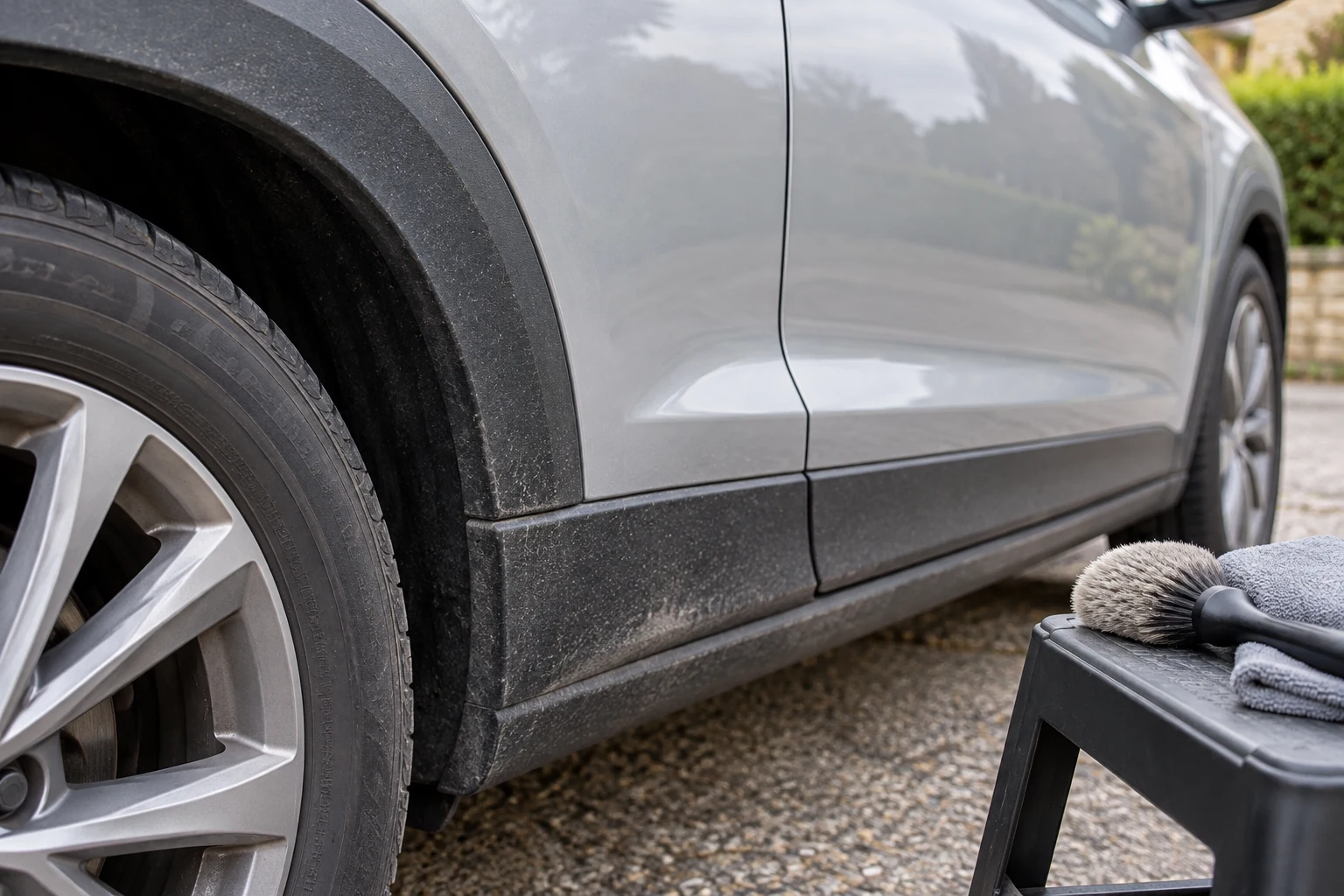
Identify what the black part is made from
Black exterior trim can be textured unpainted plastic, painted plastic, a gloss panel, rubber or a film-covered part. Those surfaces may sit beside one another but need different care. Before choosing a cleaner, establish which part you are working on and check the vehicle and finish instructions. A product intended for unpainted bumper plastic is not automatically suitable for a gloss-black pillar or a roof seal.
Routine dirt should be addressed by ordinary washing first. More chemical strength is not a substitute for removing loose grit, using clean tools or rinsing fully. A pale area may also be wax residue or weathered plastic rather than mud, so assess what remains after the normal wash before repeating the same cleaning step.
Keep the work local and manageable. Trim often meets paint, glass, cameras, rubber and metal, making overspray and dirty runoff more important than on a wide isolated panel. Choose conditions where the surface is cool and the product can be removed within its directions.
Start with the main wash
Rinse away loose dirt using a method permitted for the car. Wash with correctly diluted shampoo and a clean suitable tool. Give textured plastic enough gentle coverage to carry away the dirt without scrubbing at one dry patch. Avoid transferring grit from a wheel brush or lower wheel-arch tool onto trim beside painted bodywork.
Gtechniq GWash is one routine shampoo option where its directions and the vehicle’s care instructions fit the surface. Use the selected dilution for the wash; do not pour neat shampoo onto a stubborn pale mark and assume it is a stain remover.
A standalone bucket-wash shampoo
Gtechniq GWash 500ml
A concentrated, pH-neutral shampoo for a regular contact wash. A useful single-bottle choice when you already own a mitt and towels and do not need another boxed set.
- 500ml concentrate
- Bucket-wash shampoo
- pH-neutral formulation
Use the dilution on your UK bottle. This is GWash, not Ceramic GWash or a snow-foam pre-wash; follow your coating or finish supplier’s care instructions.
Work around edges without forcing bristles behind mouldings or lifting plastic clips. If you use a soft brush, it should be a clean tool suitable for the finish and dedicated to this work. A brush shape that reaches a wheel-bolt recess does not make the same used brush appropriate for a bumper corner.
Rinse the shampoo fully and inspect the trim. This first inspection tells you whether a separate cleaner is needed at all. Ordinary road dirt may already be gone, and the remaining appearance may need diagnosis rather than another full-car chemical stage.
Decide what remains
| Appearance | Likely question to resolve | Next action |
|---|---|---|
| Dirty film in texture | Is ordinary washing incomplete? | Repeat a controlled compatible cleaning stage with clean tools |
| White marks near a recently polished panel | Could this be product residue? | Use the separate wax-residue troubleshooting method |
| Evenly faded or patchy colour on dry clean plastic | Is the material weathered or previously dressed? | Assess before choosing optional dressing |
| Gloss black swirls, peeling or cracking | Is the surface painted, coated or damaged? | Use the correct finish advice or obtain assessment |
The table is a way to choose the next question, not a diagnosis from appearance alone. If you cannot identify the material or deposit, ask the vehicle maker or a detailer familiar with that finish. Avoid using a hidden-spot test as permission to ignore an explicit exclusion on the cleaner.
Use an all-purpose cleaner only where it adds a useful step
A suitable all-purpose cleaner can help when approved trim remains soiled after washing. Check its exact dilution and removal method, along with the surrounding materials. Gtechniq W5 is one option with role-specific instructions; it is not a reason to apply an undiluted degreaser across every black plastic part.
For approved cleaning with task-specific dilution
Gtechniq W5 Citrus All Purpose Cleaner 1L
An all-purpose cleaner with different preparation and dilution directions for different jobs. Choose the method for the actual surface and rinse as instructed before the next stage.
- 1L bottle
- Dilution depends on job
- Rinse after cleaning
Use the exact label and material approval, test discreetly and do not let the cleaner dry. Do not transfer a heavy-duty or neat application to every surface. Remove residue thoroughly and follow the next product’s preparation requirements.
Current W5 directions describe up to ten parts water to one part product for light soiling and five parts water to one part product for general cleaning. The order matters: these are water-to-product figures. Choose only a dilution permitted by the actual bottle and surface instructions. Do not borrow an old ratio from another formula or transfer a heavy-duty neat-use example to delicate trim.
Prepare any mixture in an appropriate clearly labelled bottle. Keep the original product identified and follow its handling directions. More concentration does not automatically produce a better result; it can change the compatibility and rinsing requirements of the job.
A controlled second-cleaning sequence
After establishing approval, test discreetly as directed and observe the result on the dry surface. Work a small section, controlling the cleaner so it does not drift onto adjacent materials. Use the specified working interval and only the permitted gentle agitation where it is needed. W5’s maker describes a three-to-five-minute interval before rinsing; that is not a universal timer for other cleaners.
Do not let a wet cleaner dry on the trim. If the weather or surface makes the method difficult to control, stop and change the conditions rather than rushing to cover more area. Rinse fully by a method suitable for the vehicle and cleaner, including accessible texture and edges where residue can collect.
Use clean drying materials and let the surface become dry enough to assess. Wet plastic can look darker, so comparing a just-rinsed patch with an already dry one is misleading. Look at the cleaned section in consistent light before deciding to repeat or add protection.
Cleaning and dressing are separate decisions
A trim dressing changes the appearance of compatible clean plastic and may be part of the maker’s care system. It does not establish that contamination underneath has been removed. If a pale wax mark disappears only while the surface is wet or dressed, do not count that as evidence that the residue has been cleaned away.
Read choosing an exterior plastic-trim dressing if the clean dry material is suitable for that optional stage. Apply the exact product’s method sparingly and keep it off glass, tyre tread, brakes and controls. Do not extend bumper-dressing advice to rubber roof mouldings or every door seal.
For white marks after polishing, use removing wax residue from plastic trim instead of stronger routine degreasing. It explains a maker-supported residue-removal option and why dressing is a later choice. A cracked, peeling or loose piece of trim needs repair assessment rather than a cleaner or a darker finish.
Keep the clean result easy to maintain
Rinse and clean the tools used on the trim before putting them away. Keep cloths carrying cleaner or dressing separate from the glass-finishing pile. If you used a brush for dirty exterior texture, label or store it so it is not later mistaken for an interior or paint-finishing tool.
At the next ordinary wash, inspect before adding another chemical stage. Repeat the mild permitted routine where it works, rather than treating every wash as a full strip-and-dress session. If marks keep returning in the same place, check for trapped residue, runoff from a nearby dressed part or damaged material so that the next step addresses the actual cause.
Common questions
Can I use car shampoo on black plastic trim?
Use a shampoo permitted by the vehicle and the trim’s finish instructions, at the specified wash dilution. Ordinary washing is the first step for routine dirt. Painted or gloss-black parts may need different handling from textured unpainted plastic.
Do I need an all-purpose cleaner every wash?
No. Add one only where approved trim remains soiled after the normal wash. Match the dilution, working interval and rinse method to the exact cleaner and surface rather than applying a stronger product automatically.
What does a 10:1 W5 dilution mean?
In the current maker’s light-soiling directions it means up to ten parts water to one part product. State the order when mixing and follow the received label; do not assume all brands write ratios in the same direction.
Will trim dressing clean white wax marks?
Do not rely on it for removal. A darker dressed appearance can mask remaining residue. Clean and inspect the dry trim first, using a product whose directions support that residue-removal job.
Can I clean gloss-black pillars like textured bumper plastic?
Do not assume the same method suits both. A gloss panel may be painted, coated or film-covered. Identify the finish and use its approved cleaning method, avoiding aggressive brushes and unapproved chemicals.
Sources and product instructions
Follow the label and care instructions for the exact version and surface you own.