
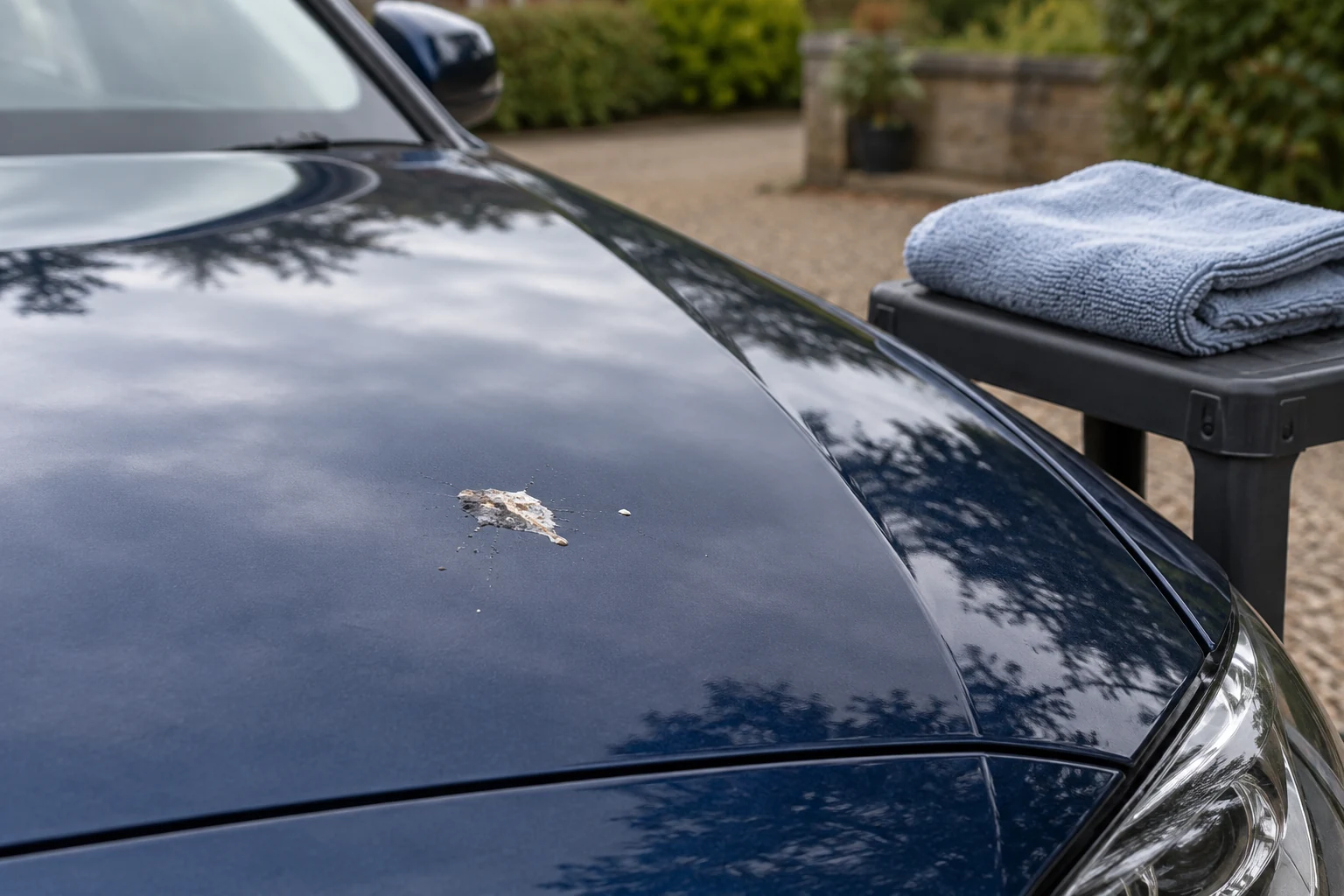
Remove the deposit without turning it into an abrasive
Bird droppings deserve prompt attention, but haste should not mean a dry wipe across the bonnet. A deposit can contain hard particles as well as organic material. The immediate job is to soften and remove what is on the surface while keeping that material from being dragged across surrounding paint.
Work on a suitably cool panel and check the actual finish. Conventional gloss paint, a wrap, paint-protection film, matt paint and a recent repair may have different care requirements. If a finish supplier specifies a method, use that instruction to select the cleaner and tool.
An existing blemish may remain after the dropping is gone. Separate that assessment from cleaning: repeatedly rubbing a clean patch can create more damage without addressing the original mark.
Prepare a small, clean kit
Have suitable water or an approved cleaning product available, plus clean soft textiles or the specified single-use wipe. Arrange somewhere clean for unused tools and a separate place for contaminated ones. Do not rest a cloth on the driveway while fetching another bottle.
You need enough control to remove the material and any product residue as instructed. If the car is hot or the cleaner would dry before you could finish, change the conditions first. Do not compensate with a concentrated chemical or a forceful pressure jet at close range.
| What you find | Useful response | Avoid |
|---|---|---|
| Fresh or readily softened deposit | Use an approved wet method and lift gently | A dry tissue dragged over the whole area |
| Dried material still attached | Allow further permitted softening and reassess | Scraping with a nail, card or blade |
| Deposit removed but a visible outline remains | Clean away residue, dry suitably and inspect | Treating every remaining mark as more dirt |
| Lifting paint, damaged film or uncertain repair | Ask the finish supplier or repairer before treatment | Using an ordinary paint-care claim as approval |
Step 1: soften before contact
For an intact finish whose care permits water-based cleaning, gently wet the deposit. A suitable damp cloth can hold moisture against it without becoming a scrubbing pad. Keep the method controlled and avoid rubbing the hard centre of the deposit while it remains attached.
If using a dedicated wipe or cleaner, follow its own softening directions. The product may be intended for a small isolated deposit rather than a whole dirty panel. Do not use a convenience wipe to dry-clean road grit around the mark.
Autoglym Bird Dropping Wipes are a relevant carry-in-the-car option. The directions put the wipe on the deposit and allow it to soften before removal. Each wipe is single use and should go into a bin afterwards.
For dealing with a dropping away from the wash kit
Autoglym Bird Dropping Wipes — 10 Pack
Ten single-use wipes intended to soften bird droppings before removal. The maker directs resting the wipe on the deposit rather than rubbing dry material across the paint.
- 10 single-use wipes
- Soften before lifting
- Dispose after use
Check specialist finish care first. Allow the deposit to soften, use without grinding and dispose of the used wipe in a bin. Removal cannot reverse an existing etched mark.
A wipe is a tool for the deposit, not a guarantee that the finish underneath is undamaged. If it has dried out, become gritty or is insufficient for the amount of material, stop and change the method rather than increasing pressure.
Step 2: lift material with minimal movement
Once the deposit has softened, lift the loosened material carefully according to the permitted method. Use a clean working face and small controlled movements. Avoid spreading a loaded face over a larger section of otherwise clean paint.
If part remains attached, return to softening rather than scrubbing harder. Do not pick at it with a fingernail or a rigid edge. A deposit that resists a compatible gentle method may need a different approved cleaner or professional advice; persistence alone does not establish safety.
Keep used cloths separate immediately. A textile carrying a dropping should not be returned to the clean drying-towel stack during the same job. For a single-use product, disposal is part of completing the task.
Step 3: remove residue and complete the clean
Follow the cleaner’s wipe-off, rinse or wash instructions. Avoid leaving a film of loosened contamination or cleaner on the panel. Where a routine home wash is appropriate, use a suitable shampoo and clean bodywork tools without dragging remaining material into the wash mitt.
Gtechniq GWash is a compatible-routine example, separate from the isolated-dropping wipe. A shampoo you already own can fill the same role if it suits the actual finish. You do not need several dedicated products to deal with a small deposit that responds to an approved simple method.
A standalone bucket-wash shampoo
Gtechniq GWash 500ml
A concentrated, pH-neutral shampoo for a regular contact wash. A useful single-bottle choice when you already own a mitt and towels and do not need another boxed set.
- 500ml concentrate
- Bucket-wash shampoo
- pH-neutral formulation
Use the dilution on your UK bottle. This is GWash, not Ceramic GWash or a snow-foam pre-wash; follow your coating or finish supplier’s care instructions.
Rinse and dry through the permitted routine. Inspect the working textile for residue before allowing it to touch another panel. If a tool was contaminated during removal, clean or retire it according to its condition and care instructions.
Step 4: distinguish remaining dirt from a paint blemish
Look at the clean area under useful light from more than one angle. A raised deposit, a greasy smear and an outline in the lacquer are different observations. Do not use the continued visibility of a mark as proof that more chemical or rubbing is needed.
If there is no removable material left, stop cleaning that spot. An etched-looking outline, colour change, cracking or uncertain damage belongs in a professional finish assessment. A photograph can help describe the problem to a detailer or repairer, but it cannot establish paint thickness.
Avoid hot-water, heat-gun and household-solvent tricks intended to make a blemish disappear. A temporary change in reflection or appearance does not demonstrate a lasting repair. Any correction should be appropriate to the paint system and remaining material.
For dried material concentrated across the front of the car, the insect-removal guide covers a different softening and rinse decision. Identify the deposit instead of assuming a dropping wipe is a whole-front-end pre-wash.
Make prompt removal easier next time
Keep an appropriate small removal kit accessible, with clean tools protected from grit. Check that wipes and bottle closures remain sound, and store products within their own requirements rather than assuming a hot vehicle is suitable permanent storage.
Compatible protection can be part of normal paint care, but it does not make droppings harmless or eliminate the need to remove them. Choose parking thoughtfully where practical and check the car after exposure. The useful habit is prompt, controlled removal followed by an honest inspection of the finish.
Common questions
Can I wipe bird droppings off with a dry tissue?
Avoid rubbing a dry deposit across the paint. It can contain hard material that marks the surface. Soften it with an appropriate wet method first, then lift carefully with a suitable clean tool or the product’s specified wipe.
How long should I leave a wet cloth on the dropping?
There is no universal time for every deposit, finish and product. Allow sufficient softening within the permitted method, keeping the area from drying. Autoglym’s wipes direct allowing the deposit to soften before removal rather than specifying a fixed interval.
Will removing the dropping remove the stain underneath?
Not necessarily. Residue on top of paint and a blemish in the finish are different problems. Inspect after a permitted clean and drying. Do not keep scrubbing clean paint to remove what may be etching or other damage.
Can I use bird-dropping wipes on a wrapped car?
Check the wrap supplier and the exact wipe instructions first. Broad hard-exterior suitability does not establish permission for every film, adhesive, matt surface or repair. Use the approved finish-care method where guidance differs.
Should I polish a mark left by bird droppings?
Only after the surface is clean, the mark has been assessed and correction is appropriate for the finish. Polishing can remove material and cannot restore missing lacquer. Seek professional advice for persistent or uncertain damage rather than automatically using stronger abrasives.
Sources and product instructions
Follow the label and care instructions for the exact version and surface you own.