
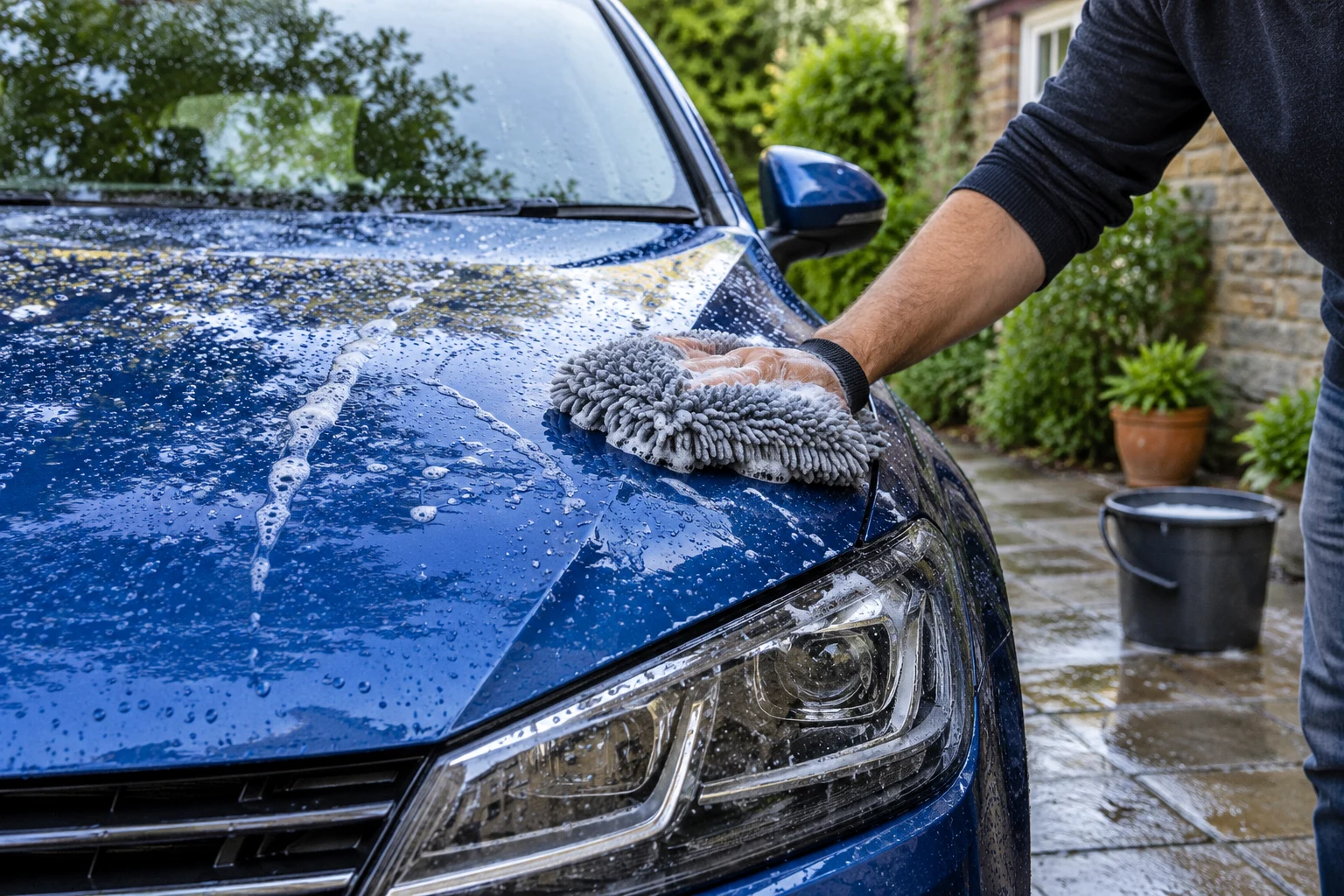
Start with the coating record
A ceramic coating changes the top surface of the paint, but it does not remove the need for careful washing. Dirty wash media can still carry abrasive particles, hard water can still leave deposits, and a hot panel can still dry before you finish it. The useful goal is a clean surface with as little unnecessary contact as practical.
Find the product name and the installer’s aftercare sheet before the first wash. Check whether the vehicle also has paint-protection film, matt panels or a convertible roof. Those areas can impose different limits even when the whole car received a ceramic treatment. If the record is missing, ask the installer rather than choosing a strong cleaner from its coating-safe headline alone.
Keep the first wash separate from normal maintenance. A product’s application time, resistance to rain and readiness for shampoo washing are different questions. An overnight stay indoors does not prove that every coating is ready for detergent. Once routine washing is permitted, keep the method repeatable so changes in the finish are easier to notice.
Choose shampoo for the installed system
A pure contact shampoo is a sensible starting point where the coating instructions permit it. It cleans without deliberately adding a wax-like layer. Gtechniq recommends GWash for its coatings, while CARPRO develops Reset around coating maintenance. These are useful system matches rather than proof that either bottle suits every coated surface.
A standalone bucket-wash shampoo
Gtechniq GWash 500ml
A concentrated, pH-neutral shampoo for a regular contact wash. A useful single-bottle choice when you already own a mitt and towels and do not need another boxed set.
- 500ml concentrate
- Bucket-wash shampoo
- pH-neutral formulation
Use the dilution on your UK bottle. This is GWash, not Ceramic GWash or a snow-foam pre-wash; follow your coating or finish supplier’s care instructions.
Use the actual dose on the bottle and measure the water you put in the bucket. An oversized bucket filled only halfway is not its nominal volume. More concentrate can leave more product to rinse away; it does not compensate for a dirty mitt or make a hot driveway easier to manage.
For a permitted CQUARTZ or compatible coating wash
CARPRO Reset Shampoo 500ml
A 500ml concentrated contact-wash shampoo developed for coating maintenance, without gloss enhancers. CARPRO gives a 1:500 dilution example; it is a bucket shampoo rather than a protective coating.
- 500ml concentrate
- No gloss enhancers
- Coating-maintenance contact wash
Confirm the installed coating’s aftercare and first-wash requirements. Follow the actual label, rinse thoroughly and keep the solution from drying. Do not infer film, wrap or matt-paint approval from coating compatibility.
Reset’s manufacturer example is 40ml in 20 litres of water, a 1:500 product-to-water mixture. That example belongs to this shampoo. For another bottle, use its own instructions. The dilution and cost guide explains measuring a dose without treating one manufacturer’s cap size as universal.
Prepare the working area before wetting the paint
Park in shade, let the bodywork cool and organise the hose so you are not pulling it over a clean panel. Have the drying towel ready before starting. If wind or sunlight is making water disappear rapidly, a smaller working area or a different time of day is more useful than a stronger solution.
Set out separate equipment for wheels and bodywork. Clean the wheels first if that suits your routine, then change tools and refresh any contaminated water before touching paint. A ceramic coating on a wheel does not make its brush appropriate for the bonnet. The separate wheel-tool guide helps keep that boundary clear.
- Inspect the mitt for grit, hard debris and dried product.
- Check the towel is clean, absorbent and free of dressing residue.
- Put dropped tools aside until properly cleaned.
- Keep bottles and hoses clear of walking routes.
- Make sure you can rinse and dry the whole area you intend to wash.
Pre-rinse and assess remaining dirt
Rinse loose dirt before bringing a mitt to the panel. A permitted pre-wash can help where traffic film needs more than water, but its concentration and dwell limits still matter. Thick foam is not evidence that a product is suitable for a particular coating. Avoid allowing any wash chemical to dry on the surface.
Look at the lower doors, rear of the car and areas behind the wheels after rinsing. If heavy material remains, do not simply push harder with the mitt. Repeat a permitted gentle stage or stop and identify the contamination. Tar, fallout and mineral marks need their own diagnosis; they are not all stubborn versions of ordinary dirt.
Contact wash with frequent tool cleaning
Work from cleaner upper panels towards dirtier lower sections, using light controlled passes. Rinse the mitt frequently and reload it with fresh wash solution. Keep the wet tool flat against the surface rather than pressing fingertips into a small patch. The coating is not a reason to increase pressure.
A reusable bodywork wash tool
Meguiar’s Super Thick Microfibre Wash Mitt
A microfibre mitt for contact washing the bodywork. Meguiar’s specifies machine washing, so it can be cleaned and reused as part of your regular wash routine.
- Microfibre
- Machine washable
- Separate from wheel-cleaning tools
Rinse it frequently during the wash and keep it separate from wheel tools. A dirty mitt can mark paint; no mitt guarantees scratch-free washing.
A soft mitt earns its place through cleanliness and control. Have a spare if the lower sections are especially dirty. When a tool drops onto paving, do not resume after a quick shake: separate it from the clean kit. The time saved by continuing is small compared with the contact you cannot undo.
Rinse completed sections before the solution dries. Work around badges and panel gaps without forcing the mitt into sharp edges. Finish the lower areas last, and keep wheel-arch liners, tyre dressing and exhaust residue away from the paint bucket.
Dry without turning the towel into another wash
After a thorough final rinse, dry with a clean soft towel using light contact. If a patch still looks dirty, return to a suitable cleaning stage instead of rubbing it with the drying towel. Absorb water from accessible areas and let trapped drips emerge before making a gentle final pass.
For drying clean bodywork
Gtechniq MF2 Drying Towel
A 60 × 90cm, 450gsm microfibre towel intended for car drying. Its larger area gives you a dedicated drying tool instead of relying on a small polish-buffing cloth.
- 60 × 90cm
- 450gsm microfibre
- Dedicated drying towel
Use a light touch on clean bodywork after completing the chosen wash method. Inspect for grit, wash after use and follow the textile’s care label. A drying towel cannot make a dirty surface safe to wipe.
A large towel is useful only while you can control it. Fold or support it so that corners do not trail onto the ground. Change to a clean towel when it becomes wet enough to smear rather than absorb. Put used towels aside for the separate washing routine.
Judge the result before buying a stronger product
Inspect clean, dry paint under consistent light. A smudge may be shampoo residue, trapped water or a mark that existed before washing. Take a photograph of a persistent patch and compare it after the next correctly completed wash, rather than adding several products in the same session.
Water beading is a useful observation, not a complete coating test. A change concentrated on lower doors suggests a different practical question from a mark around a single dried droplet. The hard-water spot guide explains why rubbing harder is a poor first response.
Ask the installer before applying clay, abrasive polish, solvent-heavy spot treatments or a new protective layer to a persistent problem. Describe what was used, its dilution and whether it dried. Keep any required warranty inspections separate from a home diagnosis. A short repeatable wash routine is easier to maintain than a shelf of products added to solve an unidentified change.
Keep a small record of problems
If a mark needs advice, note the affected panel, product and mixture rather than creating a complicated maintenance calendar. Include whether the surface was hot, whether solution dried and what the dry result looks like. Those details help the installer choose the next step and reduce the temptation to repeat an unsuitable treatment.
Common questions
When can I wash a freshly ceramic-coated car?
Use the coating installer’s written curing and first-wash instructions for the exact product and conditions. Do not borrow a waiting period from another coating or assume a spray sealant has the same cure.
Does a coated car still need a contact wash?
A rinse or pre-wash can remove loose dirt, but remaining road film may need a compatible lubricated contact wash. Do not scrub remaining grit or chase a touch-free result with increasingly strong chemicals.
Can I use wash and wax over a coating?
Only if the coating maker permits it. Added waxes or polymers can change the surface behaviour you are trying to maintain; a compatible pure shampoo makes the routine easier to assess.
Why is water no longer beading as strongly?
Dirt, residues, mineral deposits, surface condition and product wear can all affect water behaviour. Wash and rinse correctly first. Ask the installer about a persistent change before using decontamination or polishing products.
Should I clay a ceramic-coated car every wash?
No. Mechanical decontamination can mark the finish or disturb protection. Use it only where the coating maker or installer approves a specific need and method; it is not a routine wash stage.
Sources and product instructions
Follow the label and care instructions for the exact version and surface you own.