
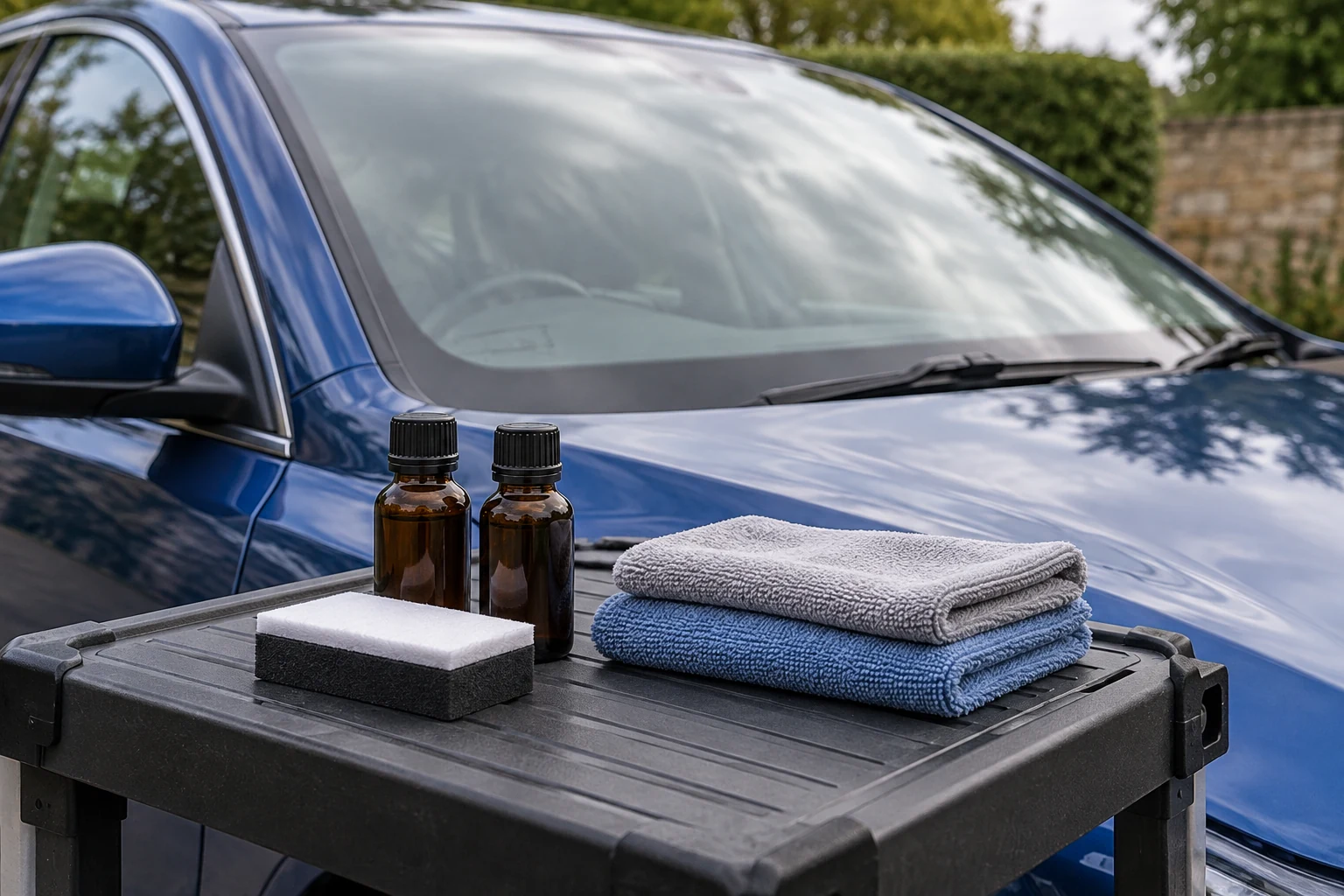
Check whether your windscreen may be treated
A windscreen rain repellent is optional. Before comparing bottles, read the vehicle’s glass and wiper instructions, including any restrictions linked to cameras or driver-assistance systems. A product being sold for windscreens does not establish approval for every car. For example, Tesla’s Model Y instructions prohibit hydrophobic treatment on the front windscreen because it can affect camera visibility. That specific restriction illustrates why the vehicle check comes first.
If the handbook excludes the treatment, choose a good exterior-glass cleaning routine instead. If the position is unclear, resolve it with the vehicle maker or relevant glass installer before purchasing. Approval for side windows or a rear screen is not automatically permission for the front windscreen.
The second check is the surface already present. An existing coating, aftermarket film, replacement pane or specialist repair may have its own cleaning and treatment rules. Do not assume that putting a second water-repellent product over the first will improve it. Maintenance and removal are separate decisions from applying a new layer.
The options
The two selected products provide contrasting application formats: a liquid used with a separate cloth and a bottle with an integrated felt applicator. Neither is ranked here by driving visibility, water-shedding speed or service life. Those claims would need evidence beyond comparing product instructions.
| Option | Format | Application commitment | Key check |
|---|---|---|---|
| Rain-X Original 200ml | Liquid; separate dry cloth | Prepare dry glass, apply, allow haze, repeat and remove haze | Original 200ml directions, not the 500ml spray or 2-in-1 |
| GYEON Q² QuickView 120ml | Integrated felt applicator | Spread cloudy film, observe the label’s wait, wipe with damp microfibre | Complete removal and vehicle permission; no skipped wait |
Rain-X Original: a separate cloth-applied liquid
The 200ml original Rain Repellent suits someone comfortable controlling a small amount of liquid with a folded dry cloth. The technical directions specify clean dry glass, application above 4°C, overlapping circular coverage, haze formation, a repeat application and final haze removal. Read the bottle before arranging the job, because the finishing materials and sequence are part of the purchase decision.
This selected bottle is not Rain-X Anti-Fog, a screenwash additive, the plastic treatment or the 2-in-1 cleaner. Similar branding is not enough to identify a substitute. If a listing offers several sizes or formulas, check the selected variant as well as the main photograph.
For a separate cloth-applied exterior-glass treatment
Rain-X Original Rain Repellent 200ml
The 200ml original liquid uses a folded dry cloth and an overlapping circular application on prepared dry glass. Its technical directions include haze formation, a repeat application and complete haze removal.
- 200ml original liquid
- Separate dry cloth required
- Glass treatment, not screenwash
Use only where the vehicle and glass-treatment instructions permit. Apply above 4°C as directed; not for plastic or Plexiglas. Keep wipers and washer operation effective; do not transfer directions from the 500ml spray or 2-in-1 cleaner.
GYEON Q² QuickView: an integrated felt format
QuickView puts the applicator on the bottle, which reduces the number of separate application pieces to organise. It still needs thoroughly cleaned glass and a suitable damp microfibre for removal. The maker describes spreading a cloudy film and waiting 5–20 minutes according to conditions before wiping it clear. Check the received directions for the actual working interval.
Do not interpret a short application format or “no curing time” description as permission to wipe immediately, leave residue or drive before the glass is clear. The application interval and complete removal remain necessary stages. A built-in applicator also needs to stay free of grit; convenience does not make a contaminated working face suitable for reuse.
For an integrated felt-applicator format
GYEON Q² QuickView 120ml
A 120ml exterior-glass rain repellent with an integrated felt applicator. GYEON describes spreading a cloudy film, waiting 5–20 minutes according to conditions and wiping clear with a damp microfibre.
- 120ml bottle
- Integrated felt applicator
- Damp-cloth removal method
Vehicle restrictions override broad coating claims. Follow the received pack’s preparation, wait and removal directions; do not treat no-curing-time wording as permission to skip the application interval. No fixed durability or reapplication promise.
Compare the whole application, not bottle size alone
A smaller bottle with an applicator cannot be compared fairly with a larger liquid bottle by volume alone. The amount required depends on the directions, glass area, preparation, wasted liquid and the number of permitted coats. Without verified consumption for your method, a cost-per-windscreen figure would look more precise than it is.
Instead, compare what you need to complete the job:
- An approved glass cleaner and enough clean cloths for preparation.
- The specific applicator or folded cloth required by the treatment.
- The dry or damp finishing material specified by that product.
- A place to work within the label’s temperature and weather limits.
- Time to remove all residue and check normal wiper and washer operation.
You do not automatically need a glass polish before every treatment. Use deeper preparation only if the surface and selected treatment require and permit it. A roof instruction excluding abrasive glass polishing remains relevant even if a product’s general marketing suggests broad glass use. Keep the planned work focused on the pane actually approved for treatment.
Think about your normal journey and maintenance routine
Rain repellency does not remove the need for effective wipers, washers, suitable screenwash or a clear field of view. Do not choose a product on an implied promise of driving without wipers. Nor should water beading in a driveway photograph be treated as a measured improvement in night-time visibility.
For a household car, the practical question is whether you can maintain and inspect the treated glass properly. If cleaning is irregular, the blades already smear or there is a persistent film you cannot identify, address those issues before adding a treatment. A coating will not repair a worn blade, chip, scratch or camera fault.
If you already use a rain repellent, check its maintenance and removal instructions before switching. Avoid combining products simply because both are described as glass coatings. If the original treatment needs a particular removal process, arrange that first on suitable glass rather than burying an uncertain layer under another bottle.
Use realistic durability expectations
Service life varies with the treatment, preparation, weather, cleaning and wiper use. A fixed reapplication calendar is not a useful substitute for the product’s current directions and the glass’s condition. Do not keep layering product whenever the water pattern changes without checking whether contamination or incomplete cleaning is the actual cause.
QuickView’s manufacturer page contains differing longevity descriptions, so this comparison does not use a months-of-protection figure to rank it. The useful verified distinction is its felt application and damp-cloth removal method. Rain-X’s selected 200ml method is different, and its instructions should be followed independently rather than blended into a single generic coating recipe.
Before you order
Confirm the exact formula, pack and application route in the selected listing. Check whether the cloths you own are suitable and free from dressing or wax residue. If you need an extra cloth, buy for the role the label specifies rather than assuming a plush drying towel or an interior cloth is interchangeable.
For a first permitted application, choose the complete method you can carry out carefully. Read applying rain repellent to a windscreen before opening the bottle. If the vehicle excludes the treatment or you cannot prepare and clear the glass properly, a clean untreated windscreen is the appropriate finish.
Common questions
Can rain repellent be used on every windscreen?
No. Vehicle instructions and camera or glass-system restrictions take priority. Tesla’s Model Y manual is one specific example prohibiting hydrophobic treatment on the front windscreen. Check the instructions for your own model.
Is rain repellent the same as a glass cleaner?
No. A cleaner removes contamination; a repellent leaves an intended treatment on permitted glass. Some combined products exist, but their directions are different from the standalone treatments selected here.
Which is easier: a separate cloth or integrated applicator?
That depends on the method you can complete properly. A separate cloth needs controlled dosing; an integrated applicator still needs a clean working face, the prescribed wait and a separate removal cloth. Neither eliminates preparation.
How long will a windscreen rain repellent last?
There is no single useful interval for every product and car. Follow the received directions and assess the glass and wiper behaviour. This guide does not rank longevity or promise a fixed reapplication schedule.
Can I apply another brand over an existing coating?
Only where the vehicle and both treatment instructions permit the combination. Otherwise use the existing coating’s maintenance or approved removal method first. Similar water-beading claims do not establish compatibility.
Sources and product instructions
Follow the label and care instructions for the exact version and surface you own.