
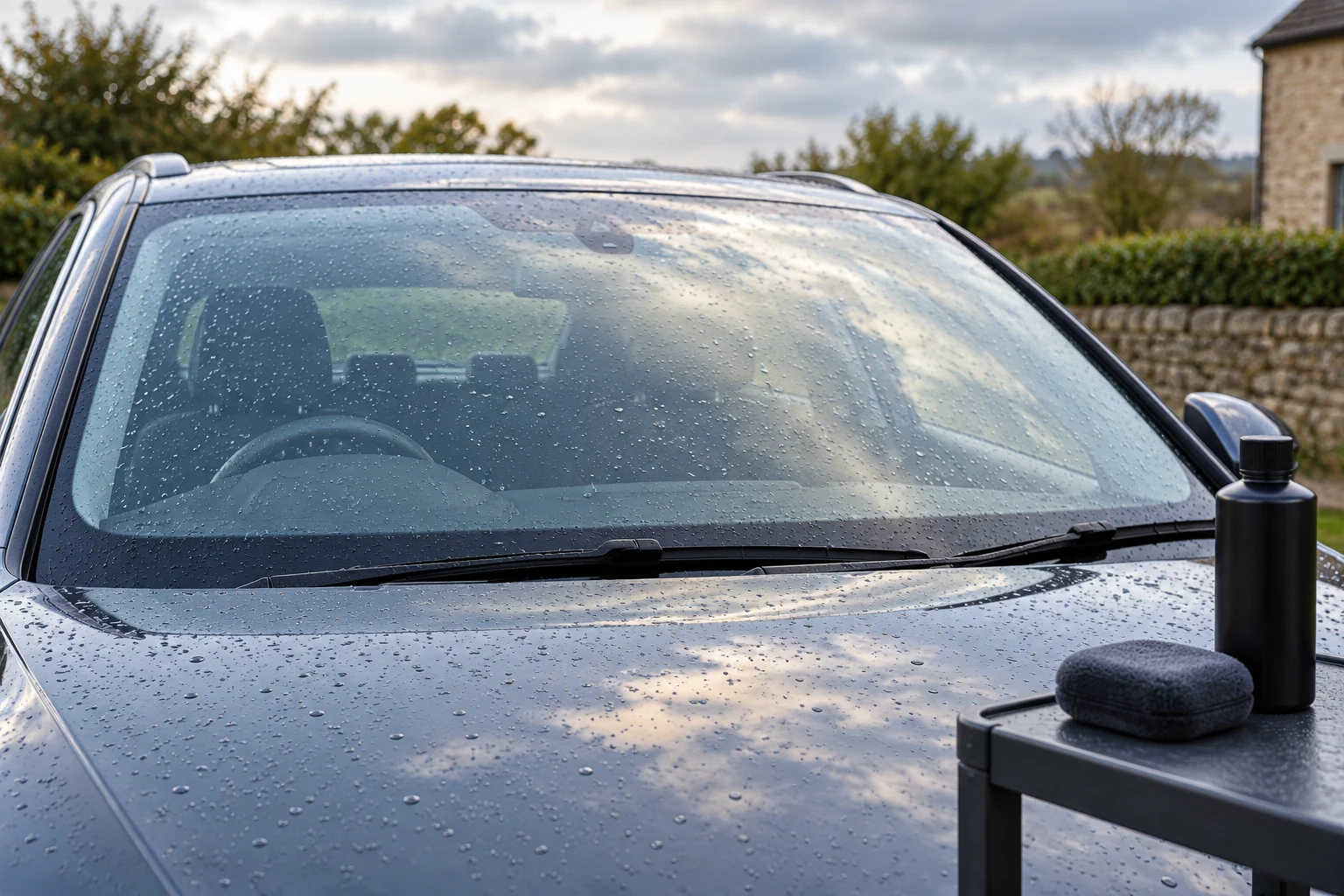
Establish permission before preparing the glass
Read the vehicle’s windscreen and wiper care instructions before opening a rain-repellent bottle. Some cars restrict hydrophobic windscreen treatments because of camera or wiping behaviour. Tesla’s Model Y manual provides a specific example; it should not be turned into a claim that every other model is approved. Check your own vehicle, replacement-glass instructions and any existing coating.
If treatment is excluded, finish with clean exterior glass. If approval is unclear, resolve it before application. Do not use a side window as a test that proves the front windscreen is suitable. The front pane’s visibility and camera requirements may differ.
This guide covers two selected formats separately: Rain-X Original Rain Repellent 200ml and GYEON Q² QuickView 120ml. The label on the bottle you receive governs the detailed process. Do not copy the 200ml liquid instructions onto a Rain-X spray, anti-fog product, plastic treatment or combined cleaner.
Prepare the job and the work area
Choose conditions within the product’s limits, with enough time to complete preparation, application and residue removal. Do not begin when the glass is hot or the weather will interrupt a stage that needs dry conditions. Put the bottle and finishing materials on a stable surface within easy reach, away from the paintwork and the path around the car.
Arrange clean preparation cloths and the separate application and removal materials required by your product. Keep them away from wax, trim dressing and tyre-care cloths. A folded cloth should provide a clean working face; if it collects grit or is dropped, replace it with a suitable clean one rather than continuing across the windscreen.
- Check the exact formula and size on the bottle.
- Read the preparation, temperature, wait and removal instructions together.
- Confirm that the existing glass coating can remain or has been removed by an approved method.
- Make sure you can reach the work without leaning on dirty paint or forcing wipers.
- Leave time for a stationary clarity and wiper check before the car is used.
1. Clean and inspect the windscreen
Wash away loose dirt first, then use a compatible automotive glass-cleaning method to remove remaining film. Check both faces of the pane; an interior smear can make the outside appear unfinished. The interior-glass guide covers that separate surface.
Inspect the prepared glass from different angles. If residue remains, identify it before applying a treatment over it. Do not automatically add clay, an abrasive pad or a glass polish because the next bottle is a coating. Preparation must be suitable for the vehicle, glass and selected product. A chip, scratch or damaged film needs assessment rather than additional pressure with the applicator.
Follow the treatment’s required final preparation. Rain-X’s selected liquid requires clean dry glass. QuickView also requires thoroughly cleaned glass. A cleaner from one range is not automatically a complete preparation system for every treatment; use any additional preparation only where the specific directions call for and permit it.
2. Follow the method for the bottle you have
| Stage | Rain-X Original 200ml | GYEON Q² QuickView 120ml |
|---|---|---|
| Apply | Folded dry cloth; overlapping circular coverage on clean dry glass | Integrated felt applicator; spread the prescribed cloudy film |
| Working interval | Allow haze and repeat as directed | Observe received directions; maker describes 5–20 minutes depending on conditions |
| Remove residue | Complete haze removal using the specified dry-cloth or water/paper method | Damp microfibre, wiping until clear |
| Before use | No remaining haze; normal visibility and wiping | No remaining film; normal visibility and wiping |
Rain-X Original 200ml
Use the 200ml product’s technical directions, including application above 4°C. Apply with the specified small folded dry cloth and overlapping circular movements. Allow the film to form its haze and repeat the application as instructed for coverage. Keep the material controlled on the permitted glass rather than flooding edges or adjacent surfaces.
Remove the final haze completely using the specified method. The maker describes a dry cloth, or water and paper towel, for this stage. That is a finishing choice within this product’s method, not a rule that every glass treatment should be wet-wiped. Stop if you cannot obtain a clear finish; do not leave a milky patch to “wear off” while driving.
For a separate cloth-applied exterior-glass treatment
Rain-X Original Rain Repellent 200ml
The 200ml original liquid uses a folded dry cloth and an overlapping circular application on prepared dry glass. Its technical directions include haze formation, a repeat application and complete haze removal.
- 200ml original liquid
- Separate dry cloth required
- Glass treatment, not screenwash
Use only where the vehicle and glass-treatment instructions permit. Apply above 4°C as directed; not for plastic or Plexiglas. Keep wipers and washer operation effective; do not transfer directions from the 500ml spray or 2-in-1 cleaner.
GYEON Q² QuickView 120ml
Use the integrated felt as instructed, spreading the treatment into the cloudy film described by GYEON. Keep the applicator clean and use controlled pressure and dosing. The manufacturer’s application text gives a 5–20-minute interval, with conditions affecting the wait, followed by removal with a damp microfibre.
Read that alongside the received label. “No curing time” wording does not mean there is no application wait or that the visible film can remain. Wipe until the surface is clear. Do not transfer Rain-X’s repeat-coat sequence or dry-haze removal to QuickView simply because both products are rain repellents.
For an integrated felt-applicator format
GYEON Q² QuickView 120ml
A 120ml exterior-glass rain repellent with an integrated felt applicator. GYEON describes spreading a cloudy film, waiting 5–20 minutes according to conditions and wiping clear with a damp microfibre.
- 120ml bottle
- Integrated felt applicator
- Damp-cloth removal method
Vehicle restrictions override broad coating claims. Follow the received pack’s preparation, wait and removal directions; do not treat no-curing-time wording as permission to skip the application interval. No fixed durability or reapplication promise.
3. Inspect before moving the car
Inspect the full windscreen, including the edges and the area in the driver’s normal field of view, while the car is stationary. Check from inside and outside so that an interior smear is not confused with treatment residue. The finished surface should be clear, rather than simply showing an attractive water pattern.
Follow the vehicle’s permitted stationary method for checking wipers and washers. Avoid running blades across dry grit. A treatment does not compensate for damaged blades, a faulty washer jet or poor screenwash preparation. If judder, smearing or a camera warning appears, stop using the treatment and follow vehicle and product advice on diagnosis and any approved removal. Do not add more liquid as the first response.
4. Maintain the result without automatic layering
Use cleaning methods compatible with the applied product and the vehicle. Keep the glass cloths separate from dressing and wax equipment. When performance changes, clean and inspect first; contamination can change water behaviour without proving that another coat is needed.
There is no universal monthly reapplication interval or number of coats for every windscreen. Follow the actual product directions, and check before switching brands or adding another layer. The buying guide explains these ownership differences. Leave panoramic roofs and other specialist panes to their own surface-care instructions, rather than extending a windscreen application around the whole car.
Common questions
Can I apply rain repellent straight after washing?
Only after completing the product’s specified glass preparation and any required drying. A freshly washed pane may still carry film, water or an incompatible treatment. Vehicle approval must be established first.
How long should I leave rain repellent before wiping?
Use the exact bottle’s directions. Rain-X Original 200ml describes haze formation and a repeat application; QuickView’s maker describes a 5–20-minute interval before damp-cloth removal. Do not use one universal timer.
Should the removal cloth be wet or dry?
That is product-specific. The selected Rain-X has its own haze-removal options, while QuickView specifies a damp microfibre. Read the complete method before starting and keep finishing cloths clean.
What should I do if the windscreen stays hazy?
Do not drive with unresolved treatment haze. Check the product’s residue-removal advice and the vehicle’s restrictions. If you cannot restore a clear finish, seek the maker or a glass specialist’s guidance rather than adding another coat.
Does rain repellent mean I can use the wipers less?
It does not replace functioning wipers, washers or appropriate screenwash. Use the vehicle’s systems as conditions require. Water beading alone does not demonstrate adequate visibility or permission to drive without wipers.
Sources and product instructions
Follow the label and care instructions for the exact version and surface you own.