
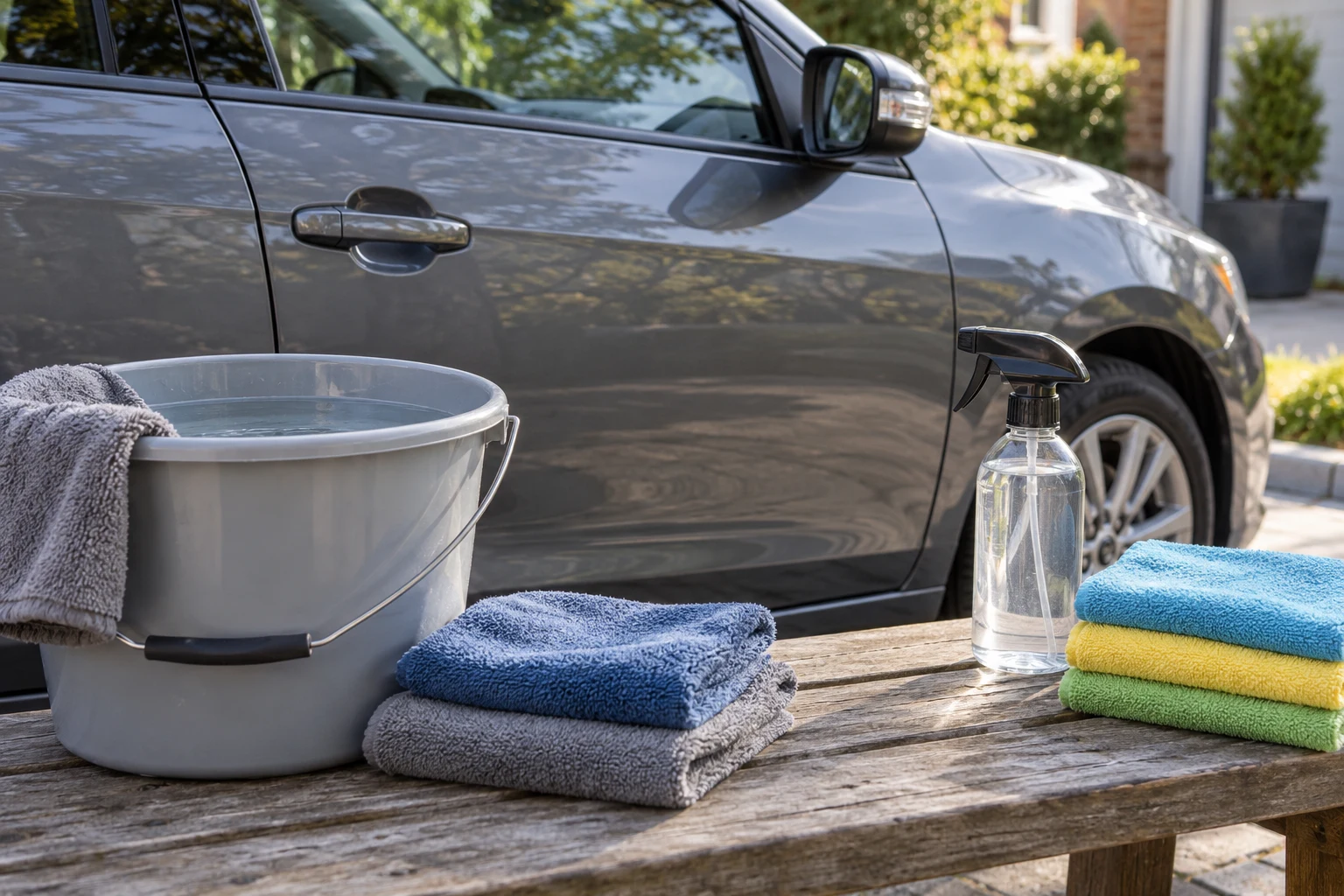
Compare methods rather than marketing names
Rinseless and waterless washing can both reduce reliance on a running hose, but they are not the same workflow. The difference matters at mixing time, while collecting dirt and when drying or finishing the panel. A bottle described as convenient does not tell you which of those steps it replaces.
A rinseless wash normally uses a purpose-made concentrate mixed into water. Wet wash media cleans a manageable section, which is then dried without the conventional final hose rinse. A waterless clean uses a suitable spray, either ready to use or diluted for that exact role, with a controlled wipe-and-finish method.
Both involve contact with the surface. The useful question is whether the chosen method can remove today’s dirt without carrying contamination into the next pass. Do not start by ranking the methods as universally safe or unsafe; identify the car, finish, soil and available working conditions first.
The practical differences
| Question | Rinseless | Waterless |
|---|---|---|
| Where is the solution? | Usually a bucket of correctly diluted concentrate | A ready-to-use spray or a separately specified spray dilution |
| What wets the wash media? | The prepared wash solution, with any permitted pre-spray | Product applied as the spray-and-wipe directions require |
| How is the section completed? | Clean, then dry promptly with separate media | Collect dirt, then complete the specified fresh-cloth finish |
| What changes the decision? | Bulk grit, hot panels, tool contamination and surface restrictions | The same limits, plus sufficient spray and clean cloth supply |
Neither column is a recipe for ordinary shampoo left unrinsed. If the bottle is a conventional contact wash, follow its rinse instructions. Likewise, a quick detailer intended to remove fingerprints from a clean car should not be promoted into a dirt-removal product without the maker’s permission.
A rinseless example: concentrate and measured water
The selected blue ONR Wash & Shine is a rinseless concentrate, not a ready-to-use waterless spray. The rinseless washing method uses a water mixture, wet media and prompt drying of each section. The received formula and revision determine its other permitted applications.
For a measured bucket-based rinseless wash
Optimum No Rinse Wash & Shine 946ml
A single 946ml bottle of the blue Wash & Shine rinseless concentrate. Used with the specified water mixture and clean wash media, followed by drying each completed section.
- 946ml single bottle
- Blue Wash & Shine concentrate
- Water dilution and separate drying required
Check the received revision and directions. This is not the green Wash & Wax or yellow Opti-Coat formula. Heavy mud and grit need bulk removal first; no universal permission for specialist finishes, displays or interior assemblies.
Mix only the amount needed for the stated method and measure the water actually used. A bucket’s nominal capacity is not the volume in it. Keep application recipes separate: a product may have one dose for washing and another for detailing or a specialist use.
This approach can be practical for routine maintenance when you can organise wet cloths or an appropriate mitt-cleaning method. It still needs clean media, drying towels and somewhere sensible to handle the solution. Not needing a final hose rinse does not mean the whole job happens with a dry cloth.
A waterless example: ready-to-use wash and wax
Meguiar’s G3626EU is a ready-to-use waterless wash with an added wax finish. It is a different purchase from the bucket concentrate above. The full method uses cloths to collect dirt and complete the finish, rather than treating a quick spray as the whole cleaning stage.
For a ready-to-use waterless clean on suitable light soiling
Meguiar’s Ultimate Waterless Wash & Wax 768ml
A 768ml ready-to-use spray-and-wipe wash with an added wax finish. Use separate clean cloth faces for collecting dirt and finishing; it is different from a bucket-diluted rinseless concentrate.
- 768ml ready-to-use spray
- G3626EU
- Adds a wax finish
Not a substitute for removing mud or grit with a suitable conventional wash. The glossy wax finish needs approval on coatings and low-sheen surfaces. Do not dilute as though it were ONR or rely on one cloth for an entire dirty car.
Meguiar’s expressly distinguishes muddy or gritty cars from suitable waterless cleaning. Do not interpret the product name as permission to remove caked-on material by repeated wiping. Check the finish too: an added glossy wax layer may be unsuitable for a matt surface or a maintenance system with narrower instructions.
A ready-to-use bottle is convenient when measuring concentrate is not wanted, but it is not automatically economical for every wash. The amount used depends on area, condition and the label’s required coverage. Do not ration spray so severely that the cloth is effectively wiping dry soil.
Judge dirt before choosing the bottle
Look at the bonnet, roof, lower doors and rear of the car. A surface that appears dusty at standing height can carry gritty material near the sills. Sand, mud and hardened deposits should trigger a different removal decision before contact washing begins.
If a pre-rinse is necessary, include it honestly in the plan. You may still complete a compatible rinseless wash afterwards, but the job is no longer accurately described as requiring no running water at all. If the location cannot support that preparation, move the wash or postpone the full clean.
Keep bonded contamination separate. Tree deposits, tar and fallout may remain after a normal wash. Neither a stronger waterless mixture nor extra rubbing is a substitute for identifying the contaminant and checking an approved removal method.
Plan the cloth changes for either method
Use a clean suitable cloth face for the next contact, not merely the face that looks least dirty. Fold carefully, change frequently and place used media apart from clean supplies. A separate finishing or drying cloth should not become the last dirty cleaning cloth of the session.
For a supply of separate clean plush cloth faces
The Rag Company Eagle Edgeless 500 — blue four-pack
Four blue 16 × 16in plush edgeless microfibre towels, specified as 500gsm and a 70/30 blend. Useful for permitted rinseless or waterless methods with frequent changes to clean faces.
- Four blue towels
- 16 × 16in / about 41cm square
- 500gsm / 70:30 blend
A four-pack is a starting supply, not a guaranteed whole-car allowance. Wash and inspect before use, keep dirty cloths separate and follow textile care. Plush fibres do not make trapped grit harmless.
There is no reliable universal number of towels for a car. Vehicle size, dirt and the permitted method affect the allowance. Have spare clean media available and stop if it is exhausted. Buying a plush towel does not make a contaminated face appropriate for another panel.
Keep wheel and tyre tools separate. If a cloth drops onto paving or collects gritty residue, put it aside for proper cleaning and inspection. A quick shake over the bucket is not the same thing as restoring a clean paint-contact surface.
Work within the drying window
Shade and cool panels make either routine easier to control. Complete one manageable section before moving on, and observe whether the liquid is disappearing too quickly. Hot surfaces and wind can make the practical window much shorter than the product’s marketing suggests.
Do not compensate with stronger arbitrary mixtures or heavy buffing. Follow the label’s remedy if residue dries, and change conditions if the problem repeats. A small successful test section is more useful than spraying the whole car and then chasing marks around it.
Count the whole routine when deciding
Compare the liquid, dilution tools, cloth supply, drying stage and laundering needs together using the rinseless-product buying guide. Concentrate consumption can be calculated under a stated water-volume assumption; whole-car cost needs your actual usage and purchase price. Avoid a fixed washes-per-bottle claim without those assumptions.
Choose rinseless when a measured wet-media routine suits the conditions, or a suitable waterless product when its spray-and-cloth method fits. Choose a conventional wash where bulk contamination demands it. The best decision preserves clean contact and clear limits rather than forcing every car into whichever bottle is easiest to carry.
Common questions
Which method uses less water?
A ready-to-use waterless spray does not need bucket dilution at use, while rinseless washing uses measured water. A complete comparison also includes any necessary pre-rinse and cloth laundry; do not assume zero total water use.
Can the same bottle do both jobs?
Some concentrates have separate approved recipes, but many products support only one method. Follow the exact formula and revision. Do not use a rinseless bucket dilution as a waterless spray unless its instructions permit it.
Is a quick-detailing spray a waterless wash?
Only if the maker explicitly provides that cleaning use and its limits. A spray for finishing an already clean surface is not automatically intended to collect road dirt.
Which is better for a dirty winter car?
Choose the method after inspecting the dirt. Bulk mud, grit and heavy contamination may need a suitable conventional pre-rinse and wash. Neither lower-water method should be chosen simply to avoid that necessary removal stage.
Do I need separate finishing cloths?
Use the product’s full cloth routine. Waterless methods commonly separate dirt collection from final finishing; rinseless methods also need separate clean drying media. Keep dirty faces out of contact with the cleaned surface.
Sources and product instructions
Follow the label and care instructions for the exact version and surface you own.