
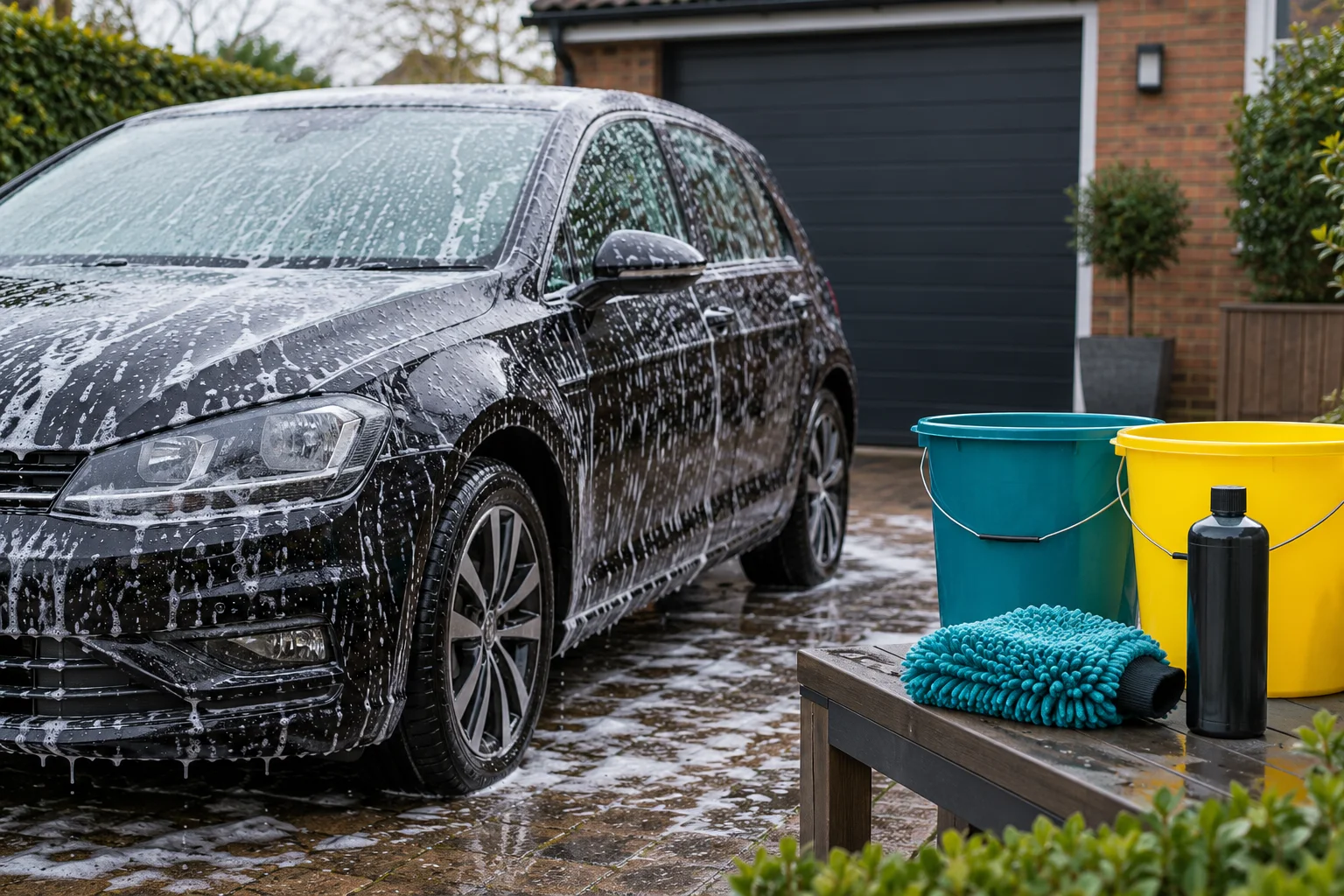
Start with the job, not the word “foam”
Snow foam is normally a pre-wash: apply it by an instructed method, allow suitable dwell and rinse away loosened contamination before touching the paint. Contact-wash shampoo is used in the washing stage with an appropriate clean mitt or pad. The two products can both make bubbles while serving different purposes.
The label matters more than the product's name. “Foaming” on a bottle does not prove that it belongs in a snow-foam lance, and a dense pre-wash blanket does not make that chemical a suitable bucket shampoo. Some products have more than one permitted application, but that needs explicit instructions for each use.
Compare the two stages
| Question | Snow-foam pre-wash | Contact-wash shampoo |
|---|---|---|
| Main purpose | Loosen suitable contamination before rinsing | Support the instructed contact-washing stage |
| Typical application | Compatible lance or instructed direct sprayer | Correctly diluted wash bucket and clean wash media |
| Measuring method | Product-specific bottle recipe or working/PIR target | Product-specific bucket dose and water volume |
| What happens next | Supervised dwell, then rinse before drying | Gentle instructed contact wash, then rinse |
| What bubbles establish | That the mixture can foam | That the mixture can foam; not proof of complete lubrication or cleanliness |
What the pre-wash can do
The useful outcome is contamination removed during the rinse before a mitt touches the car. That can reduce the dirt left for the contact stage, but the foam's appearance does not measure the amount removed. Runoff, water conditions, application and the exact formula all affect what you see.
A pre-wash should be used at its instructed strength on compatible cool surfaces. Keep watch during dwell and rinse before it dries. Do not assume a longer wait compensates for the wrong dose or that a thicker mixture is appropriate for a delicate finish.
Polar Blast illustrates this stage. Autoglym gives a starting lance mix of 100 ml product plus 500 ml water, with application and rinsing instructions and a no-drying requirement. The selected product is not suitable for soft-top convertibles. Its role here is the pre-wash, not a general-purpose replacement for the bucket stage.
For a pH-neutral lance pre-wash
Autoglym Polar Blast 2.5L
A dedicated pre-wash concentrate for a pressure-washer foam gun. Autoglym gives 100ml product plus 500ml water as a starting bottle mixture before adjustment of the lance.
- 2.5-litre concentrate
- pH-neutral pre-wash
- 100ml + 500ml bottle example
The selected listing excludes soft-top convertibles. Use cool shaded surfaces and rinse before it dries. Its bottle mixture is not the concentration at the panel, and it is not a bucket-shampoo instruction.
If a chemical instead specifies panel-impact ratio, calculate the dose from the combined lance output. Use our PIR explanation and calculator rather than copying Polar Blast's bottle recipe onto another product.
What the contact shampoo adds
Once the pre-wash has been rinsed, inspect the paint without rubbing the remaining dirt. A film or remaining ordinary soiling may need the appropriate contact-wash stage. This uses the shampoo's prescribed bucket dilution, suitable clean wash media and a controlled method.
Autoglym Foaming Car Wash is a helpful example because its name can cause confusion. The manufacturer describes a bucket-wash product, with a dose of two capfuls in 10 L of water. Do not infer a snow-foam application from the word “Foaming”, or convert an unmeasured capful into a millilitre claim. Use the actual bottle instructions.
For a clean-rinsing bucket wash
Autoglym Foaming Car Wash 1L
A pH-neutral shampoo without added finishing film. The 1-litre bottle is a separate purchase when you already own your wash tools or prefer a separate wax or sealant step.
- 1 litre concentrate
- No added finishing film
- Two capfuls per 10 litres
Autoglym specifies two capfuls in 10 litres of water. Keep panels cool, rinse thoroughly and do not let the solution dry. Check the label and safety data sheet for your pack.
A clean mitt is part of the system. Use appropriate lubrication, a light controlled approach and a way to rinse contamination out of the wash media. Keep wheel tools separate, and replace or properly clean a mitt that falls onto a dirty surface before it returns to paint. Our two-bucket guide explains the rinse-bucket role without treating a grit guard as a guarantee.
A reusable bodywork wash tool
Meguiar’s Super Thick Microfibre Wash Mitt
A microfibre mitt for contact washing the bodywork. Meguiar’s specifies machine washing, so it can be cleaned and reused as part of your regular wash routine.
- Microfibre
- Machine washable
- Separate from wheel-cleaning tools
Rinse it frequently during the wash and keep it separate from wheel tools. A dirty mitt can mark paint; no mitt guarantees scratch-free washing.
A complete sequence at home
- Prepare the equipment and inspect the car. Choose a suitable location, cool surfaces and a routine you can complete without chemical drying.
- Follow the selected pre-wash instructions for any initial rinse, application order and dilution. Do not insert a universal first step that conflicts with the product method.
- Apply the pre-wash, supervise its dwell and rinse before it dries. Have the rinse equipment ready before starting the chemical.
- Inspect the result. Do not wipe remaining dirt with a dry cloth to see whether it comes off.
- Where required, contact-wash using the shampoo's prescribed bucket dose and clean media. Work methodically, controlling contamination rather than scrubbing harder.
- Rinse fully and dry using a clean suitable towel, unless the exact finishing product calls for a different wet-finish method.
This sequence describes the jobs, not a requirement to use every chemical on every wash. Choose the stages appropriate to the condition and the products. Do not stack several pre-washes simply because they are available.
Can a pre-wash ever be enough?
An exact product may allow a rinse-only result for very light soiling. That is a conditional instruction, not proof that every car is clean after snow foam. Inspect the result, consider the contamination and follow the product guidance.
If dirt remains, do not skip directly to rubbing the car dry. Drying introduces contact too. Either complete the appropriate washing stage or reconsider the routine before dragging a towel through remaining contamination. A shiny wet panel can conceal film that becomes more obvious when dry.
For a quick maintenance wash, planning matters more than the number of bottles. Have the contact-wash equipment ready even if you hope a light pre-wash will be sufficient. That gives you an appropriate next step when the rinse leaves more contamination than expected.
When to buy one product and when to buy both
Choose routine pre-wash chemicals by the finish and complete application method. If a pressure washer is unnecessary for the chosen method, compare compatible pump sprayers rather than buying a lance by default.
If you already have a suitable bucket shampoo, a new snow foam should solve a pre-wash need rather than duplicate the same purchase. Check that your washer or sprayer can apply it at the instructed concentration and that you can control its dwell.
If you are starting with a mitt and bucket, choose the shampoo for that stage first. A pre-wash concentrate alone does not establish a complete contact-washing kit. Use the beginner kit guide to cover the whole routine, then add a compatible pre-wash setup when useful.
For either purchase, compare the actual dose, surface restrictions and method. Avoid combining products in one reservoir to chase extra foam. If the product explicitly permits more than one use, keep each preparation separate and follow its specific instructions; “multi-use” still does not mean one concentration works everywhere.
Common questions
Can I use snow foam as car shampoo?
Only if the exact product instructions permit contact washing and explain the dilution and method. A pre-wash label or thick foam does not establish suitability for a bucket and mitt. The Polar Blast example here is used for pre-washing; the separate Foaming Car Wash example is a bucket shampoo.
Is Autoglym Foaming Car Wash a snow foam?
The manufacturer describes the selected Foaming Car Wash as a bucket-wash product, with two capfuls in 10 L of water. Its name does not establish lance use. Polar Blast is the separate pre-wash example with its own application instructions.
Do I need to contact-wash after snow foam?
Assess the result and exact product guidance. Some products allow a rinse-only result for very light soiling, but remaining traffic film may still require a proper contact wash. Do not treat a wet shine or dense foam blanket as proof that the surface is ready for towel drying.
Can I mix shampoo with snow foam to make it thicker?
Do not combine chemicals unless an explicit manufacturer instruction permits that exact mixture and method. Separate product compatibility claims do not establish the behaviour of a mixture. Follow the intended concentration and investigate equipment or pickup problems instead of adding another formula.
Should I rinse before applying snow foam?
Follow the selected product’s application sequence. Different instructions can specify different starting conditions, so there is no universal initial-rinse rule for every pre-wash. Prepare the equipment and make sure you can complete the dwell and rinse without allowing the product to dry.
Sources and product instructions
Follow the label and care instructions for the exact version and surface you own.